Browse Articles

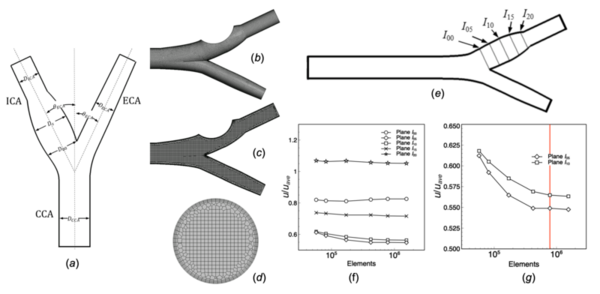
Study of PINN sensor layout in evaluating WSS with application to patient-specific carotid flow

Nie et al. | Sep 04, 2026

Study of PINN sensor layout in evaluating WSS with application to patient-specific carotid flow

Physics‑Informed Neural Networks (PINNs) offer a promising way to estimate blood‑flow behavior in arteries, especially near the vessel wall where traditional methods struggle. In this study, students tested how sensor density and placement affect PINN accuracy in modeling carotid artery flow and found that accuracy improves up to a moderate sensor density and depends strongly on how close sensors are placed to the arterial wall. Applying the optimized configuration to a patient‑specific carotid model produced velocity predictions closely matching computational fluid dynamics results, highlighting PINNs’ potential for future personalized cardiovascular assessment.

Read More...

Optimizing airfoil shape for small, low speed, unmanned gliders: A homemade investigation

Lara et al. | Mar 30, 2023

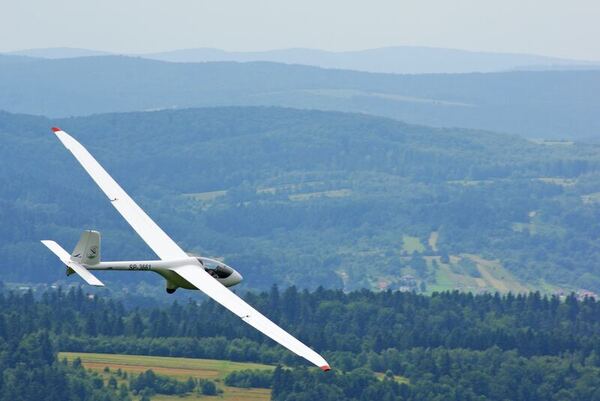
Optimizing airfoil shape for small, low speed, unmanned gliders: A homemade investigation
Image credit: Konrad Wojciechowski

Here, the authors sought to identify a method to optimize the lift generated by an airfoil based solely on its shape. By beginning with a Bernoullian model to predict an optimized wing shape, the authors then tested their model against other possible shapes by constructing them from Styrofoam and testing them in a small wind tunnel. Contrary to their hypothesis, they found their expected optimal airfoil shape did not result in the greatest lift generation. They attributed this to a variety of confounding variables and concluded that their results pointed to a correlation between airfoil shape and lift generation.

Read More...

An analysis of the mechanical properties of fencing swords, and implications for weapon selection

Redmond et al. | Aug 24, 2026

An analysis of the mechanical properties of fencing swords, and implications for weapon selection
Image credit: Jonathan Falcon

The sword is the most important piece of equipment a fencer uses. In this study, we compared the mechanical and physical properties of two of the most common types of swords used in foil fencing.We that found that maraging steel blades had a significantly greater stiffness and were damped more effectively than low carbon steel blades. These properties affect how the blade behaves during particular maneuvers and techniques, and our findings therefore provide useful insights for fencers who want to select the optimal sword configuration to suit their personal style.

Read More...

Scientific project in physics "Carbonated liquids and carbonation level"

Irina et al. | Jan 21, 2024

Scientific project in physics "Carbonated liquids and carbonation level"

In our work we followed the formation of gas bubbles on the surface of the vessel walls in different carbonated liquids, over different time intervals, at different temperatures and in vessels made of different materials. Our results made it possible to identify patterns affecting the process of formation and disappearance of carbon dioxide bubbles.

Read More...

The juxtaposition of anatomy and physics in the eye

Zhou et al. | Oct 25, 2023

The juxtaposition of anatomy and physics in the eye

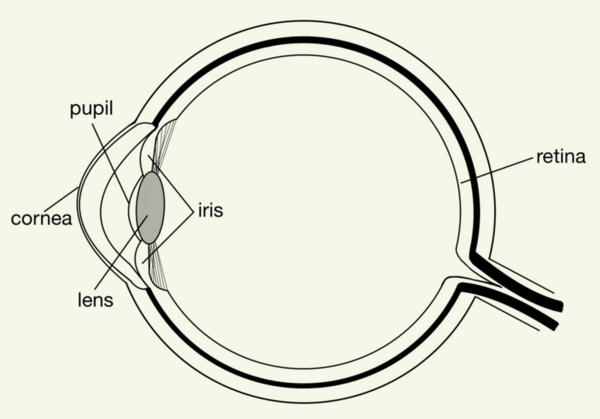
People are quick to accept the assumption that a light will appear dimmer the farther away they are, citing the inverse square relationship that illuminance obeys as rationale. However, repeated observations of light sources maintaining their brightness over large distances prompted us to explore how the brightness, or perceived illuminance of a light varies with the viewing distance from the object. We hypothesized that since both the illuminance of the light source and image size decrease at the same rate, then the concentration, or intensity of the image remains unchanged, and subsequently the perceived illuminance.

Read More...

Examination of the underlying chemical physics of the Mpemba effect in water and other liquids

Khan et al. | Apr 20, 2023

Examination of the underlying chemical physics of the Mpemba effect in water and other liquids
Image credit: D koi

Counterintuitive in nature, the Mpemba effect asserts that hot liquid freezes faster than cold liquid. While noted throughout history by scientific minds like Aristotle, the phenomenon remains in contention with varying hypotheses for the effect proposed alongside the effect’s rise in popularity. Contributing to the research efforts surrounding the Mpemba effect, the authors in this article explore the effect in different liquids ranging in physical properties and intermolecular forces to determine potential parameters attributable to producing the Mpemba effect.

Read More...

Jet optimization using a hybrid multivariate regression model and statistical methods in dimuon collisions

Chunduri et al. | Jun 09, 2024

Jet optimization using a hybrid multivariate regression model and statistical methods in dimuon collisions
Image credit: Chunduri, Srinivas and McMahan, 2024.

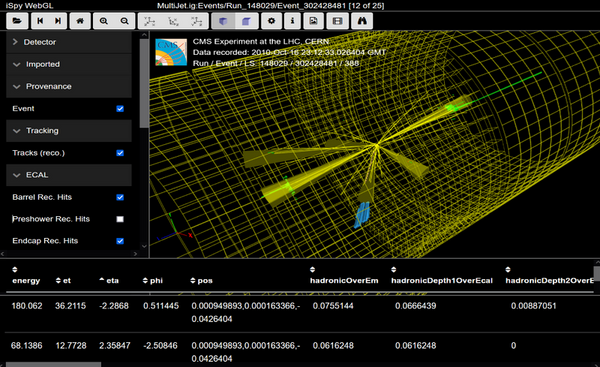
Collisions of heavy ions, such as muons result in jets and noise. In high-energy particle physics, researchers use jets as crucial event-shaped observable objects to determine the properties of a collision. However, many ionic collisions result in large amounts of energy lost as noise, thus reducing the efficiency of collisions with heavy ions. The purpose of our study is to analyze the relationships between properties of muons in a dimuon collision to optimize conditions of dimuon collisions and minimize the noise lost. We used principles of Newtonian mechanics at the particle level, allowing us to further analyze different models. We used simple Python algorithms as well as linear regression models with tools such as sci-kit Learn, NumPy, and Pandas to help analyze our results. We hypothesized that since the invariant mass, the energy, and the resultant momentum vector are correlated with noise, if we constrain these inputs optimally, there will be scenarios in which the noise of the heavy-ion collision is minimized.

Read More...

Modeling Hartree-Fock approximations of the Schrödinger Equation for multielectron atoms from Helium to Xenon using STO-nG basis sets

Gangal et al. | Oct 05, 2023

Modeling Hartree-Fock approximations of the Schrödinger Equation for multielectron atoms from Helium to Xenon using STO-nG basis sets

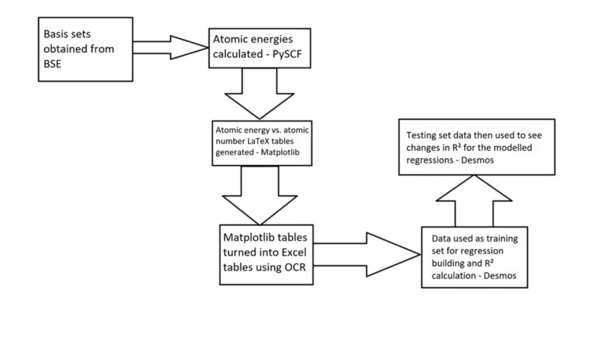
The energy of an atom is extremely useful in nuclear physics and reaction mechanism pathway determination but is challenging to compute. This work aimed to synthesize regression models for Pople Gaussian expansions of Slater-type Orbitals (STO-nG) atomic energy vs. atomic number scatter plots to allow for easy approximation of atomic energies without using computational chemistry methods. The data indicated that of the regressions, sinusoidal regressions most aptly modeled the scatter plots.

Read More...

Determining the Habitable Zone Around a Star

Lee et al. | May 29, 2013

Determining the Habitable Zone Around a Star

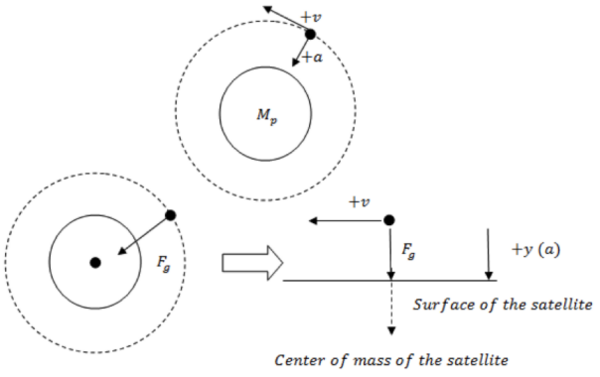
Life requires many things, including a hospitable temperature, elements, and energy. Here the authors utilize Newton's laws of physics and information relating a star's luminosity and temperature to determine the minimum and maximum masses and luminosities of planets and stars that would support life as we know it. This work can be used to determine the likelihood of a planet being able to support life based on attributes we can measure from here on Earth.

Read More...

Locating sources of a high energy cosmic ray extensive air shower using HiSPARC data

Aziz et al. | Oct 24, 2023

Locating sources of a high energy cosmic ray extensive air shower using HiSPARC data

Using the data provided by the University of Twente High School Project on Astrophysics Research with Cosmics (HiSPARC), an analysis of locations for possible high-energy cosmic ray air showers was conducted. An example includes an analysis conducted of the high-energy rain shower recorded in January 2014 and the use of Stellarium™ to discern its location.

Read More...