Browse Articles

The Impact of Age on Post-Concussive Symptoms: A Comparative Study of Symptoms Related and Not Related to the Default Mode Network

Wurscher et al. | Mar 05, 2017

The Impact of Age on Post-Concussive Symptoms: A Comparative Study of Symptoms Related and Not Related to the Default Mode Network

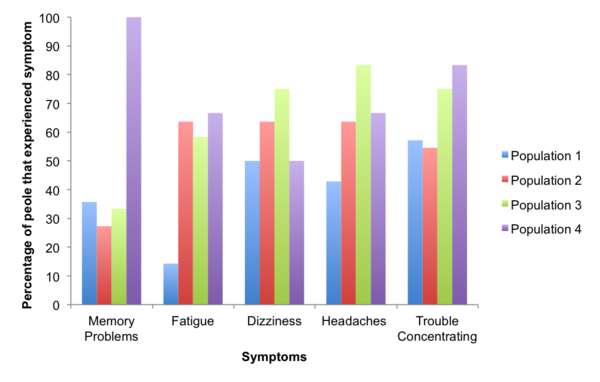
The Default Mode Network (DMN) is a network of connected brain regions that are active when the brain is not focused on external tasks. Minor brain injuries, such as concussions, can affect this network and manifest symptoms. In this study, the authors examined correlations between DMN age and post-concussion symptoms in previously concussed individuals and healthy controls.

Read More...

Functional Network Connectivity: Possible Biomarker for Autism Spectrum Disorders (ASD)

Wang et al. | Feb 23, 2015

Functional Network Connectivity: Possible Biomarker for Autism Spectrum Disorders (ASD)

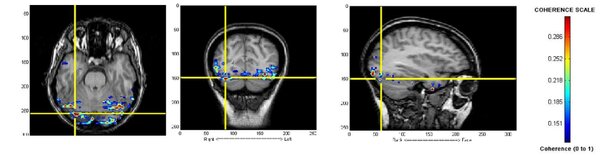
Autism spectrum disorder (ASD) is a complex neurodevelopmental disorder and is difficult to diagnose in young children. Here magnetoencephalography was used to compare the brain activity in patients with ASD to patients in a control group. The results show that patients with ASD have a high level of activity in different areas of the brain than those in the control group.

Read More...

Study of PINN sensor layout in evaluating WSS with application to patient-specific carotid flow

Nie et al. | Sep 04, 2026

Study of PINN sensor layout in evaluating WSS with application to patient-specific carotid flow

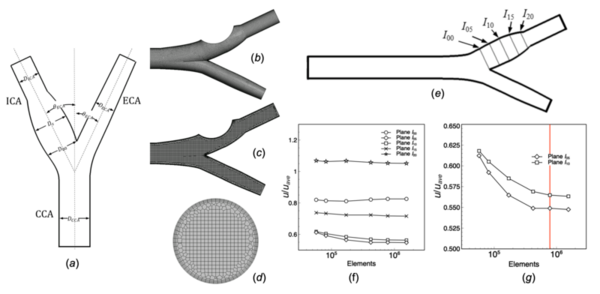
Physics‑Informed Neural Networks (PINNs) offer a promising way to estimate blood‑flow behavior in arteries, especially near the vessel wall where traditional methods struggle. In this study, students tested how sensor density and placement affect PINN accuracy in modeling carotid artery flow and found that accuracy improves up to a moderate sensor density and depends strongly on how close sensors are placed to the arterial wall. Applying the optimized configuration to a patient‑specific carotid model produced velocity predictions closely matching computational fluid dynamics results, highlighting PINNs’ potential for future personalized cardiovascular assessment.

Read More...