Browse Articles

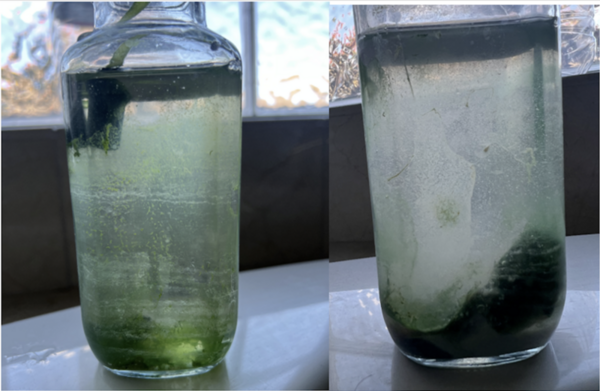
The effects of algaecides on Spirulina major and non-target organism Daphnia magna

Halepete et al. | Oct 09, 2023

The effects of algaecides on <i>Spirulina major</i> and non-target organism <i>Daphnia magna</i>
Image credit: The authors

Algal blooms pose a threat to ecosystems, but the methods used to combat these blooms might harm more than just the algae. Halepete, Graham, and Lowe-Schmahl demonstrate negative effects of anti-algae treatments on a cyanobacterium (Spirulina major), and the water fleas (Daphnia magna) that live alongside these cyanobacteria.

Read More...

Leveraging E-Waste to Enhance Water Condensation by Effective Use of Solid-state Thermoelectric Cooling

Joshi et al. | Dec 02, 2020

Leveraging E-Waste to Enhance Water Condensation by Effective Use of Solid-state Thermoelectric Cooling

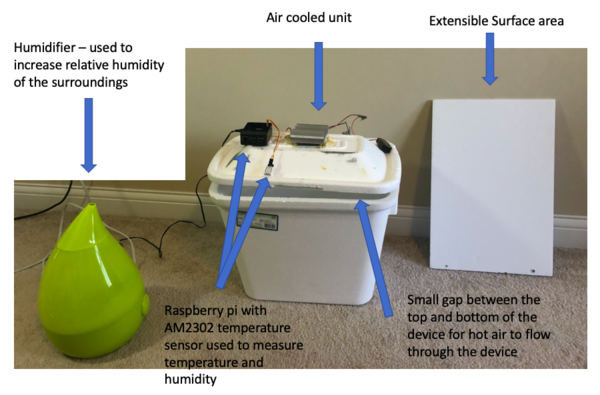
Water scarcity affects upwards of a billion people worldwide today. This project leverages the potential of capturing humidity to build a high-efficiency water condensation device that can generate water and be used for personal and commercial purposes. This compact environment-friendly device would have low power requirements, which would potentially allow it to utilize renewable energy sources and collect water at the most needed location.

Read More...

The Cosmic Microwave Background: Galactic Foregrounds and Faraday Rotation

Connelly et al. | Nov 20, 2017

The Cosmic Microwave Background: Galactic Foregrounds and Faraday Rotation

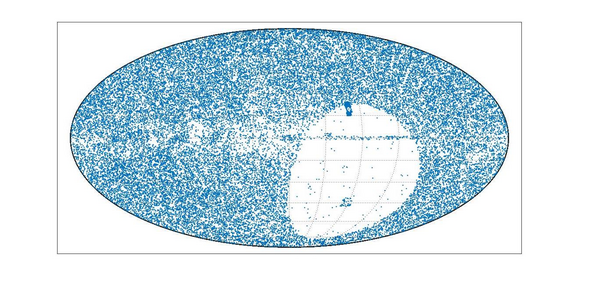
The cosmic microwave background (CMB) is faint electromagnetic radiation left over from early stages in the formation of the universe. In order to analyze the CMB, scientists need to remove from electromagnetic data foreground radiation that contaminates CMB datasets. In this study, students utilize extensive updated datasets to analyze the correlation between CMB maps and Faraday RM and WMAP sky maps.

Read More...