Browse Articles

Access to public parks, drinking fountains, and clean public drinking water in the Bay Area is not driven by income

Zaroff et al. | Jul 15, 2021

Access to public parks, drinking fountains, and clean public drinking water in the Bay Area is not driven by income

Access to green space—an area of grass, trees, or other vegetation set apart for recreational or aesthetic purposes in an urban environment—and clean drinking water can be unequally distributed in urban spaces, which are often associated with income inequality. Little is known about public drinking water and green space inequities in the Bay Area. For our study, we sought to understand how public park access, drinking fountain access, and the quality of public drinking water differ across income brackets in the Bay Area. Though we observed smaller-scale instances of inequalities, in the park distribution in the Bay Area as a whole, and in the Southern Bay’s water quality and park distribution, our results indicate that other factors could be influencing water quality, and park and fountain access in the Bay Area.

Read More...
A Temperature-Based Comparison of Compounds Found in Bao Chong Tea, Green Tea, and Black Tea

Lin et al. | May 14, 2019

A Temperature-Based Comparison of Compounds Found in Bao Chong Tea, Green Tea, and Black Tea

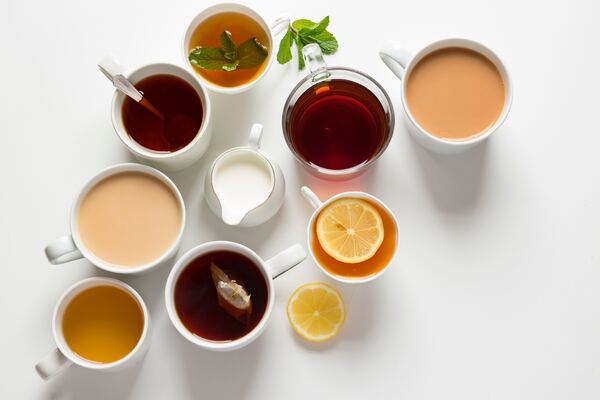
While tea has a complex history, recently the health benefits of this beverage have come into focus. In this study, researchers sought to compare the levels of caffeine, catechins and L-theanine between different types of tea using NMR spectroscopy. Further, the impact of brewing temperature on the release of these compounds was also assessed. Of those tested, Bao Chong tea had the highest levels of these compounds. Brewing temperatures between 45ºC and 75ºC were found to be optimal for compound release. These results can help consumers make informed choices about their tea preparation and intake.

Read More...

Utilizing sorbitol to improve properties of cellulose-based biodegradable hydrogels

Adler et al. | Jan 06, 2025

Utilizing sorbitol to improve properties of cellulose-based biodegradable hydrogels

Hydrogels are commonly used in medicine, pharmaceuticals, and agriculture. Hydrogels absorb water by swelling and re-release this water by diffusion. This study sought to synthesize a biodegradable, cellulose-based hydrogel that is more effective at absorbing and re-releasing water than those produced by current methods. We tested the compressive strength of both the dry and swollen gels and the tensile strength of the swollen gels to elucidate the gel structure.

Read More...

Modular mimics of neuroactive alkaloids - design, synthesis, and cholinesterase inhibitory activity of rivastigmine analogs

Yu et al. | Sep 12, 2022

Modular mimics of neuroactive alkaloids - design, synthesis, and cholinesterase inhibitory activity of rivastigmine analogs

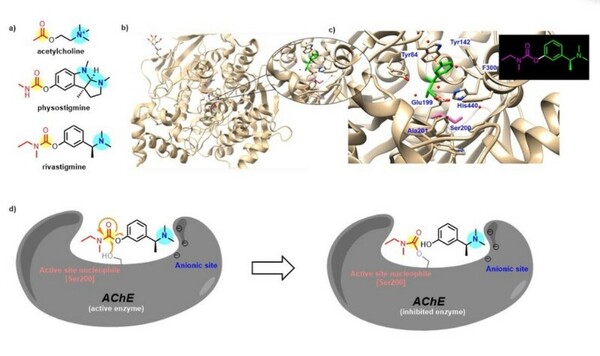
Naturally occurring neuroactive alkaloids are often studied for their potential to treat Neurological diseases. This team of students study Rivastigmine, a potent cholinesterase inhibitor that is a synthetic analog of physostigmine, which comes from the Calabar bean plant Physostigma venenosum. By comparing the effects of optimized synthetic analogs to the naturally occurring alkaloid, they determine the most favorable analog for inhibition of acetylcholinesterase (AChE), the enzyme that breaks down the neurotransmitter acetylcholine (ACh) to terminate neuronal transmission and signaling between synapses.

Read More...