Browse Articles

The Effects of Altered Microbiome on Caenorhabditis elegans Egg Laying Behavior

Gohari et al. | Aug 12, 2019

The Effects of Altered Microbiome on <em>Caenorhabditis elegans</em> Egg Laying Behavior

Since the discovery that thousands of different bacteria colonize our gut, many of which are important for human wellbeing, understanding the significance of balancing the different species on the human body has been intensely researched. Untangling the complexity of the gut microbiome and establishing the effect of the various strains on human health is a challenge in many circumstances, and the need for simpler systems to improve our basic understanding of microbe-host interactions seems necessary. C. elegans are a well-established laboratory animal that feed on bacteria and can thus serve as a less complex system for studying microbe-host interactions. Here the authors investigate how the choice of bacterial diet affects worm fertility. The same approach could be applied to many different outcomes, and facilitate our understanding of how the microbes colonizing our guts affect various bodily functions.

Read More...
A Retrospective Study of Research Data on End Stage Renal Disease

Ponnaluri et al. | Mar 09, 2016

A Retrospective Study of Research Data on End Stage Renal Disease

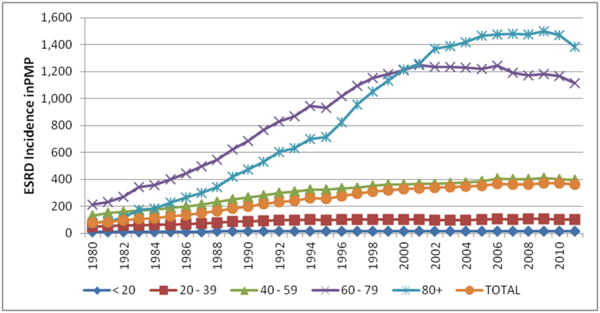
End Stage Renal Disease (ESRD) is a growing health concern in the United States. The authors of this study present a study of ESRD incidence over a 32-year period, providing an in-depth look at the contributions of age, race, gender, and underlying medical factors to this disease.

Read More...

Study of PINN sensor layout in evaluating WSS with application to patient-specific carotid flow

Nie et al. | Sep 04, 2026

Study of PINN sensor layout in evaluating WSS with application to patient-specific carotid flow

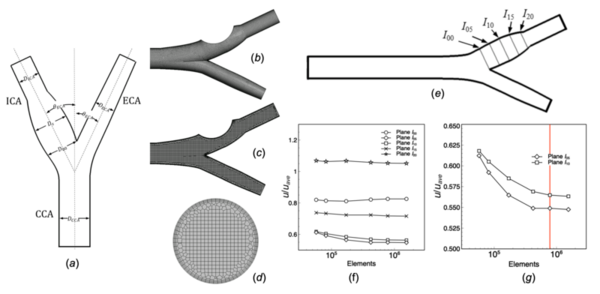
Physics‑Informed Neural Networks (PINNs) offer a promising way to estimate blood‑flow behavior in arteries, especially near the vessel wall where traditional methods struggle. In this study, students tested how sensor density and placement affect PINN accuracy in modeling carotid artery flow and found that accuracy improves up to a moderate sensor density and depends strongly on how close sensors are placed to the arterial wall. Applying the optimized configuration to a patient‑specific carotid model produced velocity predictions closely matching computational fluid dynamics results, highlighting PINNs’ potential for future personalized cardiovascular assessment.

Read More...

Evaluating need for adversarial training data given algorithmic defense methods against adversarial attacks

Yian et al. | Jul 05, 2026

Evaluating need for adversarial training data given algorithmic defense methods against adversarial attacks

The purpose of this study was to determine the necessity of previous non-algorithmic attacks (Adversarial Training) in light of algorithmic defense methods (Gradient Masking and Defensive Distillation) against FGSM attacks. We found a significant increase in image classification accuracy from defense methods with the non-algorithmic defense method compared to ones without. By analyzing the significance with a McNemar test, we determined that the inclusion of non-algorithmic defense methods is still necessary in light of new algorithmic defense methods.

Read More...

Assessing Spanish interpretation in community healthcare: a study of patient satisfaction

Yon et al. | Jun 22, 2026

Assessing Spanish interpretation in community healthcare: a study of patient satisfaction
Image credit: Yon and Jones

This manuscript explores the use of Spanish language translators in an outpatient clinic in New Jersey. The authors surveyed patients before and after in person, video, and telephone appointments to determine which modality was most acceptable to the patients. The authors found that the three modalities did not differ in patient satisfaction, but that patients were grateful for translations services and that patient trust may be expanded by the use of these services and by focuses of translator soft skills.

Read More...

Leveraging transfer learning with convolutional neural networks for cardiovascular disease detection

Chen et al. | May 25, 2026

Leveraging transfer learning with convolutional neural networks for cardiovascular disease detection
Image credit: Stephen Andrews

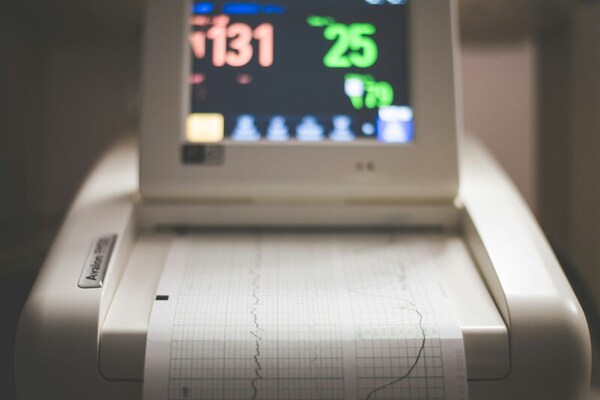
This study shows the efficacy of leveraging transfer learning, specifically from residual networks, to detect CVDs and possible signs of CVDs. The findings indicate that leveraging transfer learning from residual networks alongside medical professionals is a highly promising approach for CVD detection and diagnosis, warranting further investigation.

Read More...