Browse Articles

Efficacy of natural coagulants in reducing water turbidity under future climate change scenarios

Cho et al. | Nov 13, 2024

Efficacy of natural coagulants in reducing water turbidity under future climate change scenarios
Image credit: pine watt

Here the authors investigated the effects of natural coagulants on reducing the turbidity of water samples from the Tennessee River Watershed. They found that turbidity reduction was higher at lower temperatures for eggshells. They then projected and mapped turbidity reactions under two climate change scenarios and three future time spans for eggshells. They found site-specific and time-vary turbidity reactions using natural coagulants could be useful for optimal water treatment plans.

Read More...

The Effect of Common Cations on DNA Degradation

Larina et al. | Nov 06, 2016

The Effect of Common Cations on DNA Degradation

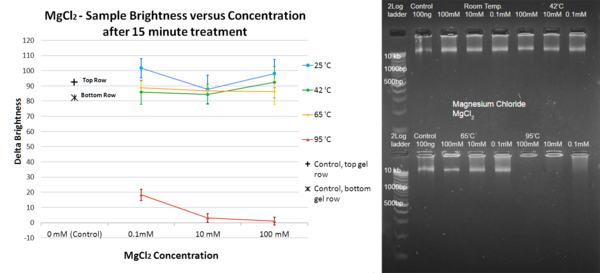
Heating of DNA-containing solutions is a part of many experiment protocols, but it can also cause damage and degradation of the DNA molecules, potentially leading to error in the experimental results. The authors of this paper investigate whether the presence of certain cations during heating can stabilize the DNA polymer and aid the preservation of the molecule.

Read More...

Investigating the inhibition of catabolic enzymes for implications in cardiovascular diseases and diabetes

Gandhi et al. | Aug 25, 2024

Investigating the inhibition of catabolic enzymes for implications in cardiovascular diseases and diabetes
Image credit: The authors

Enzymes that metabolize carbohydrates and lipids play a key role in our health, including global health challenges like cardiovascular diseases and diabetes. To learn more about these important enzymes, Gandhi and Gandhi test whether various natural substances (ginger, Aloe vera, lemon, and mint leaves) affect the activity of α-amylase and lipase enzymes.

Read More...

Cleaning up the world’s oceans with underwater laser imaging

Gurbuz et al. | Jul 07, 2023

Cleaning up the world’s oceans with underwater laser imaging
Image credit: Naja Bertolt Jensen

Here recognizing the growing amount of plastic waste in the oceans, the authors sought to develop and test laser imaging for the identification of waste in water. They found that while possible, limitations such as increasing depth and water turbidity result in increasing blurriness in laser images. While their image processing methods were somewhat insufficient they identified recent methods to use deep learning-based techniques as a potential avenue to viability for this method.

Read More...

Can essential oils be allelopathic to Lolium multiforum without harming Solanum lycopersicum?

Madan et al. | Nov 13, 2021

 Can essential oils be allelopathic to <em>Lolium multiforum</em> without harming <em>Solanum lycopersicum</em>?

Seeking to investigate eco-friendly biological methods to control weeds and enhance food crop yields, here the authors considered the effects of three essential oils on seed germination and radicle length of both a weed and a common crop. They found that treatment with turmeric oil had phytotoxic potential, leading to a reduction in both seed germination and radicle length of the weed. In contrast, ginger oil possessed allelopathic properties towards both. The authors suggest that essential oils could be used as eco-friendly bio-herbicides.

Read More...

Vineyard vigilance: Harnessing deep learning for grapevine disease detection

Mandal et al. | Aug 21, 2024

Vineyard vigilance: Harnessing deep learning for grapevine disease detection

Globally, the cultivation of 77.8 million tons of grapes each year underscores their significance in both diets and agriculture. However, grapevines face mounting threats from diseases such as black rot, Esca, and leaf blight. Traditional detection methods often lag, leading to reduced yields and poor fruit quality. To address this, authors used machine learning, specifically deep learning with Convolutional Neural Networks (CNNs), to enhance disease detection.

Read More...