Browse Articles

An explainable model for content moderation

Cao et al. | Aug 16, 2023

An explainable model for content moderation

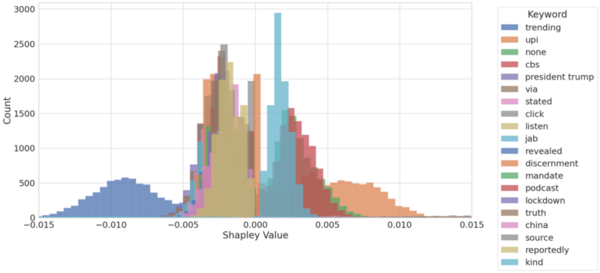
The authors looked at the ability of machine learning algorithms to interpret language given their increasing use in moderating content on social media. Using an explainable model they were able to achieve 81% accuracy in detecting fake vs. real news based on language of posts alone.

Read More...

Linearity of piezoelectric response of electrospun polymer-based (PVDF) fibers with barium titanate nanoparticles

Nichitiu et al. | Feb 13, 2023

Linearity of piezoelectric response of electrospun polymer-based (PVDF) fibers with barium titanate nanoparticles

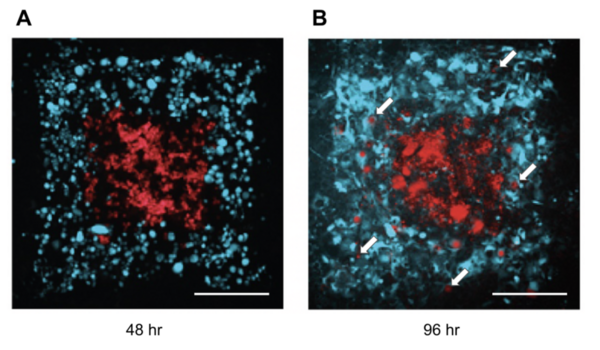
Here, seeking to develop an understanding of the properties that determine the viability of piezoelectric flexible materials for applications in electro-mechanical sensors, the authors investigated the effects of the inclusion BaTiO3 nanoparticles in electrospun Polyvinyledene Fluoride. They found the voltage generated had a piecewise linear dependence on the applied force at a few temperatures.

Read More...

Reactivity-informed design, synthesis, and Michael addition kinetics of C-ring andrographolide analogs

Zhou et al. | Nov 17, 2022

Reactivity-informed design, synthesis, and Michael addition kinetics of C-ring andrographolide analogs

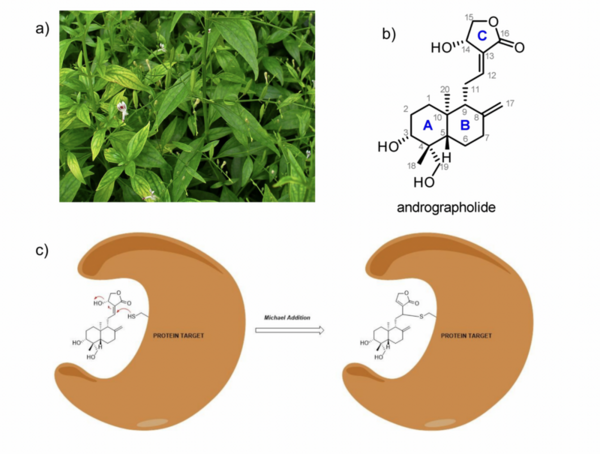
Here, based on the identification of androgapholide as a potential therapeutic treatment against cancer, Alzheimer's disease, diabetes, and multiple sclerosis, due to its ability to inhibit a signaling pathway in immune system function, the authors sought ways to optimize the natural product human systems by manipulating its chemical structure. Through the semisynthesis of a natural product along with computational studies, the authors developed an understanding of the kinetic mechanisms of andrographolide and semisynthetic analogs in the context of Michael additions.

Read More...

Enhancing activity of antibiotics against Staphylococcus aureus with Shuang-Huang-Lian

Liu et al. | Sep 29, 2022

Enhancing activity of antibiotics against Staphylococcus aureus with Shuang-Huang-Lian

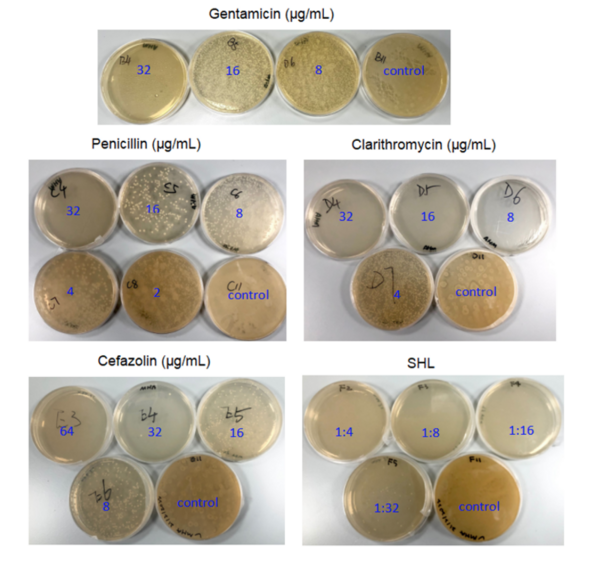
Staphylococcus aureus is a major pathogen in both hospitals and the community and can cause systemic infections such as pneumonia. Multi-drug resistant strains, such as Methicillin-resistant S. aureus (MRSA) are particularly worrisome. In order to reduce the development of bacterial resistance, we hypothesized that two selected traditional Chinese medicines, Shuang-Huang-Lian (SHL) and Lan-Qin, would be effective against S. aureus. The results showed that SHL had a synergistic effect with gentamicin as well as additive effects with penicillin and cefazolin against S. aureus compared with using antibiotics alone.

Read More...

Changing public opinions on genetically modified organisms through access to educational resources

Klein et al. | Jul 26, 2022

Changing public opinions on genetically modified organisms through access to educational resources

Genetically modified organisms (GMOs) are crops or animals that have been genetically engineered to express a certain physical or biological characteristic and have various benefits that have made them become increasingly popular. However, the public has had mixed reactions to the use of GMOs, with some skeptical of their safety. The purpose of this study was to evaluate how opinions on genetically modified foods can change from exposure to small amounts of information

Read More...

Luteolin's positive inhibition of melanoma cell lines.

Su et al. | Nov 17, 2020

Luteolin's positive inhibition of melanoma cell lines.

Luteolin (3′,4′,5,7-tetrahydroxyflavone) is a flavonoid that occurs in fruits, vegetables, and herbs. Research suggests that luteolin is effective against various forms of cancer by triggering apoptosis pathways. This experiment analyzes the effects of luteolin on the cell viability of malignant melanoma cells using an in vitro experiment to research alternative melanoma treatments and hopefully to help further cancer research as a whole.

Read More...

The Development of a Highly Sensitive Home Diagnosis Kit for Group A Streptococcus Bacteria (GAS)

Mai et al. | Dec 05, 2018

The Development of a Highly Sensitive Home Diagnosis Kit for Group A Streptococcus Bacteria (GAS)

In this article, Mai et al. have developed a do-it-yourself kit for the detection of Strep A bacterial infections. While Strep A infections require antibiotic administration, viral infections, which can present with similar symptoms, often resolve on their own. The problem with delayed antibiotic treatment is an increasing risk of complications. Currently an accurate diagnosis requires that patients make the trip to the hospital where sensitive tests can be performed. The method described here, bundled into a commercially available kit, could help speed up the identification of such bacterial infections. When presented with symptoms of a sore throat and fever, you could just buy the kit at your local pharmacy, perform the simple yet highly accurate and sensitive test, and know whether an urgent trip to the doctor's for an antibiotic prescription is necessary. How convenient!

Read More...

An evaluation of the trends in U.S. maternal deaths based on abortion policies from 2018 to 2021

Haq et al. | Feb 18, 2026

An evaluation of the trends in U.S. maternal deaths based on abortion policies from 2018 to 2021

Here the authors evaluate the relationship between state-level abortion policies and maternal mortality across the United States from 2018 to 2021. Their findings reveal that states with restrictive abortion laws consistently experienced higher maternal mortality ratios than those with protective policies, culminating in a 72% increase in deaths within restrictive states by the end of the study period.

Read More...