Browse Articles

Testing Various Synthetic and Natural Fiber Materials for Soundproofing

Karuppiah et al. | Jun 15, 2017

Testing Various Synthetic and Natural Fiber Materials for Soundproofing

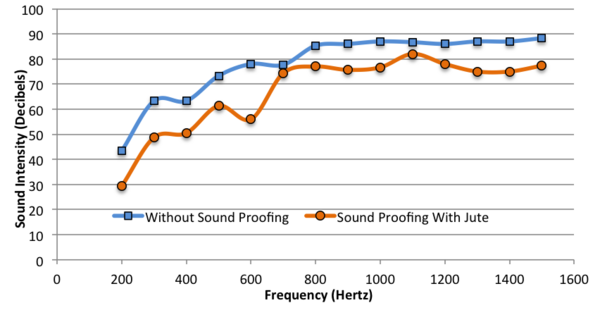
Noise pollution negatively impacts the health and behavioral routines of humans and other animals, but the production of synthetic sound-absorbing materials contributes to harmful gas emissions into the atmosphere. The authors of this paper investigated the effectiveness of environmentally-friendly, cheap natural-fiber materials, such as jute, as replacements for synthetic materials, such as gypsum and foam, in soundproofing.

Read More...

Rhizosphere metagenome analysis and wet-lab approach to derive optimal strategy for lead remediation in situ

Bhat et al. | Jul 18, 2023

Rhizosphere metagenome analysis and wet-lab approach to derive optimal strategy for lead remediation <i>in situ</i>
Image credit: Karolina Grabowska

The Environmental Protection Agency (EPA) reports a significant number of heavy metal-contaminated sites across the United States. To address this public health concern, rhizoremediation using microbes has emerged as a promising solution. Here, a combination of soil microbes were inoculated in the rhizosphere in soil contaminated with 500 parts per million (ppm) of lead. Results showed rhizoremediation is an effective bioremediation strategy and may increase crop productivity by converting nonarable lands into arable lands.

Read More...

A 3D printed triboelectric nanogenerator for bridge vibration energy harvesting and sensing

Walavalkar et al. | Jul 19, 2026

A 3D printed triboelectric nanogenerator for bridge vibration energy harvesting and sensing
Image credit: Jakub Żerdzicki

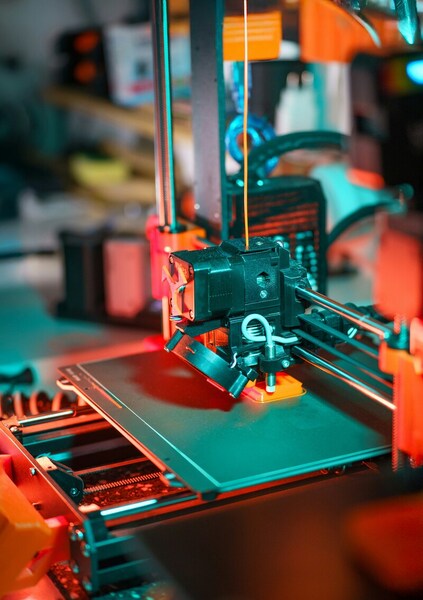
This study strongly illustrates that optimizing 3D printing parameters would enhance a triboelectric nanogenerator's performance. The design improvements substantiate the potential of optimized, 3D-printed TENGs for developing scalable, cost-effective solutions for powering low-energy electronics, particularly in applications such as structural health monitoring.

Read More...

The Effectiveness of Different Palate Relievers Against a Hot Chili Pepper Sauce

Avendaño-Rodríguez et al. | Jun 11, 2016

The Effectiveness of Different Palate Relievers Against a Hot Chili Pepper Sauce

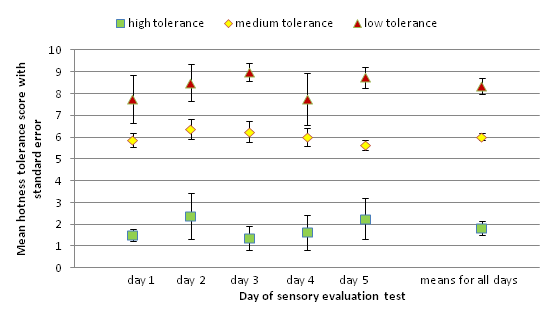
Cuisine with hot chili peppers can be tasty, but sometimes painful to consume because of the burning sensations caused by the capsaicin molecule. The authors wanted to find the palate reliever that decreases the burning sensation of capsaicin the most by testing water, soft drink, olive oil, milk, and ice-cream as possible candidates. The authors hypothesized that olive oil would be the best palate reliever as it is non-polar like the capsaicin molecule. The authors surveyed 12 panelists with low, medium, and high spice tolerances and found that across all levels of spice tolerance, milk and ice-cream were the best palate relievers and soft drink the worst.

Read More...

Effect of the Herbal Formulation HF1 on the Expression of PD-L1 in PC3 cells

Imani et al. | Nov 15, 2019

Effect of the Herbal Formulation HF1 on the Expression of PD-L1 in PC3 cells

In this study, Imani et al. investigate whether a new proprietary herbal formulation, HF1, can inhibit expression of immune suppressor protein PD-L1. PD-L1 is a transmembrane protein that can be expressed by cancer cells to assist in their ability to avoid attacks from the immune system. Work from this study demonstrates that HF1 treatment can reduce expression of PD-L1 in cultured cancer cells, implicating HF1 as a potential new cancer therapy.

Read More...

Effect of heme vs. non-heme iron supplements on gut microbiome fitness

Dogra et al. | Nov 07, 2022

Effect of heme vs. non-heme iron supplements on gut microbiome fitness

Here, based on identification of iron deficiencies of a majority of people around the world, the authors sought to understand how the two main forms of dietary iron, heme and non-heme, affect the bacteria found in the human gut. by using a cell plate study, they found that bacterial growth increased with increasing concentration os either form of iron, up until the point where the high iron content resulted in cytotoxicity. They suggest this evidence points to the potential dangers of overconsumption of iron.

Read More...

The effect of Omega-3 on bovine blood cells as a potential remedy for Cerebral Cavernous Malformations

Pulluru et al. | Sep 22, 2023

The effect of Omega-3 on bovine blood cells as a potential remedy for Cerebral Cavernous Malformations
Image credit: Carolien van Oijen

Here, the authors investigated if dietary Omega-3 fatty acids could reduce the potential for cerebral cavernous malformations, which are brain lesions that occur due to a genetic mutation where high membrane permeability occurs between endothelial cell junctions. In a bovine-based study where some cows were fed an Omega-3 diet, the authors found the membranes of bovine blood cells increased in thickness with Omega-3 supplementation. As a result, they suggest that dietary Omega-3 could be considered as a possible preventative measure for cerebral cavernous malformations.

Read More...

Effect of hypervitaminosis A in regenerating planaria: A potential model for teratogenicity testing

Bennet et al. | Dec 12, 2022

Effect of hypervitaminosis A in regenerating planaria: A potential model for teratogenicity testing

This unique research study evaluated the potential use of the flatworm, brown planaria (Dugesia tigrine), as an alternative model for teratogenicity testing. In this study, we exposed amputated planaria to varying concentrations of a known teratogen, vitamin A (retinol), for approximately 2 weeks, and evaluated multiple parameters including the formation of blastema and eyes. The results from this study demonstrated that high concentrations of retinol caused defects in head and eye formation in regenerating planaria, with similarities to vitamin A related teratogenicity findings in mammals. Based on these results, regenerating brown planaria are a promising alternative model for teratogenicity testing, which can potentially be paradigm shifting as it can reduce cost, time, and pregnant animal use in research.

Read More...