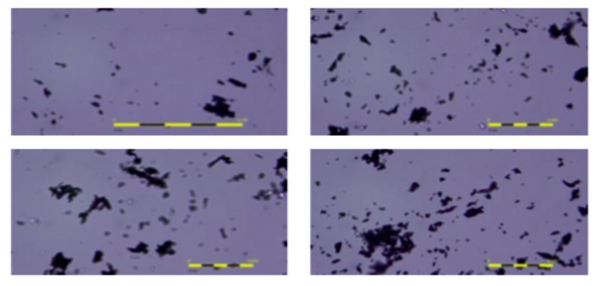
In this article, the authors propose an effective, environmentally-friendly method of producing conductive ink using expired waste oil, polystyrene, and graphene.
Read More...Environmentally-friendly graphene conductive ink using graphene powder, polystyrene, and waste oil
In this article, the authors propose an effective, environmentally-friendly method of producing conductive ink using expired waste oil, polystyrene, and graphene.
Read More...Discovery of novel targets for diffuse large B-cell lymphoma
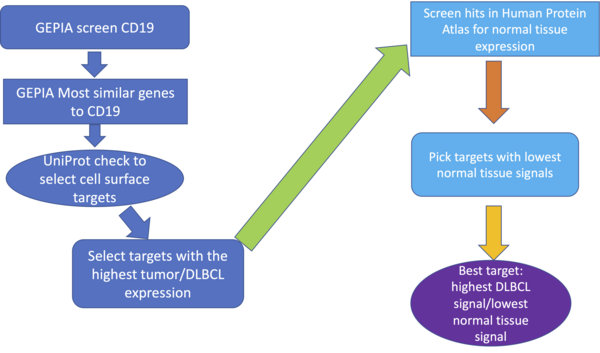
In this study, the authors identify new potential targets to treat advanced diffuse large B-cell lymphoma after treatment relapse and loss of CD19 expression.
Read More...Effects of vascular normalizing agents on immune marker expression in T cells, dendritic cells, and melanoma cells
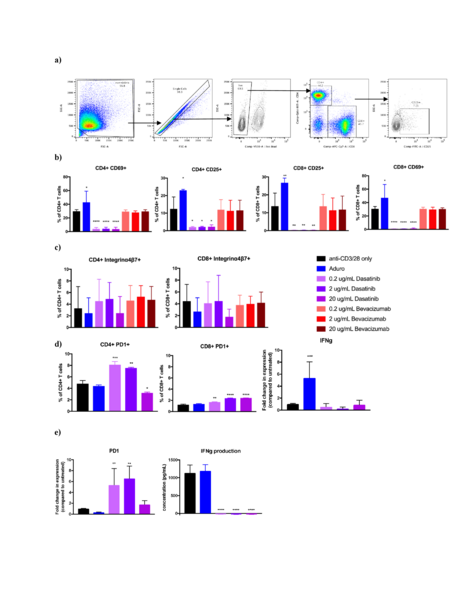
Tertiary lymphoid structures (TLS) are lymph node-like structures that form at sites of inflammation, and their presence in cancer patients is predictive of a better clinical outcome. One significant obstacle to TLS formation is reduced immune cell infiltration into the tumor microenvironment (TME). Recent studies have shown that vasculature normalizing (VN) agents may override this defect to improve tissue perfusion and increased immune cell entry into the TME. However, their effects on immune cell and tumor cell phenotype remain understudied. Here the authors investigate whether treating tumor cells with VN would reduce their immunosuppressive phenotype and promote production of chemokine that recruit immune cells and foster TLS formation.
Read More...Methanotrophic bioremediation for the degradation of oceanic methane and chlorinated hydrocarbons

Seeking an approach to address the increasing levels of methane and chlorinated hydrocarbons that threaten the environment, the authors worked to develop a novel, low-cost biotrickling filter for use as an ex situ method tailored to marine environments. By using methanotrophic bacteria in the filter, they observed methane degradation, suggesting the feasibility of chlorinated hydrocarbon degradation.
Read More...Changes in Aromanian language use and the Aromanian ethnolinguistic group’s reaction to decline

The Aromanian language and culture is quickly declining towards extinction. In this new research article, Ganea and Lascu provide evidence that, although the use of the Aromanian language is less prevalent among younger individuals, participants overwhelming support the preservation of Aromanian language and culture.
Read More...Exploring the Wonders of the Early Universe: Green Pea Galaxies and Light Flux
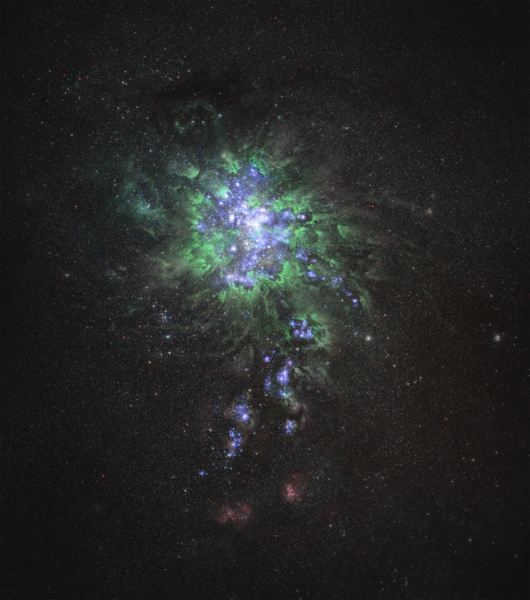
Studying other galaxies can help us understand the origins of the universe. Here, the authors study a type of galaxies known as Green Peas gaining insights that could help inform our understanding of Lyman alpha emitters, one of the first types of galaxies that existed in the early universe.
Read More...Caffeine: Does Drinking Coffee Alter Performance and RPE Levels of a Teenage Athlete in both Aerobic and Anaerobic Exercises?

Caffeine is widely consumed across the globe and is most appreciated for its effects as a stimulant. Here the authors investigate whether caffeine consumption affects performance during endurance or strength training. Their results suggest that caffeine consumption enhances endurance training, but not strength training.
Read More...Variations in Heat Absorption and Release of Earth Surfaces During Fall in Laramie, Wyoming

Here the authors investigate the contributions of man-made surfaces in Laramie, Wyoming to the Urban Heat Island (UHI) effect. Heat absorption and release by five surfaces were measured in the autumn of 2018. By recording temperatures of man-made and natural surfaces at early morning, mid-afternoon, and evening using an infrared thermometer, the authors determined that man-made surfaces retained more heat in fall than natural surfaces.
Read More...The Effect of the Human MeCP2 gene on Drosophila melanogaster behavior and p53 inhibition as a model for Rett Syndrome
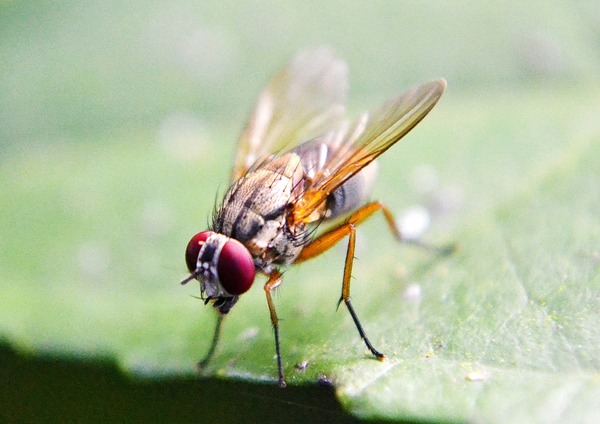
In this study, the authors observe if the symptoms of Rett Syndrome, a neurodegenerative disease in humans, are reflected in Drosophila melanogaster. This was achieved by differentiating the behavior and physical aspects of wild-type flies from flies expressing the full-length MeCP2 gene and the mutated MeCP2 gene (R106W). After conducting these experiments, some of the Rett Syndrome symptoms were recapitulated in Drosophila, and a subset of those were partially ameliorated by the introduction of pifithrin-alpha.
Read More...Electromagnetic Radiation From Electronics Does Affect Plant Growth

Plants are the main producers of oxygen and organic compounds. Ensuring the health of these organisms is vital, as recent technologies could be damaging them. The purpose of this study was to find out if electromagnetic (EM) radiation from electronics affects plant growth.
Read More...