Browse Articles

Understanding the impossibility of machine learning fairness with data examples

Pillutla et al. | Sep 04, 2026

Understanding the impossibility of machine learning fairness with data examples

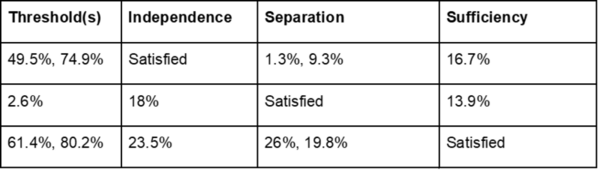
Machine learning systems are often expected to make fair decisions, yet the most widely used fairness criteria—independence, separation, and sufficiency—cannot generally be satisfied at the same time. In this study, students tested these criteria using a logistic regression model on a real-world student performance dataset and found that each criterion was met only at different prediction thresholds, with no threshold satisfying all three simultaneously. These results illustrate the inherent trade-offs in algorithmic fairness and highlight why achieving perfectly fair machine learning models is often impossible in practice.

Read More...
The growth of bacteria on everyday objects and the antimicrobial effects of household spices

Daehan Yi et al. | Apr 29, 2026

The growth of bacteria on everyday objects and the antimicrobial effects of household spices
Image credit: Daehan Yi, Boughaleb Hassani and Ribeiro

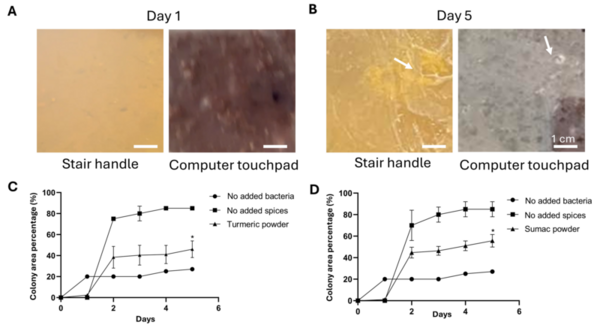
The study investigates the antibacterial properties of household spices on bacteria isolated from everyday objects, aiming to address the limited understanding of bacterial resilience on surfaces and the potential of spices as antibacterial agents. Researchers hypothesized that bacteria would grow faster on some surfaces than others and that spices like honey, chili powder, turmeric, and sumac would inhibit bacterial growth at varying rates. The findings suggest that household spices possess significant antibacterial properties and could be used as emergency disinfectants, particularly in under-resourced settings. However, they cannot replace medical treatments but offer insights into alternative health solutions using common ingredients.

Read More...