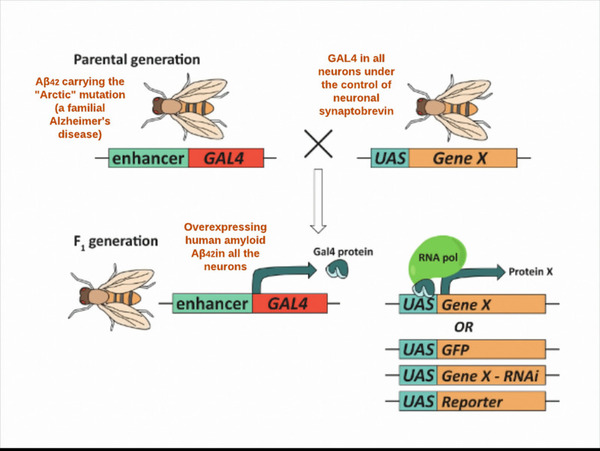
Oxidative damage and neuro-inflammation were the key pathways implicated in the pathogenesis of Alzheimer’s disease. In this study, 30 natural extracts from plant roots and leaves with extensive anti-inflammatory and anti-oxidative properties were consumed by Drosophila melanogaster. Several assays were performed to evaluate the efficacy of these combinational extracts on delaying the progression of Alzheimer’s disease. The experimental group showed increased motor activity, improved associative memory, and decreased lifespan decline relative to the control group.
The purpose of this investigation is to develop a hydrogel to aid skin regeneration by creating an extracellular matrix for fibroblast growth with antibacterial and infection-detection properties. Authors developed two natural hydrogels based on pectin and potato peels and characterized the gels for fibroblast compatibility through rheology, scanning electron microscopy, swelling, degradation, and cell cytotoxicity assays. Overall, this experiment fabricated various hydrogels capable of acting as skin substitutes and counteracting infections to facilitate wound healing. Following further testing and validation, these hydrogels could help alleviate the 13-billion-dollar financial burden of foot ulcer treatment.
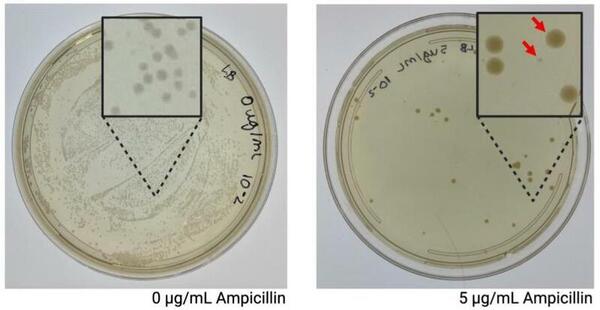
Here, the authors recognized the tendency of bacteria to form biofilms, where this behavior offers protection against threats such as antibiotics. To investigate this, they observed the effects of sublethal exposure of the antibiotic ampicillin on E. coli biofilm formation with an optical density crystal violet assay. They found that exposure to ampicillin resulted in the favored formation of biofilms over time, as free-floating bacteria were eradicated.
Since cough syrup and mouthwash are commonly used items and often end up flushed down the drain or toilet, they can eventually find their way into into freshwater waterways which can be harmful to many marine organisms, such as planarians (aquatic flatworms). To investigate the effects of these substances on planarians, the authors considered different concentrations of Listerine mouthwash and Robitussin syrup along with their active ingredients. By using a behavioral assay, they identified that the active ingredients of cough syrup detrimentally affect planarian behavior. They suggest that these findings could be used to guide disposal methods to lessen detrimental effects on aquatic life.
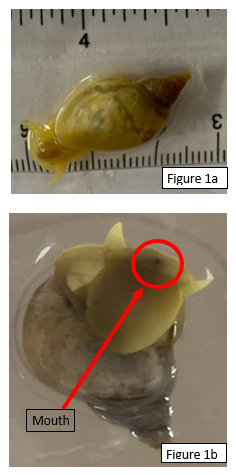
Stress and anxiety have become more prevalent issues in recent years with teenagers especially at risk. Recent studies show that experiencing stress while learning can impair brain-cell communication thus negatively impacting learning. Green tea is believed to have the opposite effect, aiding in learning and memory retention. In this study, the authors used Lymnaea stagnalis , a pond snail, to explore the relationship between green tea and a stressor that impairs memory formation to determine the effects of both green tea and stress on the snails’ ability to learn, form, and retain memories. Using a conditioned taste aversion (CTA) assay, where snails are exposed to a sweet substance followed by a bitter taste with the number of biting responses being recorded, the authors found that stress was shown to be harmful to snail learning and memory for short-term, intermediate, and long-term memory.
The major drawback of chemotherapy regimens for treating cancer is that the cancerous cells acquire drug resistance and become impervious to further dose escalation. Keeping in mind the studied success of herbal formulations with regard to alternative treatments for cancer, we hypothesized that the use of a chemotherapeutic drug and proprietary herbal formulation, HF1, would combat this phenomenon when administered with common chemotherapeutic drug 5FU. Results demonstrated a cooperative effect between HF1 and 5FU on the drug resistant cell line, implying that administration of HF1 with 5FU results in cell death as measured by MTT assay.
In this study, we performed orthotopic auto-transplantation of fresh ovarian tissues by transplanting unilateral half ovarian tissue to the contralateral ovary in the ICR (Institute of Cancer Research) strain of outbred, heterogeneous mice to determine if the transplanted tissue could be functional. We found that the freshly transplanted mouse ovarian tissue survived and functional, as histochemical and immunofluorescence assays have shown that not only both follicles at different developing stages and corpus luteum are available, but the morphology of them are properly maintained within the transplanted tissue.
Treatments inhibiting Notch signaling pathways have been explored by researchers as a new approach for the treatment of glioblastoma tumors, which is a fast-growing and aggressive brain tumor. Recently, retinoic acid (RA) therapy, which inhibits Notch signaling, has shown a promising effect on inhibiting glioblastoma progression. RA, which is a metabolite of vitamin A, is very important in embryonic cellular development, which includes the regulation of multiple developmental processes, such as brain neurogenesis. However, high doses of RA treatment caused many side effects such as headaches, nausea, redness around the injection site, or allergic reactions. Therefore, we hypothesized that a combination treatment of RA and siRNA targeting NOTCH1 (siNOTCH1), the essential gene that activates Notch signaling, would effectively inhibit brain cancer cell proliferation. The aim of the study was to determine whether inhibiting NOTCH1 would inhibit the growth of brain cancer cells by cell viability assay. We found that the combination treatment of siNOTCH1 and RA in low concentration effectively decreased the NOTCH1 expression level compared to the individual treatments. However, the combination treatment condition significantly decreased the number of live brain cancer cells only at a low concentration of RA. We anticipate that this novel combination treatment can provide a solution to the side effects of chemotherapy.
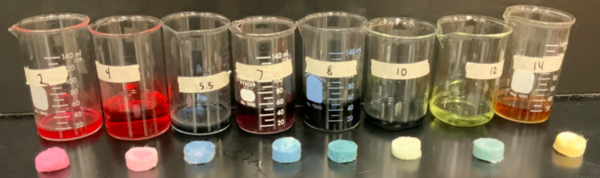
One important factor that contributes to human cancers is accumulated damage to cells' DNA due to the oxidative stress caused by free radicals. In this study, the authors investigate the effects of several different tea leaf extracts on oxidative stress in cultured human prostate cells to see if antioxidants in the tea leaves could help protect cells from this type of DNA damage. They found that all four types of tea extract (as well as direct application of the antioxidant EGCG) improved the outcomes for the cultured cells, with white tea extract having the strongest effect. This research suggests that tea extracts and the antioxidants that they contain may have applications in the treatment of the many diseases associated with cellular DNA damage, including cancer.
Anti-diabetic drugs like Metformin are known to increase gut permeability, and this has a negative impact on patient health. These authors hypothesized that this can be mitigated using purple sweet potato extract, which is high anthocyanin content, that feeds bacteria metabolism to decrease gut permeability.