Browse Articles

Effects of Ocean Acidification on Marine Calcium Carbonate

Prahalad et al. | Jul 31, 2020

Effects of Ocean Acidification on Marine Calcium Carbonate

Industrialization has transformed human life and improved it for many. Nonetheless, a side effect has been an increase in chemical waste, which when not disposed of properly, has detrimental effects on surrounding habitats. An increase in ocean acidification could potentially affect many forms of life, disrupting the ecological balance in unforeseeable ways. In this article the authors explore the effect of acidification on corals and shells, and observe that an increase in ocean acidity has a significant effect on corals, but not shells. This illustrates how acidification could negatively affect marine life, and calls our attention to managing the factors that contribute to increasing the pH of the Earth's water bodies.

Read More...
Development of a Novel Treatment Strategy to Treat Parkinsonian Neurodegeneration by Targeting Both Lewy Body Aggregation and Dopaminergic Neuronal Degradation in a Drosophila melanogaster Model

Sama et al. | Sep 25, 2019

Development of a Novel Treatment Strategy to Treat Parkinsonian Neurodegeneration by Targeting Both Lewy Body Aggregation and Dopaminergic Neuronal Degradation in a <em>Drosophila melanogaster</em> Model

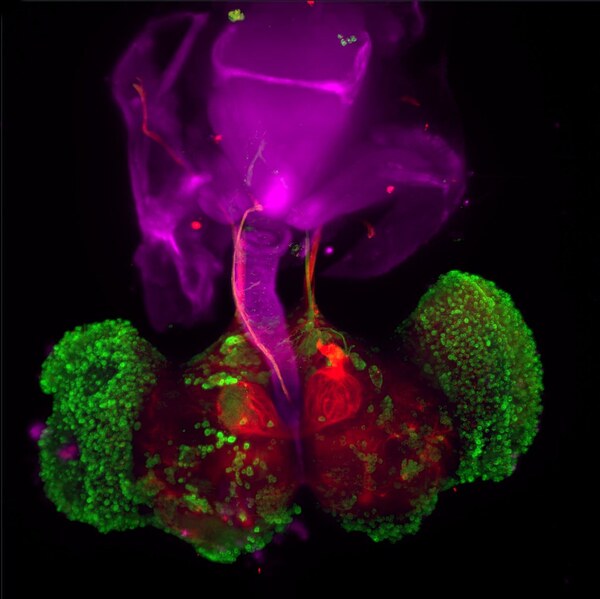
In this article the authors address the complex and life quality-diminishing neurodegenerative disease known as Parkinson's. Although genetic and/or environmental factors contribute to the etiology of the disease, the diagnostic symptoms are the same. By genetically modifying fruit flies to exhibit symptoms of Parkinson's disease, they investigate whether drugs that inhibit mitochondrial calcium uptake or activate the lysosomal degradation of proteins could improve the symptoms of Parkinson's these flies exhibit. The authors report the most promising outcome to be that when both types of drugs were used together. Their data provides encouraging evidence to support further investigation of the utility of such drugs in the treatment of human Parkinson's patients.

Read More...

Mitigation of ultraviolet solar radiation involving calcite

Nare et al. | Oct 10, 2026

Mitigation of ultraviolet solar radiation involving calcite

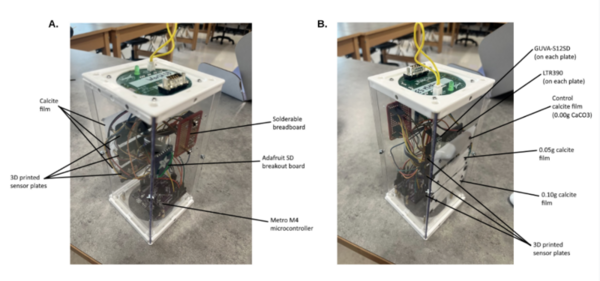
This study tested whether calcite, a safe and naturally occurring mineral, can block ultraviolet (UV) radiation when used in solar geoengineering. Students launched a high‑altitude balloon carrying UV sensors and calcite‑coated sheets to measure how much UV light passed through different calcite concentrations. Their results showed that calcite significantly reduces UV transmission, suggesting it may be a promising material for future stratospheric aerosol injection to help mitigate climate change.

Read More...

Effects of various alkaline carbonic solutions on the growth of the freshwater algae Chlorophyceae

Jani et al. | Aug 11, 2023

Effects of various alkaline carbonic solutions on the growth of the freshwater algae Chlorophyceae
Image credit: Jordan Whitfield

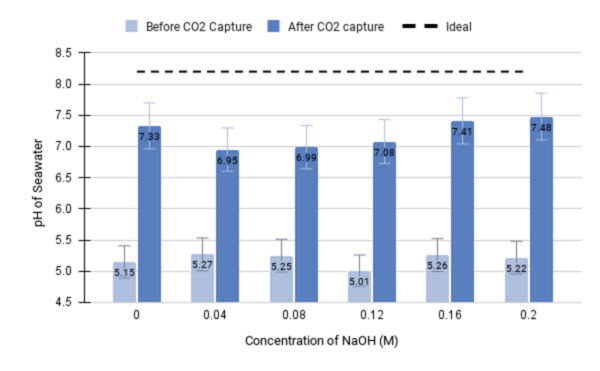
Modern day fossil fuels are prone to polluting our environment, which can provide major habitat loss to many animals in our ecosystems. Algae-based biofuels have become an increasingly popular alternative to fossil fuels because of their sustainability, effectiveness, and environmentally-friendly nature. To encourage algae growth and solidify its role as an emerging biofuel, we tested basic (in terms of pH) solutions on pond water to determine which solution is most efficient in inducing the growth of algae.

Read More...

Testing HCN1 channel dysregulation in the prefrontal cortex using a novel piezoelectric silk neuromodulator

Mathew et al. | May 05, 2021

Testing HCN1 channel dysregulation in the prefrontal cortex using a novel piezoelectric silk neuromodulator

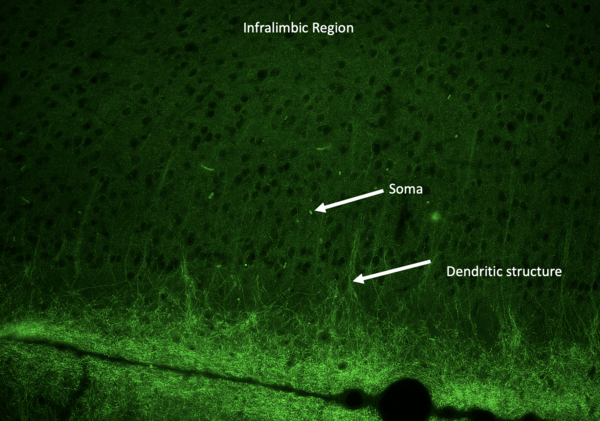
Although no comprehensive characterization of schizophrenia exists, there is a general consensus that patients have electrical dysfunction in the prefrontal cortex. The authors designed a novel piezoelectric silk-based implant and optimized electrical output through the addition of conductive materials zinc oxide (ZnO) and aluminum nitride (AlN). With further research and compatibility studies, this implant could rectify electrical misfiring in the infralimbic prefrontal cortex.

Read More...