Browse Articles

Effects of Wi-Fi EMF on Drosophila melanogaster

Anand et al. | Jan 29, 2020

Effects of Wi-Fi EMF on <em>Drosophila melanogaster</em>

While increased access to Wi-Fi has been a great advancement, we have a limited understanding if there are any health effects on animals. In this study, Anand and Anand exposed fruit flies (Drosophila melanogaster) to different concentrations of Wi-Fi electromagnetic fields, and observed effects on their reproduction and survivability.

Read More...

Drosophila proteins as human surrogates for early drug discovery: Findings from detailed structural analysis

Shankar et al. | Oct 11, 2026

<i>Drosophila</i> proteins as human surrogates for early drug discovery: Findings from detailed structural analysis

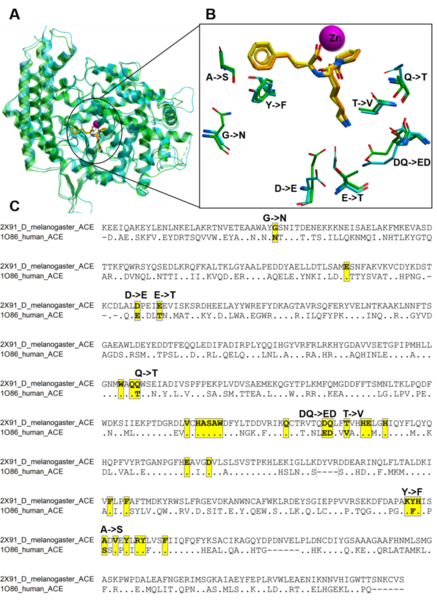
This study examines the possibility of utilizing proteins from Drosophila melanogaster in early drug discovery. Structural and sequence analysis of five diverse Drosophila proteins and its human homologs were conducted. Drosophila proteins with high conservation of amino acids at functionally significant positions are better candidates for use as human surrogate in drug discovery efforts.

Read More...

Which fruit peel helps retain the most soil moisture?

Parashar et al. | Jan 09, 2024

Which fruit peel helps retain the most soil moisture?
Image credit: Anshu A

Here, the authors investigated the ability to use fruit peels to help soil retain moisture, a property that is essential to agriculture. Across a 96-hour observation period, orange, banana, and kiwi peel water emulsions were evaluated for their effects on soil moisture. They found that orange peels retained the most moisture, but banana and kiwi peels also offered improvements over their control sample.

Read More...

Efficacy of Rotten and Fresh Fruit Extracts as the Photosensitive Dye for Dye-Sensitized Solar Cells

Jayasankar et al. | Jan 16, 2019

Efficacy of Rotten and Fresh Fruit Extracts as the Photosensitive Dye for Dye-Sensitized Solar Cells

Dye-sensitized solar cells (DSSC) use dye as the photoactive material, which capture the incoming photon of light and use the energy to excite electrons. Research in DSSCs has centered around improving the efficacy of photosensitive dyes. A fruit's color is defined by a unique set of molecules, known as a pigment profile, which changes as a fruit progresses from ripe to rotten. This project investigates the use of fresh and rotten fruit extracts as the photoactive dye in a DSSC.

Read More...

Development of novel biodegradable bioplastics for packaging film using mango peels

Wang et al. | Apr 06, 2025

Development of novel biodegradable bioplastics for packaging film using mango peels
Image credit: JACQUELINE BRANDWAYN

Here the authors explored the development of biodegradable bioplastic films derived from mango peels as a sustainable solution to plastic pollution and greenhouse gas emissions from fruit waste. They optimized the film's mechanical properties and water resistance through adjusting processing conditions and incorporating plasticizers and a hydrophobic coating, ultimately demonstrating its potential as a bacteriostatic and biodegradable alternative to conventional plastic food wrap.

Read More...

Development of a Novel Treatment Strategy to Treat Parkinsonian Neurodegeneration by Targeting Both Lewy Body Aggregation and Dopaminergic Neuronal Degradation in a Drosophila melanogaster Model

Sama et al. | Sep 25, 2019

Development of a Novel Treatment Strategy to Treat Parkinsonian Neurodegeneration by Targeting Both Lewy Body Aggregation and Dopaminergic Neuronal Degradation in a <em>Drosophila melanogaster</em> Model

In this article the authors address the complex and life quality-diminishing neurodegenerative disease known as Parkinson's. Although genetic and/or environmental factors contribute to the etiology of the disease, the diagnostic symptoms are the same. By genetically modifying fruit flies to exhibit symptoms of Parkinson's disease, they investigate whether drugs that inhibit mitochondrial calcium uptake or activate the lysosomal degradation of proteins could improve the symptoms of Parkinson's these flies exhibit. The authors report the most promising outcome to be that when both types of drugs were used together. Their data provides encouraging evidence to support further investigation of the utility of such drugs in the treatment of human Parkinson's patients.

Read More...

The effects of a high-sucrose diet on the survival of Drosophila melanogaster from a bacterial infection

Warwick et al. | May 22, 2026

The effects of a high-sucrose diet on the survival of <i>Drosophila melanogaster</i> from a bacterial infection

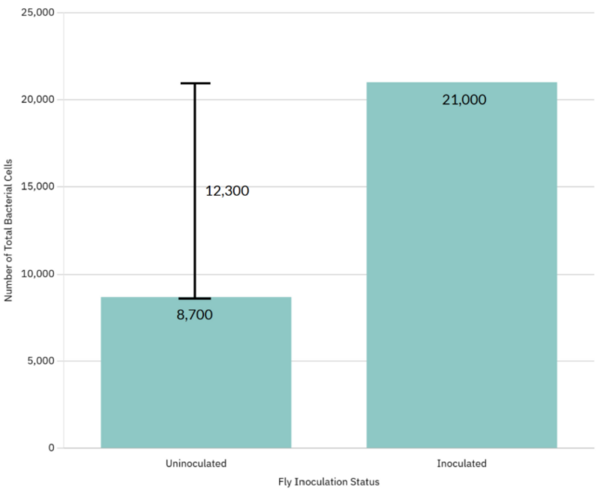
Excess sucrose consumption has been associated with several health problems, including inflammation and potential negative effects on immune function. However, the exact relationship between sucrose intake and immunity remains unclear, especially during bacterial infections. This study examined how sucrose intake affected the survival of fruit flies following oral infection with the bacterial pathogen Serratia marcescens.

Read More...