Browse Articles

Study of PINN sensor layout in evaluating WSS with application to patient-specific carotid flow

Nie et al. | Sep 04, 2026

Study of PINN sensor layout in evaluating WSS with application to patient-specific carotid flow

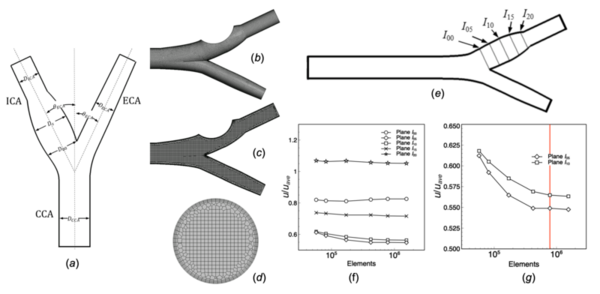
Physics‑Informed Neural Networks (PINNs) offer a promising way to estimate blood‑flow behavior in arteries, especially near the vessel wall where traditional methods struggle. In this study, students tested how sensor density and placement affect PINN accuracy in modeling carotid artery flow and found that accuracy improves up to a moderate sensor density and depends strongly on how close sensors are placed to the arterial wall. Applying the optimized configuration to a patient‑specific carotid model produced velocity predictions closely matching computational fluid dynamics results, highlighting PINNs’ potential for future personalized cardiovascular assessment.

Read More...
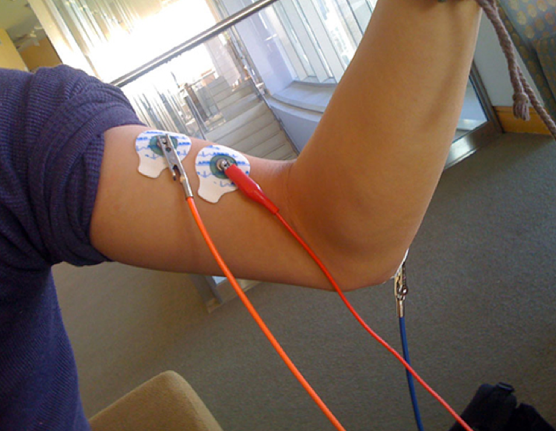
Starts and Stops of Rhythmic and Discrete Movements: Modulation in the Excitability of the Corticomotor Tract During Transition to a Different Type of Movement

Lim et al. | Aug 27, 2018

Starts and Stops of Rhythmic and Discrete Movements: Modulation in the Excitability of the Corticomotor Tract During Transition to a Different Type of Movement

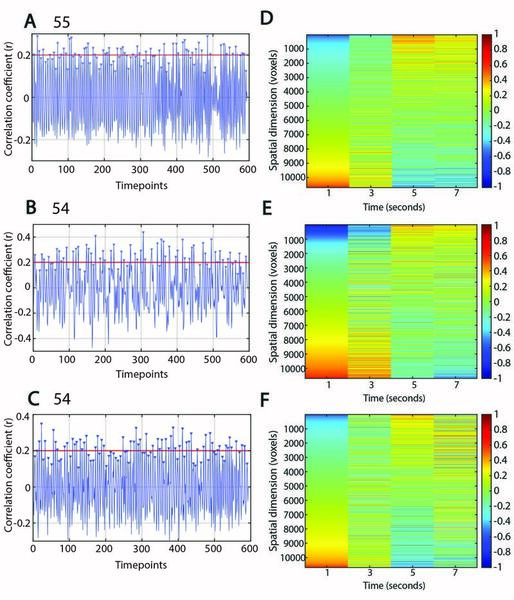
Control of voluntary and involuntary movements is one of the most important aspects of human neurological function, but the mechanisms of motor control are not completely understood. In this study, the authors use transcranial magnetic stimulation (TMS) to stimulate a portion of the motor cortex while subjects performed either discrete (e.g. throwing) or rhythmic (e.g. walking) movements. By recording electrical activity in the muscles during this process, the authors showed that motor evoked potentials (MEPs) measured in the muscles during TMS stimulation are larger in amplitude for discrete movements than for rhythmic movements. Interestingly, they also found that MEPs during transitions between rhythmic and discrete movements were nearly identical and larger in amplitude than those recorded during either rhythmic or discrete movements. This research provides important insights into the mechanisms of neurological control of movement and will serve as the foundation for future studies to learn more about temporal variability in neural activity during different movement types.

Read More...

The Role of Temporal Lobe Epilepsy in Cardiac Structure and Function

Choi et al. | Aug 15, 2018

The Role of Temporal Lobe Epilepsy in Cardiac Structure and Function

Cardiac autonomic and structural changes may occur in temporal lobe epilepsy patients and contribute to the risk of sudden unexpected death in epilepsy patients. Choi and colleagues reviewed clinical charts to obtain patients’ lifetime seizure count, antiepileptic drug use, and history of heart disease, followed by transthoracic echocardiogram to calculate left ventricle dimensions, ejection fraction, and left ventricle mass. By comparing epilepsy patients to control subjects, they found that epilepsy patients had thinner left ventricle walls and smaller ejection fraction, but with no significant difference in left ventricle mass.

Read More...