Browse Articles

Measuring the effect of early universe dark matter on the primordial values of helium-4 and deuterium

Pal et al. | Apr 29, 2026

Measuring the effect of early universe dark matter on the primordial values of helium-4 and deuterium

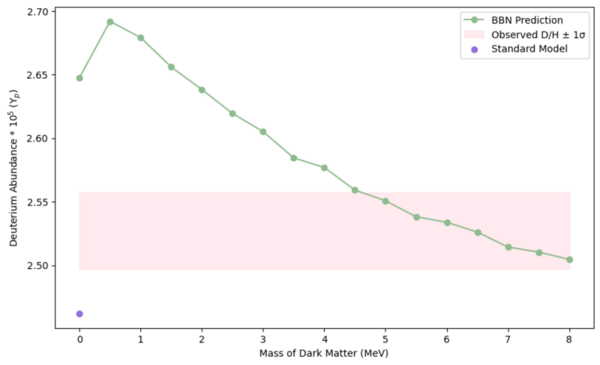
Recent observations by the “Extremely Metal-Poor Representatives Explored by the Subaru Survey” (EMPRESS) collaboration found normal deuterium levels but unexpectedly low helium-4, challenging current cosmological theories. This study used simulations with the PRyMordial package to test whether dark matter particles interacting with neutrinos in the early universe could explain the discrepancy.

Read More...

Using machine learning to detect outliers of red clump stars

Meng et al. | Oct 10, 2026

Using machine learning to detect outliers of red clump stars

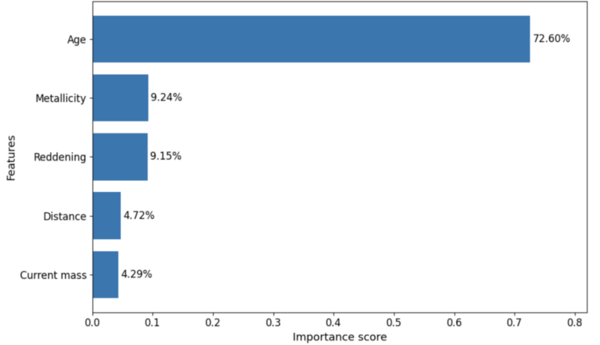
Machine learning offers a powerful way to analyze large astronomical datasets and identify stars with unusual properties. In this study, students used Extreme Gradient Boosting and Isolation Forest models to investigate why some red clump stars deviate from their expected luminosities. Their results show that stellar age plays a much stronger role than metallicity in driving luminosity variation, and the models successfully detected outlier stars that may affect distance measurements in galactic studies.

Read More...

Comparative Analysis of Vital Capacities of Athletes, Singers and Other Students of Age 13-14 Years: A Cross-Sectional Observational Study

Taneja et al. | Sep 30, 2019

Comparative Analysis of Vital Capacities of Athletes, Singers and Other Students of Age 13-14 Years: A Cross-Sectional Observational Study

Physical activity when performed regularly has beneficial effects on all systems of the body, including pulmonary functions. This study, conducted at Springdales School in Dhaula Kuan, New Delhi, aimed to determine the effect of sports and singing on the vital capacity (the maximum amount of air a person can expel from the lungs after a maximum inhalation), an important measure of pulmonary health.

Read More...

Locating sources of a high energy cosmic ray extensive air shower using HiSPARC data

Aziz et al. | Oct 24, 2023

Locating sources of a high energy cosmic ray extensive air shower using HiSPARC data

Using the data provided by the University of Twente High School Project on Astrophysics Research with Cosmics (HiSPARC), an analysis of locations for possible high-energy cosmic ray air showers was conducted. An example includes an analysis conducted of the high-energy rain shower recorded in January 2014 and the use of Stellarium™ to discern its location.

Read More...

Don’t Waste the Medical Waste: Reducing Improperly Classified Hazardous Waste in a Medical Facility

Hemani et al. | Jun 20, 2018

Don’t Waste the Medical Waste: Reducing Improperly Classified Hazardous Waste in a Medical Facility

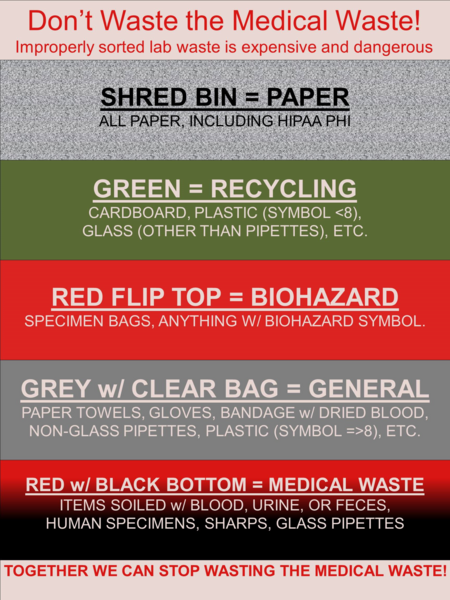
Hemani et al. tackled the problem of rampant hospital waste by implementing staff training to help inform hospital workers about proper waste disposal. The authors observed a significant increase in proper waste disposal after the training, showing that simple strategies, such as in-person classroom training and posters, can have a profound effect on limiting improper waste handling.

Read More...

The ecological mysteries of Opheodesoma spectabilis : Seasonal trends, habitat preferences, and climate responses

Watson et al. | Jul 26, 2026

The ecological mysteries of <i>Opheodesoma spectabilis</i>	: Seasonal trends, habitat preferences, and climate responses

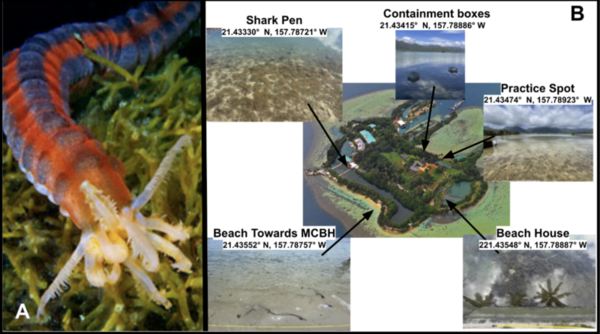
This study examines how environmental conditions influence the abundance and ecological role of the sea cucumber Opheodesoma spectabilis in Kāneʻohe Bay. Field observations and laboratory experiments showed that the species is more common in algae-dominated sandy habitats, where it improves water clarity and increases dissolved oxygen through bioturbation. However, exposure to very high temperatures caused rapid mortality, suggesting that marine heat waves could threaten this species and the ecological functions it provides.

Read More...