Browse Articles

Exploring differences in men’s marijuana consumption and cigarette smoking by race and citizenship status

Miriyala et al. | Sep 04, 2024

Exploring differences in men’s marijuana consumption and cigarette smoking by race and citizenship status

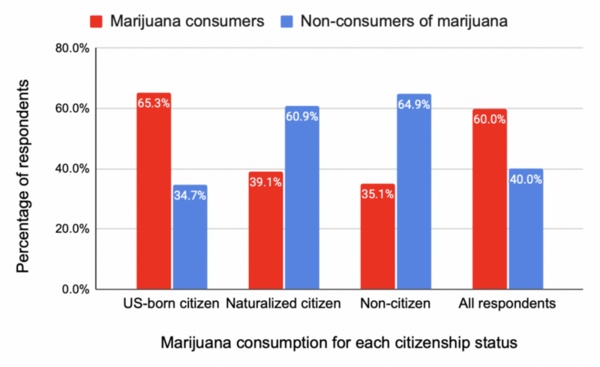
This study examined the relationship between citizenship status, racial background, and the use of marijuana and cigarettes among males in California using data from the 2017–2018 California Health Interview Survey. Findings indicated that non-citizens and naturalized citizens were less likely to use marijuana compared to US-born citizens, while Asian and Latino males were less likely to consume marijuana than White males. Additionally, various racial groups were more likely to smoke cigarettes compared to White males, suggesting that targeted health interventions based on citizenship status and race could be beneficial.

Read More...

Risk assessment modeling for childhood stunting using automated machine learning and demographic analysis

Sirohi et al. | Sep 25, 2022

Risk assessment modeling for childhood stunting using automated machine learning and demographic analysis

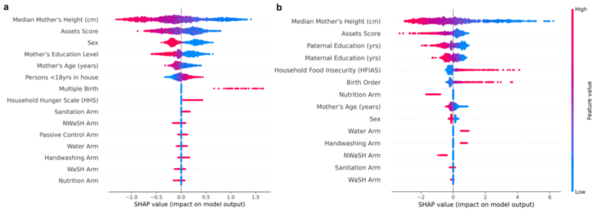
Over the last few decades, childhood stunting has persisted as a major global challenge. This study hypothesized that TPTO (Tree-based Pipeline Optimization Tool), an AutoML (automated machine learning) tool, would outperform all pre-existing machine learning models and reveal the positive impact of economic prosperity, strong familial traits, and resource attainability on reducing stunting risk. Feature correlation plots revealed that maternal height, wealth indicators, and parental education were universally important features for determining stunting outcomes approximately two years after birth. These results help inform future research by highlighting how demographic, familial, and socio-economic conditions influence stunting and providing medical professionals with a deployable risk assessment tool for predicting childhood stunting.

Read More...

The Parent-Child Relationship During the College Planning Process

Vanden et al. | Sep 19, 2019

The Parent-Child Relationship During the College Planning Process

To explore the parent-child relationship during college planning, authors surveyed high school juniors from two private schools (boarding school vs. non-boarding parochial school). After coding, survey answers indicate students at boarding schools were found to have greater fear of parental control and disappointment, while students at non-boarding parochial schoolexpressed a greater need for parental assistance.

Read More...

Optimizing airfoil shape for small, low speed, unmanned gliders: A homemade investigation

Lara et al. | Mar 30, 2023

Optimizing airfoil shape for small, low speed, unmanned gliders: A homemade investigation
Image credit: Konrad Wojciechowski

Here, the authors sought to identify a method to optimize the lift generated by an airfoil based solely on its shape. By beginning with a Bernoullian model to predict an optimized wing shape, the authors then tested their model against other possible shapes by constructing them from Styrofoam and testing them in a small wind tunnel. Contrary to their hypothesis, they found their expected optimal airfoil shape did not result in the greatest lift generation. They attributed this to a variety of confounding variables and concluded that their results pointed to a correlation between airfoil shape and lift generation.

Read More...

siRNA-dependent KCNMB2 silencing inhibits lung cancer cell proliferation and promotes cell death

Jeong et al. | Nov 01, 2022

siRNA-dependent KCNMB2 silencing inhibits lung cancer cell proliferation and promotes cell death

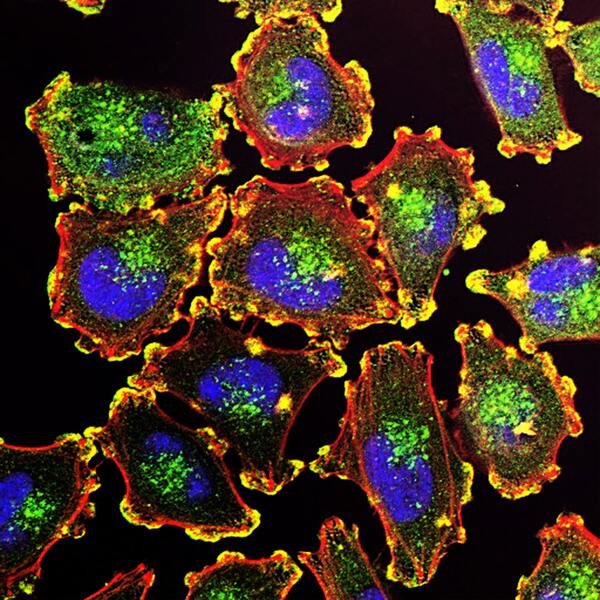
Here, seeking to better understand the genetic associations underlying non-small cell lung cancer, the authors screened hundreds of genes, identifying that KCNMB2 upregulation was significantly correlated with poor prognoses in lung cancer patients. Based on this, they used small interfering RNA to decrease the expression of KCNMB2 in A549 lung cancer cells, finding decreased cell proliferation and increased lung cancer cell death. They suggest this could lead to a new potential target for lung cancer therapies.

Read More...