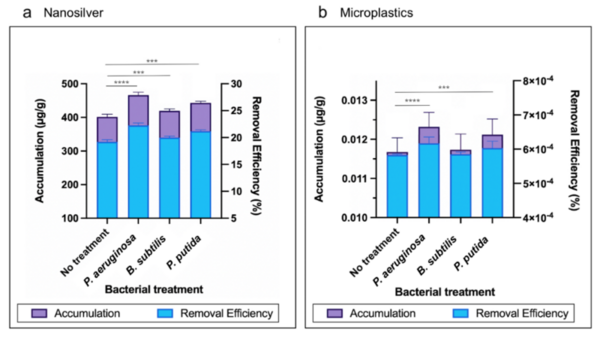
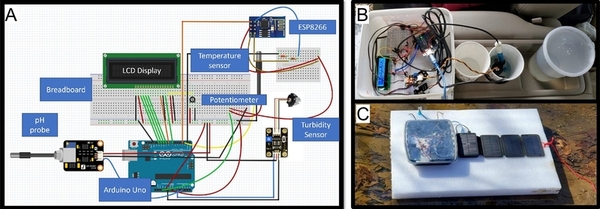
The authors looked at phytoremediation, the process by which plants are used to remove pollutants from our environment, and the ability of Lemna minor to perform phytoremediation in various simulated polluted environments. The authors found that L. minor could remove pollutants from the environment and that the addition of bacteria increased this removal.
Here, beginning from an initial interest in the possibility to use a computer to automatically solve a geometry diagram parser, the authors developed their own Fast Geometry Diagram Parser (FastGDP) that uses clustering and corner information. They compared their own methods to a more widely available, method, GeoSolver, finding their own to be an order of magnitude faster in most cases that they considered.
The disinterested willingness a person has for helping others is known as altruism. But is this willingness to help others dependent on external factors that make you more or less inclined to be generous? We hypothesized that generosity in adolescents would depend on external factors and that these factors would change the amount of help given. To evaluate altruism and generosity, we conducted non-anonymous and anonymous variations of the dictator game and ultimatum game experiments and explored the role of anonymity, fairness, and reciprocity in high school students.
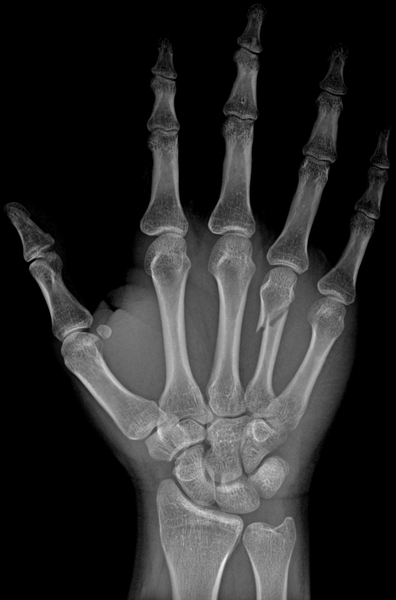
Scientists are always on the quest to improve the body's healing abilities and broken bones are no exception. In this article, the authors investigate properties of 3D-printed biocompatible polymers used to improve bone healing. With such efforts, we can hope to, one day, improve bone scaffolding materials in ways that make the natural healing processes more efficient, reducing the time needed for recovery from bone fractures.
In this study, the effects of vitamin C, ginger, or curcumin supplements on C-reactive protein levels in healthy participants are determined in an eight-week open-label trial.
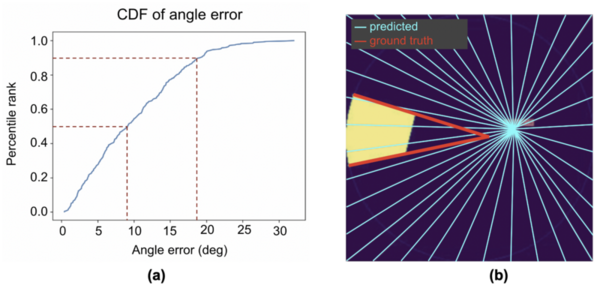
Robot-assisted minimally invasive surgery (RMIS) benefits from increased precision and faster recovery, with force feedback from the surgical tool being critical for control. Researchers tested the use of neural networks for detecting the vanishing point of the tool, a key element for force feedback.
Nonalcoholic fatty liver disease (NAFLD) is one of the most prevalent chronic liver diseases worldwide, but there are few studied warning signs for early detection of the disease. Here, researchers study alterations that occur in a mouse model of NAFLD, which indicate the onset of NAFLD sooner. Earlier detection of diseases can lead to better prevention and treatment.
Natural selection shapes the evolution of all organisms, and one question of interest is whether natural selection will reach a "stopping point": a stable, ideal, value for any particular trait. Madhan and Kanagavel tackle this question by building a computer simulation of trait evolution in organisms.
Many cases of viral hepatitis are easily preventable if caught early; however, a lack of public awareness regarding often leads to diagnoses near the final stages of disease when it is most lethal. Thus, we wanted to understand to what extent an individual's sex, age, education and country of residence (India or Singapore) impacts disease identification. We sent out a survey and quiz to residents in India (n = 239) and Singapore (n = 130) with questions that test their knowledge and awareness of the disease. We hypothesized that older and more educated individuals would score higher because they are more experienced, but that the Indian population will not be as knowledgeable as the Singaporean population because they do not have as many resources, such as socioeconomic access to schools and accessibility to healthcare, available to them. Additionally, we predicted that there would not be any notable differences between make and females. The results revealed that the accuracy for all groups we looked at was primarily below 50%, demonstrating a severe knowledge gap. Therefore, we concluded that if more medical professionals discussed viral hepatitis during hospital visits and in schools, patients can avoid the end stages of the disease in notable cases.