Browse Articles

Exploring the Factors that Drive Coffee Ratings

Agarwal et al. | May 19, 2025

Exploring the Factors that Drive Coffee Ratings

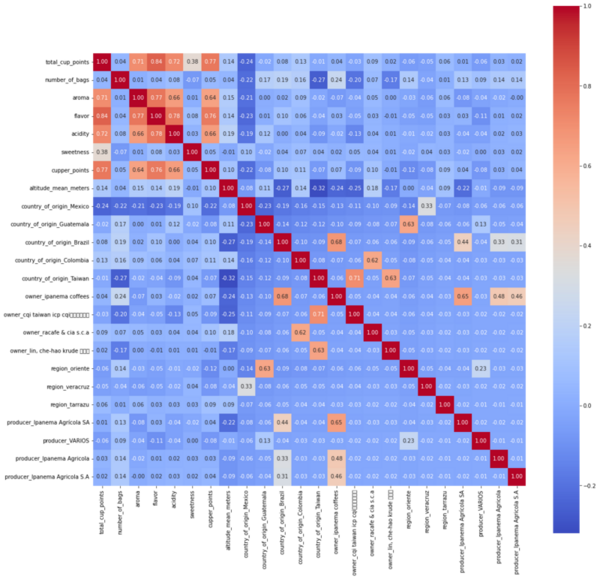
This study explores the factors that influence coffee quality ratings using data from the Coffee Quality Institute. Through a regression model based on gradient descent, the authors aimed to predict coffee ratings (total cup points) and hypothesized that sweetness and the coffee producer would be the most influential factors.

Read More...

Analysis of electrodialysis as a method of producing potable water

Shen et al. | May 03, 2024

Analysis of electrodialysis as a method of producing potable water

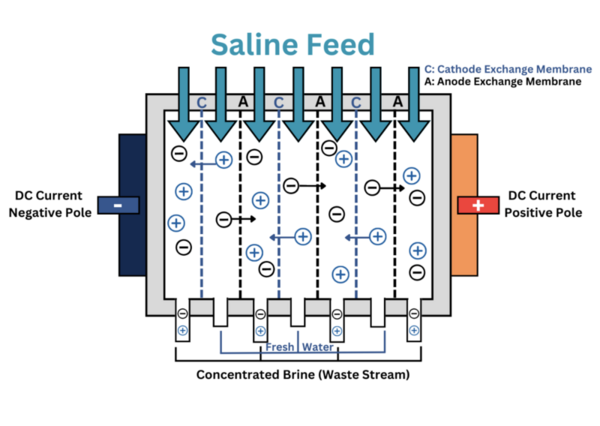
Here, seeking a way to convert the vast quantity of seawater to drinking water, the authors investigated the purification of seawater to drinking water through electrodialysis. Using total dissolved solids (TDS) as their measure, they found that electrodialysis was able to produce deionized water with TDS values under the acceptable range for consumable water.

Read More...

Impact of hog farming on water quality of aquatic environments in North Carolina

Kancharla et al. | Aug 08, 2023

Impact of hog farming on water quality of aquatic environments in North Carolina

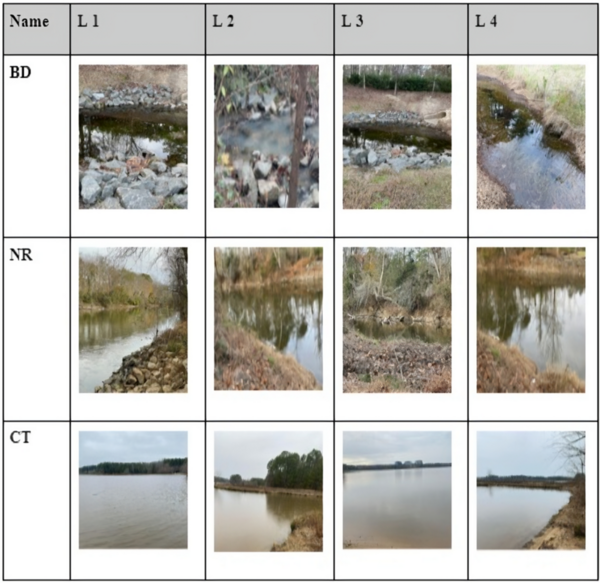
This study collected samples from water bodies near hog farms and an aquatic environment not near a hog farm. It was hypothesized that water bodies near the hog farms would have lower water quality with higher turbidity, total dissolved solids (TDS), and pH than the water body not in proximity to a hog farm because of water contamination with hog waste. Results showed that the turbidity was 4–6 times higher, TDS was 1.5–2 times higher, and pH was 3 units higher in the 2 experimental locations compared to the control location. This study and its findings are important for understanding the impact of hog farming on the proximal water bodies.

Read More...

Exponential regression analysis of the Canadian Zero Emission Vehicle market’s effects on climate emissions in 2030

Ajay et al. | Feb 25, 2023

Exponential regression analysis of the Canadian Zero Emission Vehicle market’s effects on climate emissions in 2030
Image credit: Andrew Roberts

Here, the authors explored how the sale and use of electric vehicles could reduce emissions from the transport industry in Canada. By fitting the sale of total of electric vehicles with an exponential model, the authors predicted the number of electric vehicle sales through 2030 and related that to the average emission for such vehicles. Ultimately, they found that the sale and use of electric vehicles alone would likely not meet the 45% reduction in emissions from the transport industry suggested by the Canadian government

Read More...

Investigation of unknown causes of uveal melanoma uncovers seven recurrent genetic mutations

Nanda et al. | Aug 25, 2022

Investigation of unknown causes of uveal melanoma uncovers seven recurrent genetic mutations

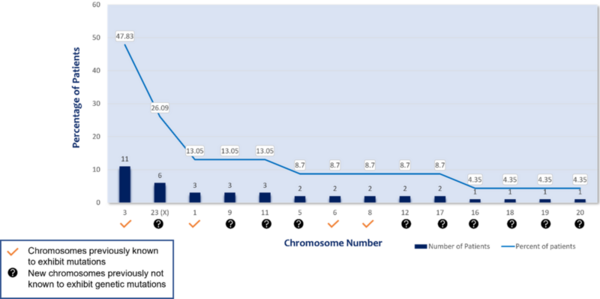
Uveal melanoma (UM) is a rare subtype of melanoma but the most frequent primary cancer of the eye in adults. The goal of this study was to research the genetic causes of UM through a comprehensive frequency analysis of base-pair mismatches in patient genomes. Results showed a total of 130 genetic mutations, including seven recurrent mutations, with most mutations occurring in chromosomes 3 and X. Recurrent mutations varied from 8.7% to 17.39% occurrence in the UM patient sample, with all mutations identified as missense. These findings suggest that UM is a recessive heterogeneous disease with selective homozygous mutations. Notably, this study has potential wider significance because the seven genes targeted by recurrent mutations are also involved in other cancers.

Read More...

Bacteroides thetaiotaomicron Growth Numbers Are Unchanged in the Presence of Yogurt

Phan et al. | Dec 29, 2016

<i>Bacteroides thetaiotaomicron</i> Growth Numbers Are Unchanged in the Presence of Yogurt

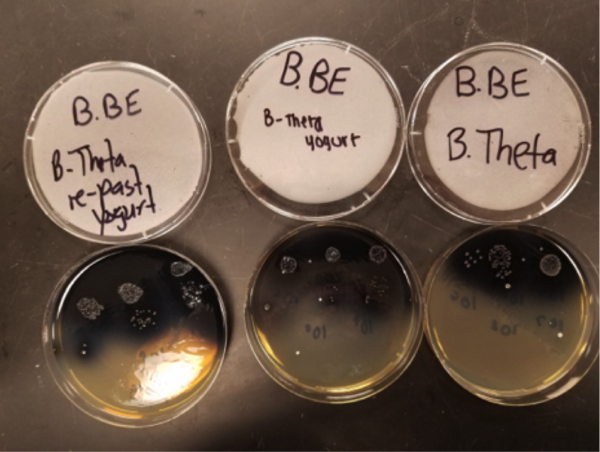
Disruptions to the microbiome, specifically the imbalance in the two major phyla, the Firmicutes and the Bacteroidetes, have been linked to the development of obesity. This study explored whether or not Fage plain total 0% Greek yogurt, which contains live and active bacterial cultures belonging to the Firmicute phylum, could decrease the numbers of Bacteroides thetaiotaomicron, an organism found in the human gut that belongs to the Bacteroidetes phylum.

Read More...

The Protective Effects of Panax notoginseng Saponin on the Blood-Brain Barrier via the Nrf2/ARE Pathway in bEnd3 Cells

Yang et al. | Apr 06, 2016

The Protective Effects of <i>Panax notoginseng</i> Saponin on the Blood-Brain Barrier via the Nrf2/ARE Pathway in bEnd3 Cells

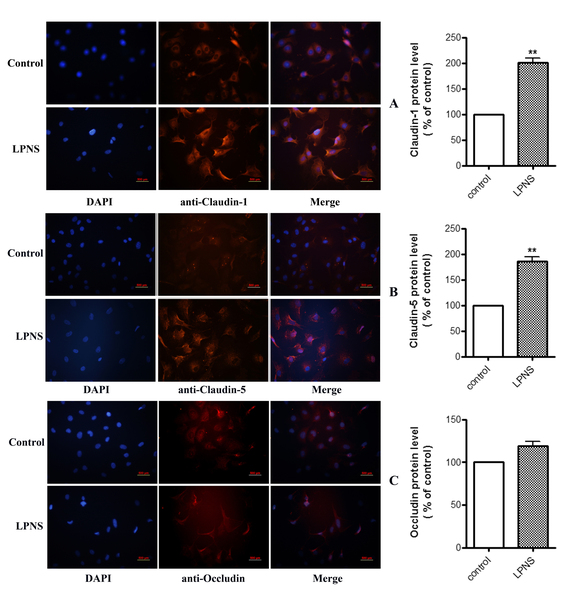
Disruption of the blood-brain barrier (BBB) is related to many neurological disorders, and can be caused by oxidative stress to cerebral microvascular endothelial cells (CMECs) composing the BBB. The authors of the paper investigated the protective effects of the total saponins in the leaves of Panax notoginseng (LPNS) on oxidative-stress-induced damage in a mouse cerebral microvascular endothelial cell line.

Read More...

Legacy mercury, reservoir dynamics, and dredging effects on methylmercury in San Francisco Bay

Silver et al. | Aug 24, 2026

Legacy mercury, reservoir dynamics, and dredging effects on methylmercury in San Francisco Bay

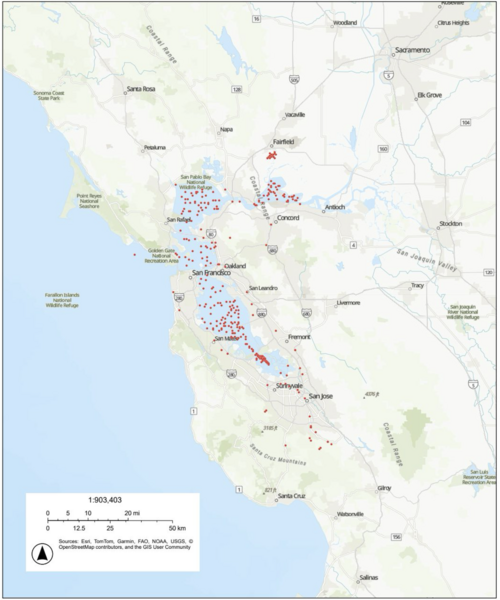
This study analyzes over two decades of monitoring data (1999-2022) to investigate how legacy mining, reservoir water releases, and dredging activities influence toxic methylmercury (MeHg) levels in San Francisco Bay. The findings reveal a significant delayed correlation between river flow and San Francisco Bay MeHg, and counter to the authors' hypothesis, a strong association between increased MeHg concentrations in the bay and both total annual dredging volume and beneficial sediment reuse / upland sediment disposal.

Read More...

Impact of Silverado Fire on soil carbon

Choi et al. | Feb 20, 2025

Impact of Silverado Fire on soil carbon

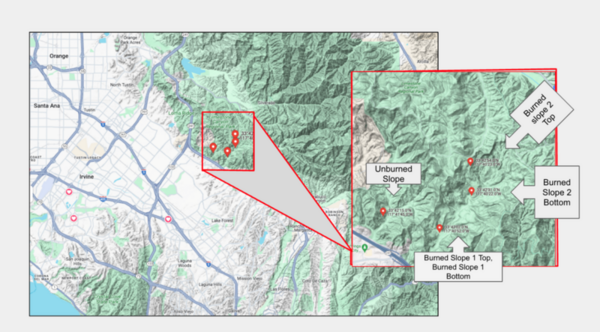
Soil stores three times more carbon than the atmosphere, making small changes in its storage and release crucial for carbon cycling and climate models. This study examined the impact of the 2020 California Silverado Fire on pyrogenic carbon (PyC) deposits using nitrogen and carbon isotopes as proxies. While the results showed significant variability in δ¹⁵N, δ¹³C, total carbon, and total nitrogen across sites, they did not support the hypothesis that wildfire increases δ¹⁵N while keeping δ¹³C constant, emphasizing the need for location-based controls when using δ¹⁵N to track PyC.

Read More...