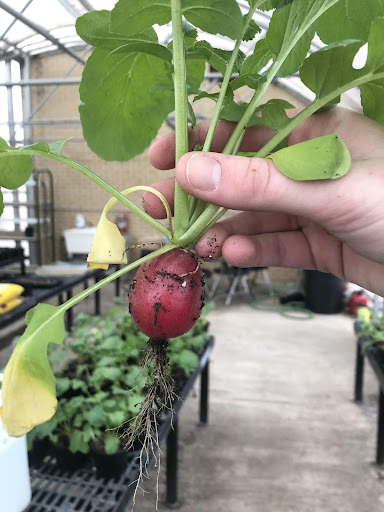
This study is centered around developing biofortification methods: the authors test whether the amount of calcium available to growing crops translates into more calcium present in the crops.
Read More...Biofortification of Raphanus sativus through irrigation with Ca2+ solutions does not increase calcium content
This study is centered around developing biofortification methods: the authors test whether the amount of calcium available to growing crops translates into more calcium present in the crops.
Read More...De novo design of a dual-target inhibitor against tau phosphorylation and acetylation for Alzheimer's therapy
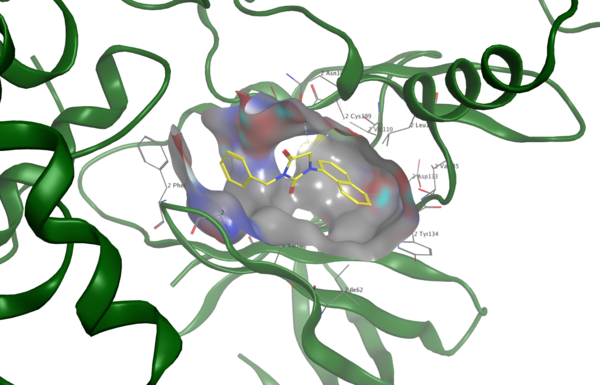
The authors use computational methods to compare tau acetylation to the better studied tau phosphorylation in Alzheimer's disease and then design and computationally test a new drug to prevent abnormal post-translational modifications of tau.
Read More...Modeling the moving sofas in circular hallways using geometric methods
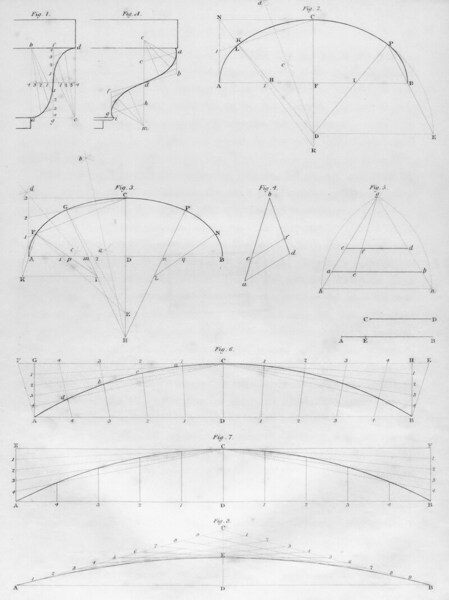
Investigation of the largest rigid shape that can be moved through a circular hallway of unit width with an arbitrary turn angle
Read More...Comparison of spectral subtraction noise reduction algorithms

Here, the authors investigated methods to reduce noise in audio composed of real-word sounds. They specifically used two spectral subtraction noise reduction algorithms: stationary and non-stationary finding notable differences in noise improvements depending on the noise sources.
Read More...Similarity Graph-Based Semi-supervised Methods for Multiclass Data Classification

The purpose of the study was to determine whether graph-based machine learning techniques, which have increased prevalence in the last few years, can accurately classify data into one of many clusters, while requiring less labeled training data and parameter tuning as opposed to traditional machine learning algorithms. The results determined that the accuracy of graph-based and traditional classification algorithms depends directly upon the number of features of each dataset, the number of classes in each dataset, and the amount of labeled training data used.
Read More...The effects of algaecides on Spirulina major and non-target organism Daphnia magna
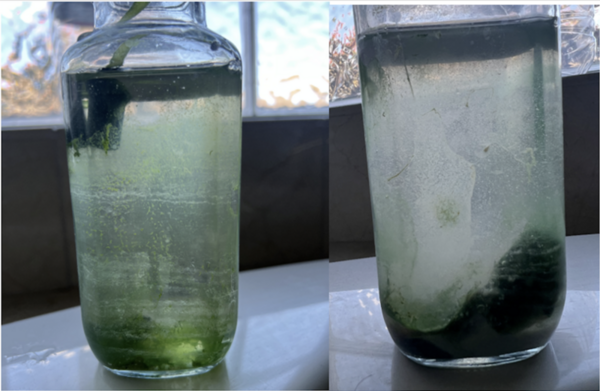
Algal blooms pose a threat to ecosystems, but the methods used to combat these blooms might harm more than just the algae. Halepete, Graham, and Lowe-Schmahl demonstrate negative effects of anti-algae treatments on a cyanobacterium (Spirulina major), and the water fleas (Daphnia magna) that live alongside these cyanobacteria.
Read More...Prediction of molecular energy using Coulomb matrix and Graph Neural Network
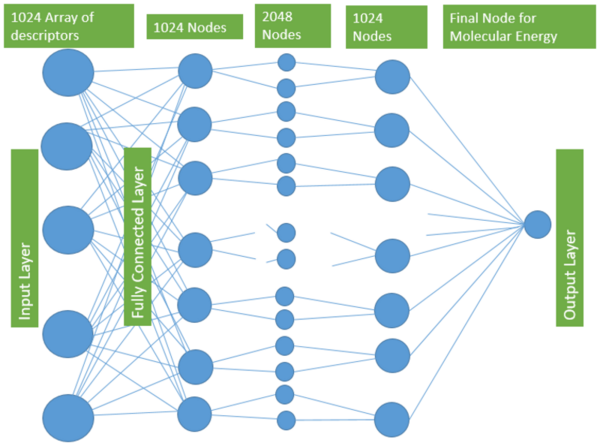
With molecular energy being an integral element to the study of molecules and molecular interactions, computational methods to determine molecular energy are used for the preservation of time and resources. However, these computational methods have high demand for computer resources, limiting their widespread feasibility. The authors of this study employed machine learning to address this disadvantage, utilizing neural networks trained on different representations of molecules to predict molecular properties without the requirement of computationally-intensive processing. In their findings, the authors determined the Feedforward Neural Network, trained by two separate models, as capable of predicting molecular energy with limited prediction error.
Read More...Study of PINN sensor layout in evaluating WSS with application to patient-specific carotid flow
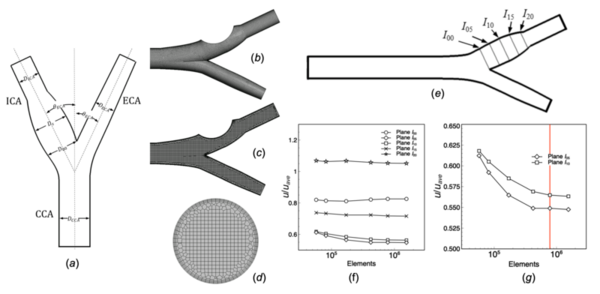
Physics‑Informed Neural Networks (PINNs) offer a promising way to estimate blood‑flow behavior in arteries, especially near the vessel wall where traditional methods struggle. In this study, students tested how sensor density and placement affect PINN accuracy in modeling carotid artery flow and found that accuracy improves up to a moderate sensor density and depends strongly on how close sensors are placed to the arterial wall. Applying the optimized configuration to a patient‑specific carotid model produced velocity predictions closely matching computational fluid dynamics results, highlighting PINNs’ potential for future personalized cardiovascular assessment.
Read More...In silico design of an epitope-based vaccine for Rocio virus using phage display and E. coli expression system
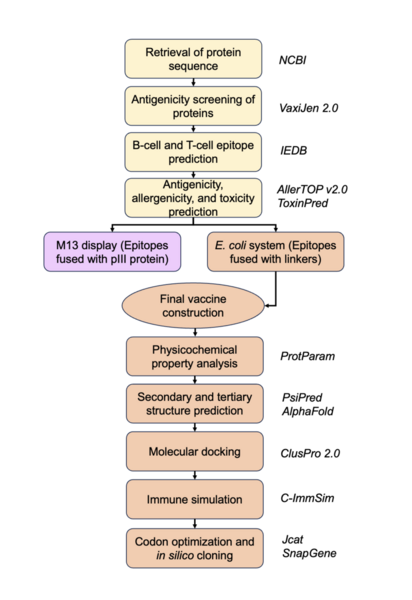
The explored the potential of an epitope-based vaccine for Rocio virus using computational methods and M13 bacteriophage technology. Researchers identified 30 promising B- and T-cell epitopes and designed vaccine candidates using both phage display and E. coli expression systems.
Read More...Optimized biochemical depolymerization of plastics from surgical face masks

The authors combine chemical, enzymatic, and microbial-based methods to optimize degradation of plastics within a surgical facemask.
Read More...