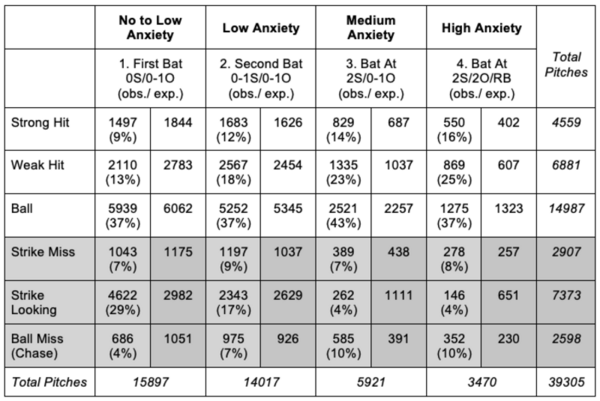
This study examined whether findings from laboratory studies of baseball cognition also apply during real games. Using 2024 MLB data from 30 players, researchers analyzed batting performance under different levels of feedback and anxiety.
The main goal of this study is to determine what demographics are related to tuberculosis incidence in the United States populations, particularly if changing demographics are related to differences in tuberculosis risk over two discrete time periods. The major finding is that in the two studied time periods, tuberculosis risk factors were somewhat consistent and may be influenced by things such as immigration, healthcare access, and race or ethnicity, although the top predictor did change.
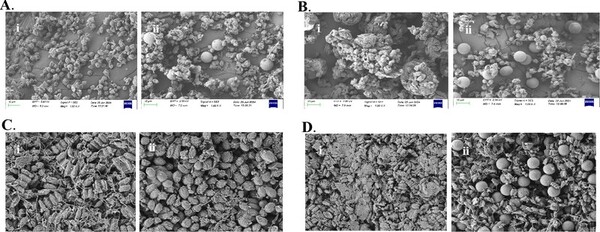
This paper looks at using spent coffee grounds as a partial substitute for titanium dioxide (TiO2) as a catalyst for chemical reactions. Using UV-Vis spectrophotometry, they found that adding the coffee grounds to TiO2 in a 3:1 ratio, there is still meaningful catalytic activity. This offers a cheaper solution than just using pure TiO2.
The authors test whether coating stainless steel orthopedic screws in silver will promote calcium precipitation to improve orthopedic implant integration into bone.
Autism Spectrum Disorder (ASD) and Alzheimer's Disease (AD) are distinct conditions, but research suggests a link, as individuals with ASD are 2.5 times more likely to develop AD. A study employing genome-wide association studies and Mendelian randomization revealed shared genetic factors, particularly in synaptic regulation pathways, that may increase the risk of AD in those with ASD. These findings provide insights into the genetic underpinnings connecting the two disorders.
The authors looked at the primary structure of lignin peroxidase in an attempt to identify mutations that would improve both the stability and solubility of the peroxidase protein. The goal is to engineer peroxidase enzymes that are stable to help break down polymers, such as PVC, into monomers that can be reused instead of going to landfills.
The authors looked at two peptides, gluteomorphin and casomorphin, that are present after the digestion of bread and cheese. As these peptides can bind opioid receptors the authors want to know if they could be addictive in the same way as conventional opioids (i.e., morphine) are known to be. Their results in a planaria model suggest that both of these peptides are addictive.