Browse Articles

Effectiveness of Biodegradable Plastic in Preventing Food Spoilage

Zhang et al. | Mar 20, 2012

Effectiveness of Biodegradable Plastic in Preventing Food Spoilage

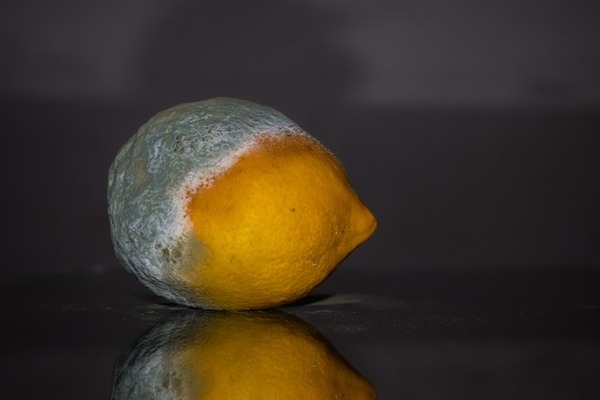
Most people put little thought into the type of plastic wrap they use to store their leftovers. This study investigates the differences between biodegradable plastic wrap and non-biodegradable plastic wrap in their ability to prevent food spoilage. Does one work better than the other? Read more to find out!

Read More...
Mitigation of ultraviolet solar radiation involving calcite

Nare et al. | Oct 10, 2026

Mitigation of ultraviolet solar radiation involving calcite

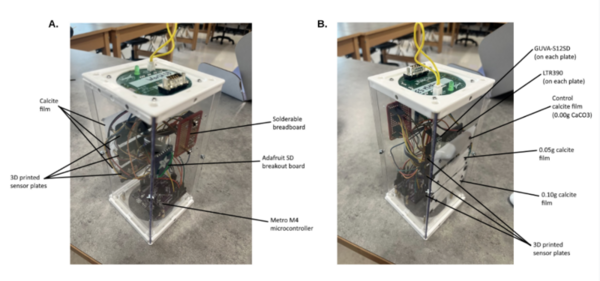
This study tested whether calcite, a safe and naturally occurring mineral, can block ultraviolet (UV) radiation when used in solar geoengineering. Students launched a high‑altitude balloon carrying UV sensors and calcite‑coated sheets to measure how much UV light passed through different calcite concentrations. Their results showed that calcite significantly reduces UV transmission, suggesting it may be a promising material for future stratospheric aerosol injection to help mitigate climate change.

Read More...

Comparison of shower filters for reducing total residual chlorine under household flow conditions

Lee et al. | Sep 19, 2026

Comparison of shower filters for reducing total residual chlorine under household flow conditions
Image credit: Micheile Henderson

This study compared two commercial shower filters and three individual filtration media to evaluate their ability to reduce total residual chlorine under household flow conditions. By identifying which materials most effectively reduce chlorine during regular shower use, this research provides practical information for consumers and offers guidance for designing more affordable and reusable shower filtration systems.

Read More...

A model for angle evolution in conical piles formed using the fixed funnel method

Capaldi et al. | Jul 20, 2026

A model for angle evolution in conical piles formed using the fixed funnel method

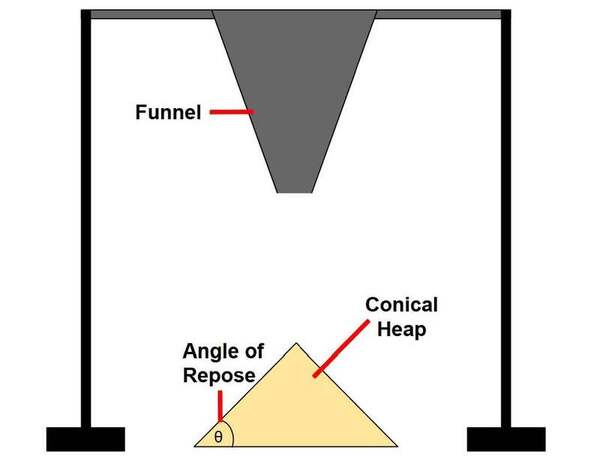
When granular materials are poured onto a surface, they form conical piles whose slopes increase before reaching a stable angle of repose. We found that this angle evolution follows a previously unrecognized two-phase exponential growth pattern that is conserved across granular materials with diverse particle properties. The parameters of this model correlate with particle friction and are influenced by deposition conditions, providing a quantitative framework for describing pile formation.

Read More...