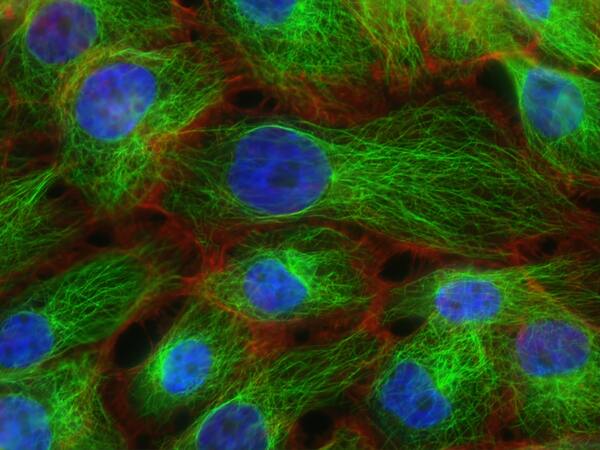
This study follows the process of single-cloning and the growth of a homogeneous cell population in a superficial environment over the course of six weeks with the end goal of showing which of five tumor growth models commonly used to predict heterogeneous cancer cell population growth (Exponential, Logistic, Gompertz, Linear, and Bertalanffy) would also best exemplify that of homogeneous cell populations.
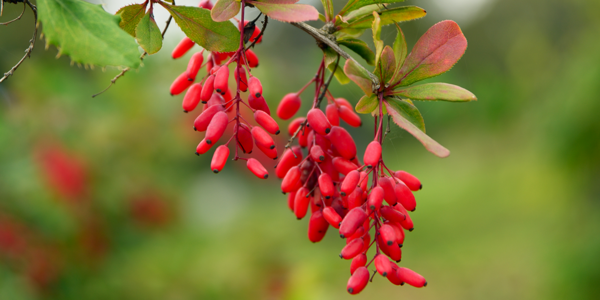
Berberine, a natural product alkaloid, has been shown to exert biological activity via in situ production of singlet oxygen when photo irradiated. Berberine utilizes singlet oxygen in its putative mechanism of action, wherein it forms an activated complex with DNA and photosensitizes triplet oxygen to singlet oxygen to specifically oxidize guanine residues, thereby halting cell replication and leading to cell death. This has potential application in photodynamic therapy, alongside other such compounds which also act as photosensitizers and produce singlet oxygen in situ. The quantification of singlet oxygen in various photosensitizers, including berberine, is essential for determining their photosensitizer efficiencies. We postulated that the singlet oxygen produced by photoirradiation of berberine would be superior in terms of singlet oxygen production to the aforementioned photosensitizers when irradiated with UV light, but inferior under visible light conditions, due to its strong absorbance of UV wavelengths.
Machine learning and deep learning techniques can be used to predict the early onset of breast cancer. The main objective of this analysis was to determine whether machine learning algorithms can be used to predict the onset of breast cancer with more than 90% accuracy. Based on research with supervised machine learning algorithms, Gaussian Naïve Bayes, K Nearest Algorithm, Random Forest, and Logistic Regression were considered because they offer a wide variety of classification methods and also provide high accuracy and performance. We hypothesized that all these algorithms would provide accurate results, and Random Forest and Logistic Regression would provide better accuracy and performance than Naïve Bayes and K Nearest Neighbor.
Alcohol use disorder is a chronic, relapsing disease that affects millions of Americans every day. There are limited treatment options for alcohol dependence and alcohol withdrawal symptoms, including depression and anxiety. Previous studies have shown that probiotics can decrease depression in rodents during maternal separation and anxiety in humans. Therefore, we hypothesized that the ethanol-withdrawn planaria who consumed probiotics would have decreased withdrawal symptoms as measured by increased motility compared to the ethanol-withdrawn planaria that were not fed probiotics. The ethanol-withdrawn planaria had a statistically significant decrease in motility compared to the control group, while the planaria that consumed probiotics had no statistically significant change in motility compared to the control group.
In this study, the authors investigate the antimicrobial effects of berberine and berberine analogs. Berberine is extracted from plants and is a naturally occurring alkaloid, and is also excited photochemically. Using three different assays, the authors tested whether these compounds would inhibit bacterial growth. They found that these compounds were antibacterial and even more so when used with photoirradiation. This study has important antibacterial implications.
In this study, the authors investigate a timely and important topic: forest fires. More specifically, they use a wildfire simulator to test how ladder fuels effect the burn area of a forest fire. Ladder fuels are fuels that cause a forest fire to rise up from the forest floor to the canopy, which may affect the overall spread. They simulated fire spread with different levels of ladder fuel treatment and found that the spread of a burn area would indeed decrease with increased ladder fuel treatment. These findings have important implications for forest and forest fire management.
Climate change is predicted to increase the frequency of severe thunderstorm events in coming years. In this study, the authors hypothesized that (i) the majority of severe thunderstorm events will occur in the summer months in all states examined for all years analyzed, (ii) climate change will cause an unusual number of severe thunderstorm events in winter months in all states, (iii) thundersnow would be observed in Colorado, and (iv.) there would be no difference in the number of severe thunderstorm events between states in any given year examined. They classified lightning seasons in all states observed, with the most severe thunderstorm events occurring in May, June, July, and August. Colorado, New Jersey, Washington, and West Virginia were found to have severe thunderstorm events in the winter, which could be explained by increased winter storms due to climate change (1). Overall, they highlight the importance of quantifying when lightning seasons occur to avoid lightning-related injuries or death.
Since school bathrooms are widely suspected to be unsanitary, we wanted to compare the total amount of bacteria with the amount of bacteria that had ampicillin or streptomycin resistance across different school bathrooms in the Boston area. We hypothesized that because people interact with the faucet, outdoor handle, and indoor handle of the bathroom, based on whether or not they have washed their hands, there would be differences in the quantity of the bacteria presented on these surfaces. Therefore, we predicted certain surfaces of the bathroom would be less sanitary than others.
The major drawback of chemotherapy regimens for treating cancer is that the cancerous cells acquire drug resistance and become impervious to further dose escalation. Keeping in mind the studied success of herbal formulations with regard to alternative treatments for cancer, we hypothesized that the use of a chemotherapeutic drug and proprietary herbal formulation, HF1, would combat this phenomenon when administered with common chemotherapeutic drug 5FU. Results demonstrated a cooperative effect between HF1 and 5FU on the drug resistant cell line, implying that administration of HF1 with 5FU results in cell death as measured by MTT assay.
This study aimed to determine whether the life cycle stages, or phenophases, of some plants in the urban environment of Central Park, New York, differ from the typical phenophases of the same plant species. The authors hypothesized that the phenophases of the thirteen plants we studied would differ from their typical phenophases due to the urban heat island effect. Although the phenophases of five plants matched up with typical trends, there were distinct changes in the phenophases of the other eight, possibly resulting from the urban heat island effect.