Browse Articles

Evaluating Biomarkers and Treatments for Acute Kidney Injury in a Zebrafish Model

Mathew et al. | Aug 11, 2019

Evaluating Biomarkers and Treatments for Acute Kidney Injury in a Zebrafish Model

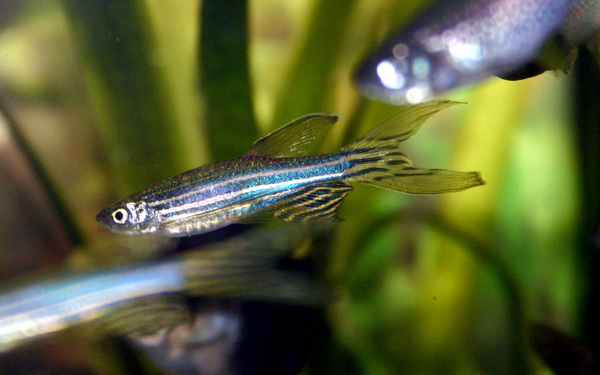
Coronary Artery Disease (CAD) is the leading cause of death in the United States, and 81% of Acute Kidney Injury (AKI) patients in the renal fibrosis stage later develop CAD. In this study, Mathew and Joykutty aimed to create a cost-effective strategy to treat AKI and thus prevent CAD using a model of the zebrafish, Danio rerio. They first tested whether AKI is induced in Danio rerio upon exposure to environmental toxins, then evaluated nitrotyrosine as an early biomarker for toxin-induced AKI. Finally, they evaluated 4 treatments of renal fibrosis, the last stage of AKI, and found that the compound SB431542 was the most effective treatment (reduced fibrosis by 99.97%). Their approach to treating AKI patients, and potentially prevent CAD, is economically feasible for translation into the clinic in both developing and developed countries.

Read More...
The Development and Maximization of a Novel Photosynthetic Microbial Fuel Cell Using Rhodospirillum rubrum

Gomez et al. | Mar 02, 2014

The Development and Maximization of a Novel Photosynthetic Microbial Fuel Cell Using <em>Rhodospirillum rubrum</em>

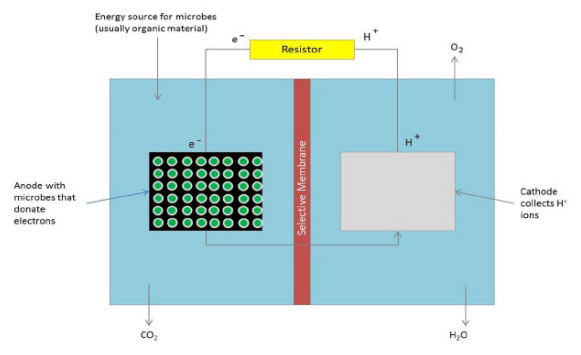
Microbial fuel cells (MFCs) are bio-electrochemical systems that utilize bacteria and are promising forms of alternative energy. Similar to chemical fuel cells, MFCs employ both an anode (accepts electrons) and a cathode (donates electrons), but in these devices the live bacteria donate the electrons necessary for current. In this study, the authors assess the functionality of a photosynthetic MFC that utilizes a purple non-sulfur bacterium. The MFC prototype they constructed was found to function over a range of environmental conditions, suggesting its potential use in industrial models.

Read More...

Investigating the effects of PVC microplastics on the growth of Chlorella vulgaris

Beaubien et al. | Oct 13, 2026

Investigating the effects of PVC microplastics on the growth of <i>Chlorella vulgaris</i>

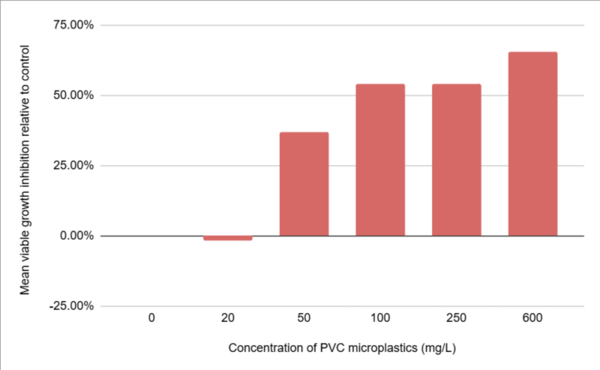
This study examined the effect of varying PVC microplastic concentrations on the growth of Chlorella vulgaris in freshwater, utilizing six PVC levels and identical culture conditions. Cell counts revealed that higher PVC concentrations consistently reduced algal growth, and a Spearman correlation test detected a significant negative monotonic association between PVC concentration and viable cell density. These results support the hypothesis that PVC microplastics impair algal growth, underscoring their ecological risk in freshwater environments.

Read More...

Investigating facilitated biofilm formation in Escherichia coli exposed to sublethal levels of ampicillin

Yang et al. | Jan 20, 2023

Investigating facilitated biofilm formation in <em>Escherichia coli</em> exposed to sublethal levels of ampicillin

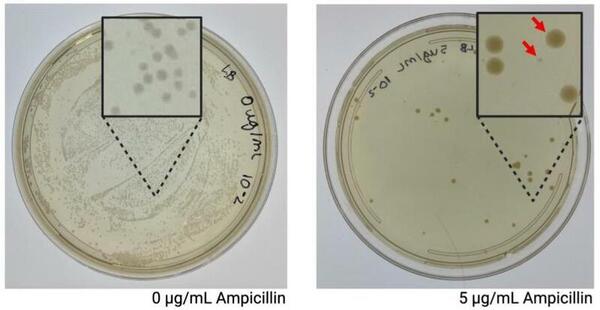
Here, the authors recognized the tendency of bacteria to form biofilms, where this behavior offers protection against threats such as antibiotics. To investigate this, they observed the effects of sublethal exposure of the antibiotic ampicillin on E. coli biofilm formation with an optical density crystal violet assay. They found that exposure to ampicillin resulted in the favored formation of biofilms over time, as free-floating bacteria were eradicated.

Read More...