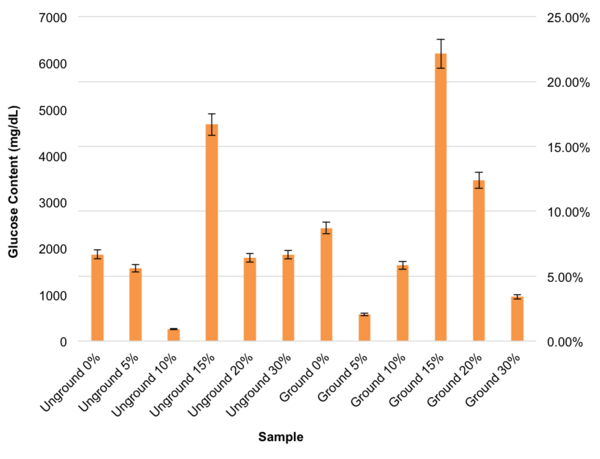
Fossil fuels are a limited resource; thus, it is important to explore new sources of energy. The authors examine the ability of switchgrass to produce ethanol and test the effects of pretreatment and grinding on ethanol yield.
Read More...Determining the Effect of Chemical and Physical Pretreatments on the Yield and Energy Output of Cellulosic Ethanol from Panicum Virgatum
Fossil fuels are a limited resource; thus, it is important to explore new sources of energy. The authors examine the ability of switchgrass to produce ethanol and test the effects of pretreatment and grinding on ethanol yield.
Read More...The Effects of Ocean Acidification on the food location behavior and Locomotion of Pagurus Longicarpus
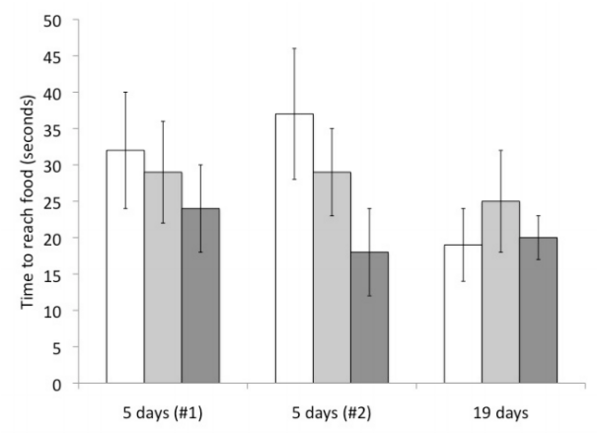
Increasing levels of atmospheric carbon dioxide is slowly acidifying our oceans. Here the authors test the effects of ocean acidification on the ability of hermit crabs (P. longicarpus) to find food. Though no statistically significant changes in food finding were observed, the data suggest a trend toward different activity.
Read More...An alternative to textile dyes: Synthesizing and applying PMMA nanoparticles to create structural coloration
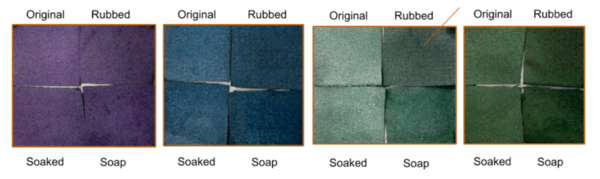
The authors looked at developing a PMMA nanoparticle fabric dye that would be more sustainable compared to traditional fabric dyes. They were able to create PMMA based dyes in different colors that were also durable (i.e., did not fade quickly on fabric).
Read More...Examining the Growth of Methanotrophic Bacteria Immersed in Extremely Low-Frequency Electromagnetic Fields
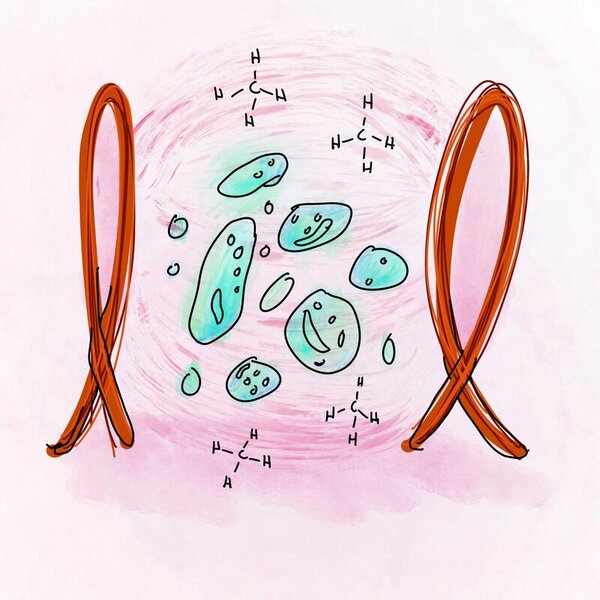
Scientist are investigating the use of methane-consuming bacteria to aid the growing problem of rising greenhouse gas emissions. While previous studies claim that low-frequency electromagnetic fields can accelerate the growth rate of these bacteria, Chu et al. demonstrate that this fundamental ideology is not on the same wavelength with their data.
Read More...Artificial Intelligence-Based Smart Solution to Reduce Respiratory Problems Caused by Air Pollution

In this report, Bhardwaj and Sharma tested whether placing specific plants indoors can reduce levels of indoor air pollution that can lead to lung-related illnesses. Using machine learning, they show that plants improved overall indoor air quality and reduced levels of particulate matter. They suggest that plant-based interventions coupled with sensors may be a useful long-term solution to reducing and maintaining indoor air pollution.
Read More...Temperatures of 20°C Produce Increased Net Primary Production in Chlorella sp.
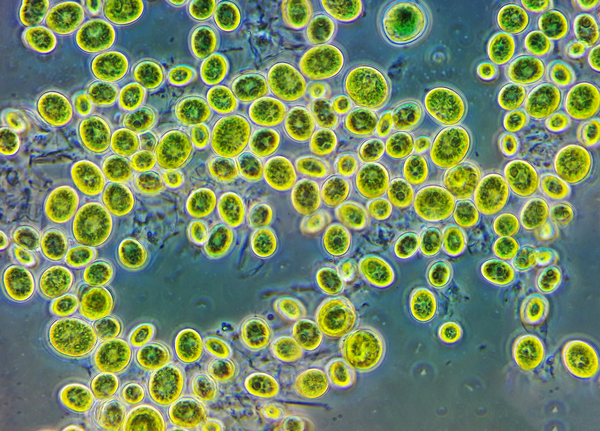
Chlorella sp. are unicellular green algae that use photosynthesis to reduce carbon dioxide into glucose. In this study, authors sought to determine the temperature that Chlorella sp. is maximally efficient at photosynthesis, and therefore removing the most carbon dioxide from the system. This activity could be harnessed to naturally remove carbon dioxide from the environment, fighting the effects of climate change.
Read More...Influence of socioeconomic status on academic performance in virtual classroom settings

In this study, the authors conduct a survey to evaluate the impact of household socioeconomic status on effectiveness of distance learning for students.
Read More...Integrating microbial fuel cell with sedum green roof for stormwater retention and renewable energy generation
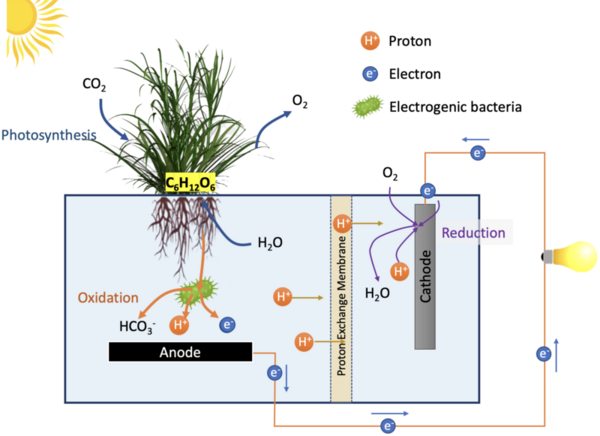
The authors looked at renewable energy generators and the ability to utilize green roofs as a solution to climate change.
Read More...Determining the Habitable Zone Around a Star
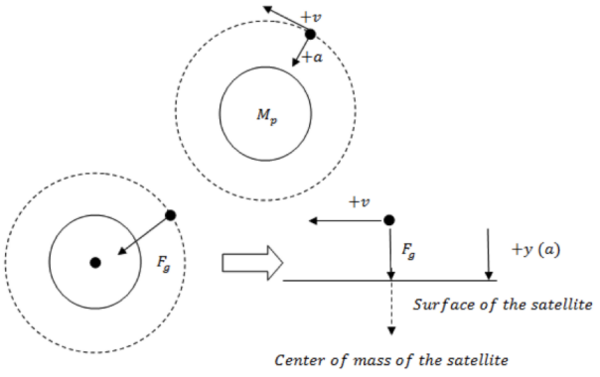
Life requires many things, including a hospitable temperature, elements, and energy. Here the authors utilize Newton's laws of physics and information relating a star's luminosity and temperature to determine the minimum and maximum masses and luminosities of planets and stars that would support life as we know it. This work can be used to determine the likelihood of a planet being able to support life based on attributes we can measure from here on Earth.
Read More...Harvesting Atmospheric Water
The objective of this project was to test various materials to determine which ones collect the most atmospheric water when exposed to the same environmental factors. The experiment observed the effect of weather conditions, a material’s surface area and hydrophilicity on atmospheric water collection. The initial hypothesis was that hydrophobic materials with the greatest surface area would collect the most water. The materials were placed in the same outside location each night for twelve trials. The following day, the materials were weighed to see how much water each had collected. On average, ribbed plastic collected 10.8 mL of water per trial, which was over 20% more than any other material. This result partially supported the hypothesis because although hydrophobic materials collected more water, surface area did not have a significant effect on water collection.
Read More...