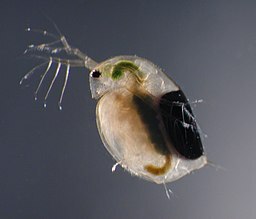
In this study a student uses Daphnia magna, or water fleas, to assay the purity of local soil samples. Daphnia magna are a helpful organism to detect potentially harmful levels of toxins in water.
Read More...Monitoring Local Soil Toxicity by Daphnia magna Viability
In this study a student uses Daphnia magna, or water fleas, to assay the purity of local soil samples. Daphnia magna are a helpful organism to detect potentially harmful levels of toxins in water.
Read More...Testing Various Synthetic and Natural Fiber Materials for Soundproofing
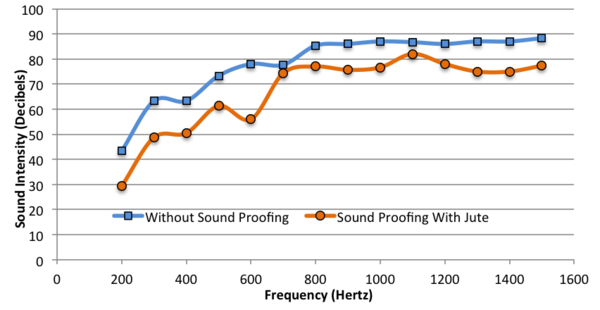
Noise pollution negatively impacts the health and behavioral routines of humans and other animals, but the production of synthetic sound-absorbing materials contributes to harmful gas emissions into the atmosphere. The authors of this paper investigated the effectiveness of environmentally-friendly, cheap natural-fiber materials, such as jute, as replacements for synthetic materials, such as gypsum and foam, in soundproofing.
Read More...Green Tea Extract as an Environmentally Friendly Antibacterial Agent Against Pseudomonas syringae pv. tomato on Plants
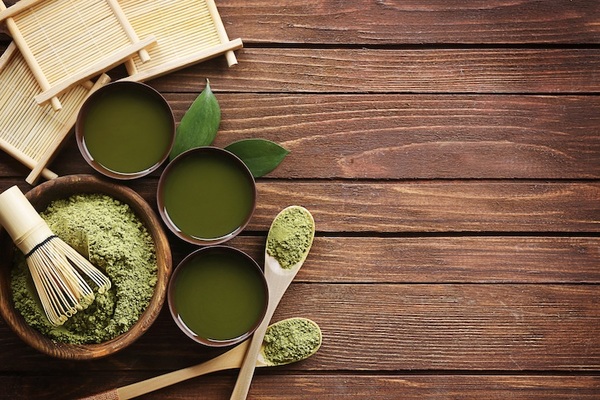
Plant pathogens can cause significant crop loss each year, but controlling them with bactericides or antibiotics can be costly and may be harmful to the environment. Green tea naturally contains polyphenols, which have been shown to have some antimicrobial properties. In this study, the authors show that green tea extract can inhibit growth of the plant pathogen Pseudomonas syringae pv. tomato and may be useful as an alternative bactericide for crops.
Read More...Antimicrobial properties of common household spices on microbes cultured from two kitchen locations
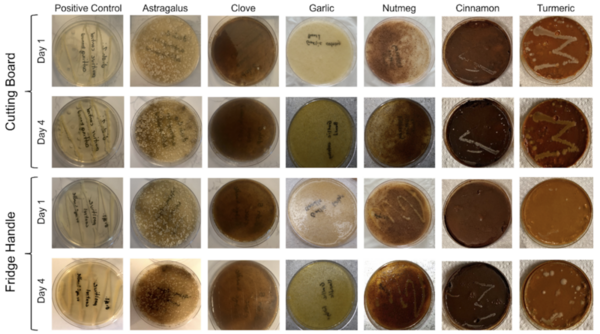
The number of bacterial infections in humans is rising, and a major contributor is foodborne illnesses, which affect a large portion of the population and result in many hospitalizations and deaths. Common household cleaners are an effective strategy to combat foodborne illness, but they are often costly and contain harmful chemicals. Thus, the authors sought to test the antimicrobial effectiveness of spices (clove, nutmeg, astragalus, cinnamon, turmeric, and garlic) on microbes cultured from refrigerator handles and cutting boards. Results from this study demonstrate long-lasting, antimicrobial effects of multiple spices that support their use as alternatives to common household cleaners.
Read More...Can Green Tea Alleviate the Effects of Stress Related to Learning and Long-Term Memory in the Great Pond Snail (Lymnaea stagnalis)?
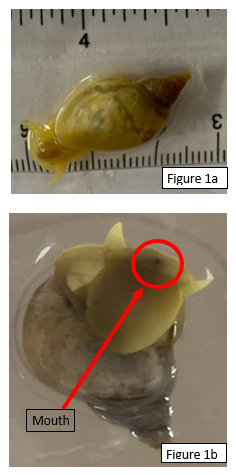
Stress and anxiety have become more prevalent issues in recent years with teenagers especially at risk. Recent studies show that experiencing stress while learning can impair brain-cell communication thus negatively impacting learning. Green tea is believed to have the opposite effect, aiding in learning and memory retention. In this study, the authors used Lymnaea stagnalis , a pond snail, to explore the relationship between green tea and a stressor that impairs memory formation to determine the effects of both green tea and stress on the snails’ ability to learn, form, and retain memories. Using a conditioned taste aversion (CTA) assay, where snails are exposed to a sweet substance followed by a bitter taste with the number of biting responses being recorded, the authors found that stress was shown to be harmful to snail learning and memory for short-term, intermediate, and long-term memory.
Read More...Reduce the harm of acid rain to plants by producing nitrogen fertilizer through neutralization

The phenomenon of dying trees and plants in areas affected by acid rain has become increasingly problematic in recent times. Is there any method to efficiently utilize the rainwater and reduce the harmfulness of acid rain or make it beneficial to plants? This study aimed to investigate the potential of neutralizing acid rainwater infiltrating the soil to increase soil pH, produce beneficial salts for plants, and support better plant growth. To test this hypothesis, precipitation samples were collected from six states in the U.S. in 2022, and the pH of the acid rain was measured to obtain a representative pH value for the country. Experiments were then conducted to simulate the neutralization of acid rain and the subsequent change in soil pH levels. To evaluate the effectiveness and feasibility of this method, cat grass was planted in pots of soil soaked with solutions mimicking acid rain, with control and experimental groups receiving neutralizing agents (ammonium hydroxide) or not. Plant growth was measured by analyzing the height of the plants. Results demonstrated that neutralizing agents were effective in improving soil pH levels and that the resulting salts produced were beneficial to the growth of the grass. The findings suggest that this method could be applied on a larger agricultural scale to reduce the harmful effects of acid rain and increase agricultural efficiency.
Read More...Novel environmentally friendly approach to wastewater treatment eliminates aluminum sulfate and chlorination

The authors tested environmentally-friendly alternatives to wastewater treatment chemicals, including activated charcoal for filtration and citrus peels for preventing bacterial growth.
Read More...Detergent pollutants decrease nutrient availability in soil
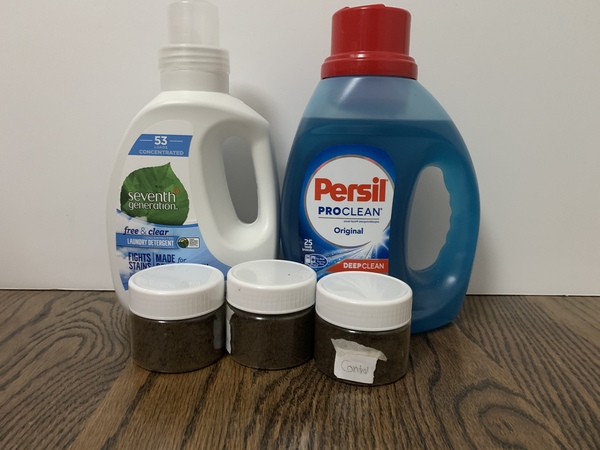
Household detergents have surfactants that can potentially harm the soil and broader ecosystems. In this study, the authors investigate whether eco-friendly and less-eco-friendly detergents affect soil pH, phosphorus, nitrogen, and potassium levels.
Read More...Comparing the Voltage Output of Water in Drop and Flow Form Using a Piezoelectric Sensor and Hydroelectric Turbine

This study compares the voltage output of two potential alternative energy sources: water drops hitting a piezoelectric surface and water flowing through a hydroelectric turbine. The findings of this study suggest that harnessing kinetic energy from falling raindrops may be a viable alternative energy source.
Read More...Formulation of novel polyherbal compound MAT20 with phytochemicals found in amla, tulsi, and moringa

With herbal plants providing an address to the adverse effects of oxidative stress found within the body, the authors of this article develop and assess a novel compound (“MAT20”) that blends three herbal plants for optimal oxidative stress relief.
Read More...