Browse Articles

Influence of induction heating on static recrystallization kinetics of AISI 4130 steel

Chen et al. | Apr 30, 2026

Influence of induction heating on static recrystallization kinetics of AISI 4130 steel

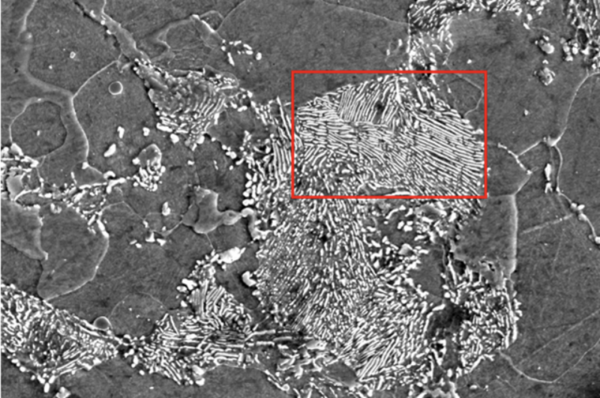
This article investigates whether induction heating can speed up static recrystallization in AISI 4130 steel compared with traditional radiant heating. It was found that induction-heated samples recrystallized faster, softened more quickly, and showed earlier microstructural changes like grain nucleation and pearlite spheroidization, suggesting induction heating could be a more efficient alternative for industrial metal heat treatments.

Read More...

Forecasting air quality index: A statistical machine learning and deep learning approach

Pasula et al. | Feb 17, 2025

Forecasting air quality index: A statistical machine learning and deep learning approach
Image credit: Amir Hosseini

Here the authors investigated air quality forecasting in India, comparing traditional time series models like SARIMA with deep learning models like LSTM. The research found that SARIMA models, which capture seasonal variations, outperform LSTM models in predicting Air Quality Index (AQI) levels across multiple Indian cities, supporting the hypothesis that simpler models can be more effective for this specific task.

Read More...

Study of PINN sensor layout in evaluating WSS with application to patient-specific carotid flow

Nie et al. | Sep 04, 2026

Study of PINN sensor layout in evaluating WSS with application to patient-specific carotid flow

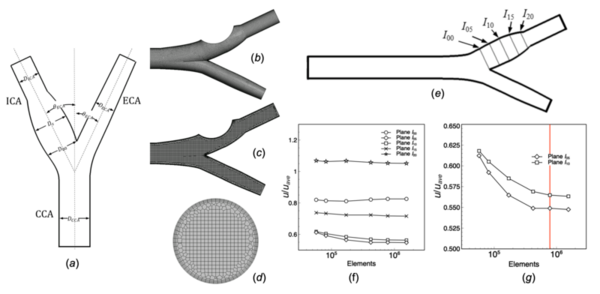
Physics‑Informed Neural Networks (PINNs) offer a promising way to estimate blood‑flow behavior in arteries, especially near the vessel wall where traditional methods struggle. In this study, students tested how sensor density and placement affect PINN accuracy in modeling carotid artery flow and found that accuracy improves up to a moderate sensor density and depends strongly on how close sensors are placed to the arterial wall. Applying the optimized configuration to a patient‑specific carotid model produced velocity predictions closely matching computational fluid dynamics results, highlighting PINNs’ potential for future personalized cardiovascular assessment.

Read More...

Optimizing AI image detection using a Convolutional Neural Network model with Fast Fourier Transform

Gupta et al. | Oct 24, 2025

Optimizing AI image detection using a Convolutional Neural Network model with Fast Fourier Transform

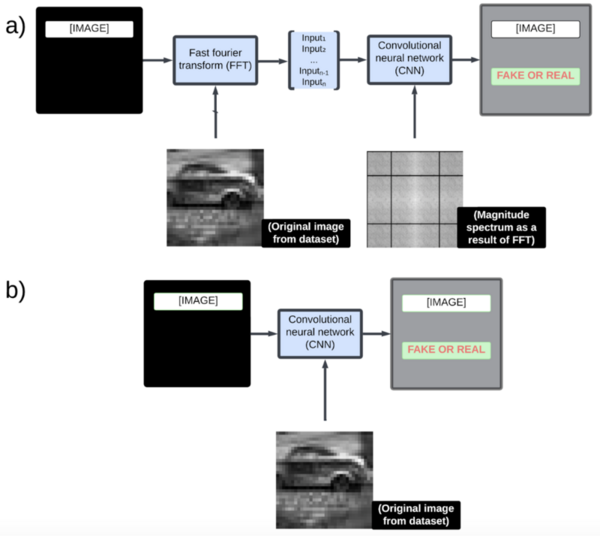
Recent advances in generative AI have made it increasingly hard to distinguish real images from AI-generated ones. Traditional detection models using CNNs or U-net architectures lack precision because they overlook key spatial and frequency domain details. This study introduced a hybrid model combining Convolutional Neural Networks (CNN) with Fast Fourier Transform (FFT) to better capture subtle edge and texture patterns.

Read More...

Determining viability of image processing models for forensic analysis of hair for related individuals

Wang et al. | Feb 04, 2025

Determining viability of image processing models for forensic analysis of hair for related individuals
Image credit: Taylor Smith

Here, the authors used machine learning to analyze microscopic images of hair, quantifying various features to distinguish individuals, even within families where traditional DNA analysis is limited. The Discriminant Analysis (DA) model achieved the highest accuracy (88.89%) in identifying individuals, demonstrating its potential to improve the reliability of hair evidence in forensic investigations.

Read More...

Machine learning predictions of additively manufactured alloy crack susceptibilities

Gowda et al. | Nov 12, 2024

Machine learning predictions of additively manufactured alloy crack susceptibilities

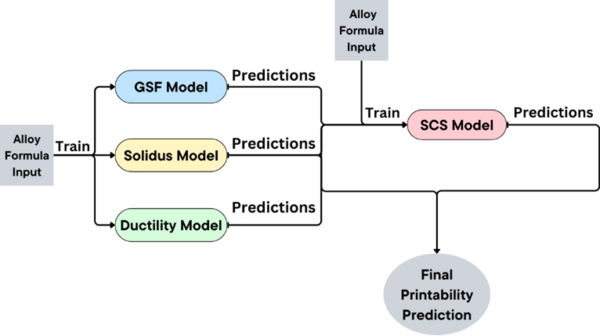
Additive manufacturing (AM) is transforming the production of complex metal parts, but challenges like internal cracking can arise, particularly in critical sectors such as aerospace and automotive. Traditional methods to assess cracking susceptibility are costly and time-consuming, prompting the use of machine learning (ML) for more efficient predictions. This study developed a multi-model ML pipeline that predicts solidification cracking susceptibility (SCS) more accurately by considering secondary alloy properties alongside composition, with Random Forest models showing the best performance, highlighting a promising direction for future research into SCS quantification.

Read More...

Using broad health-related survey questions to predict the presence of coronary heart disease

Chavda et al. | Aug 23, 2024

Using broad health-related survey questions to predict the presence of coronary heart disease

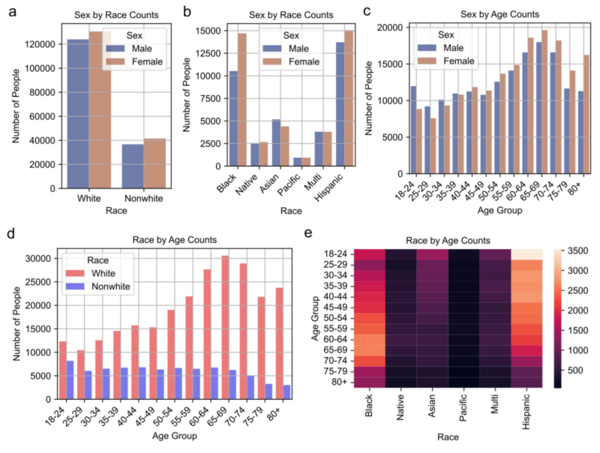
Coronary heart disease (CHD) is the leading cause of death in the U.S., responsible for nearly 700,000 deaths in 2021, and is marked by artery clogging that can lead to heart attacks. Traditional prediction methods require expensive clinical tests, but a new study explores using machine learning on demographic, clinical, and behavioral survey data to predict CHD.

Read More...

A comparative study on the suitability of virtual labs for school chemistry experiments

Praveen et al. | Aug 22, 2022

A comparative study on the suitability of virtual labs for school chemistry experiments

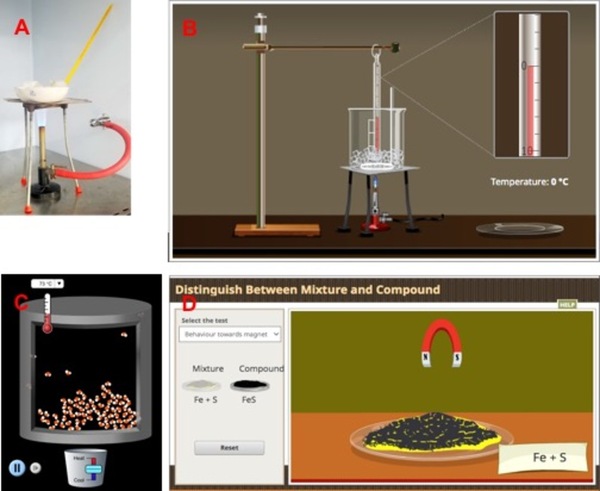
Virtual labs have been gaining popularity over the last few years, especially during the worldwide lockdown due to the COVID-19 pandemic. In this study, the suitability of virtual labs for school chemistry experiments is addressed and their effectiveness is compared to traditional physical lab experiments by focusing on physical and human resources, convenience, cost, safety, and time involved as well as topic "matter".

Read More...

Modulation of VEGF and TGF beta in 5-FU induced inflammation in MCF-7 using an herbal formulation

Vinay Nair et al. | Jun 03, 2022

Modulation of VEGF and TGF beta in 5-FU induced inflammation in MCF-7 using an herbal formulation

Acquired drug resistance is an increasing challenge in treating cancer with chemotherapy. One mechanism
behind this resistance is the increased inflammation that supports the progression and development of
cancer that arises because of the drug’s presence. Integrative oncology is the field that focuses on including natural products alongside traditional therapy to create a treatment that focuses on holistic patient well-being.
In this study, the authors demonstrate that the use of an herbal formulation, consisting of turmeric and green tea, alongside a traditional chemotherapeutic drug, 5-fluorouracil (FU) significantly decreases the level of cytokines produced in breast cancer cells when compared to the levels produced when exposed solely to the chemo drug. The authors conclude that this combination of treatment, based on the principle of integrative oncology, shows potential for reducing the resistance against treatment conferred through increased inflammation. Consequently, this suggests a prospective way forward in improving the efficacy of cancer treatment.

Read More...