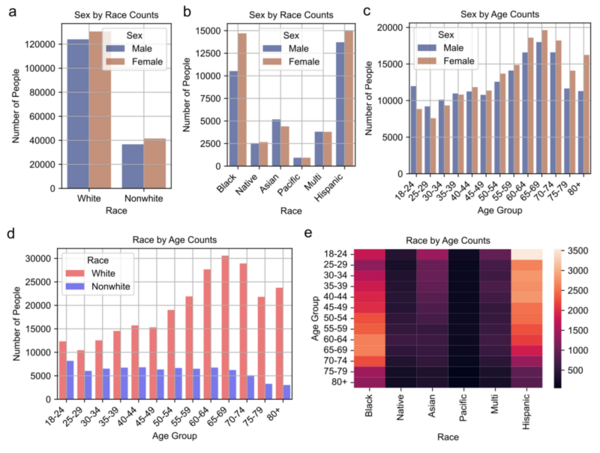
Coronary heart disease (CHD) is the leading cause of death in the U.S., responsible for nearly 700,000 deaths in 2021, and is marked by artery clogging that can lead to heart attacks. Traditional prediction methods require expensive clinical tests, but a new study explores using machine learning on demographic, clinical, and behavioral survey data to predict CHD.
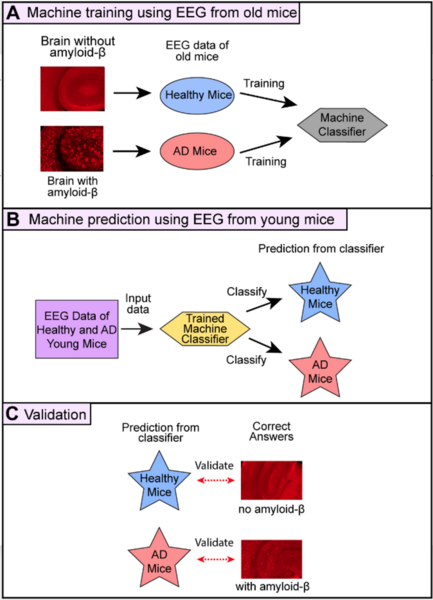
Alzheimer’s disease (AD) is a common disease affecting 6 million people in the U.S., but no cure exists. To create therapy for AD, it is critical to detect amyloid-β protein in the brain at the early stage of AD because the accumulation of amyloid-β over 20 years is believed to cause memory impairment. However, it is difficult to examine amyloid-β in patients’ brains. In this study, we hypothesized that we could accurately predict the presence of amyloid-β using EEG data and machine learning.
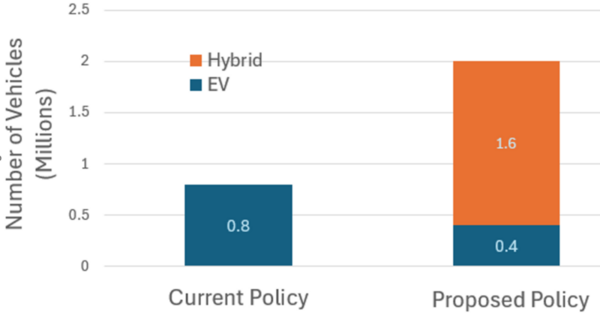
Car emissions harm both the environment and human health, and current U.S. EV tax credits mainly benefit high-income households because EVs are expensive. This study evaluates U.S. vehicle emissions policies by analyzing 2022 national vehicle data to compare the fuel economy and greenhouse gas impacts of the current EV tax credit with a proposed policy that incentivizes hybrid vehicle purchases.
In this study, the authors survey middle and high school students in different states in the U.S. to evaluate stress levels, learning experiences, and activity levels during the COVID-19 pandemic.
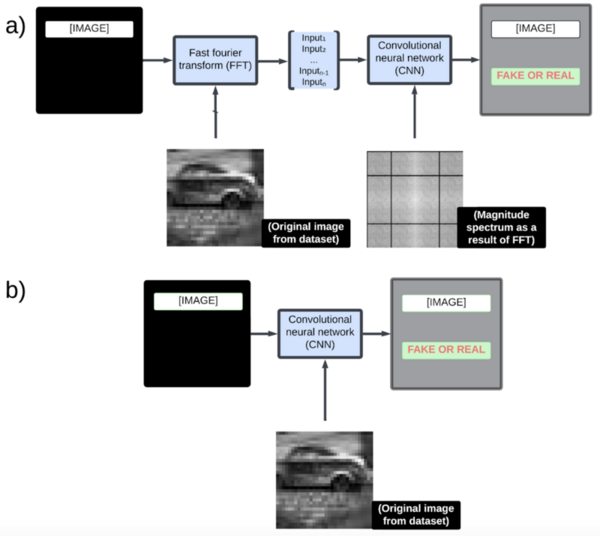
Recent advances in generative AI have made it increasingly hard to distinguish real images from AI-generated ones. Traditional detection models using CNNs or U-net architectures lack precision because they overlook key spatial and frequency domain details. This study introduced a hybrid model combining Convolutional Neural Networks (CNN) with Fast Fourier Transform (FFT) to better capture subtle edge and texture patterns.
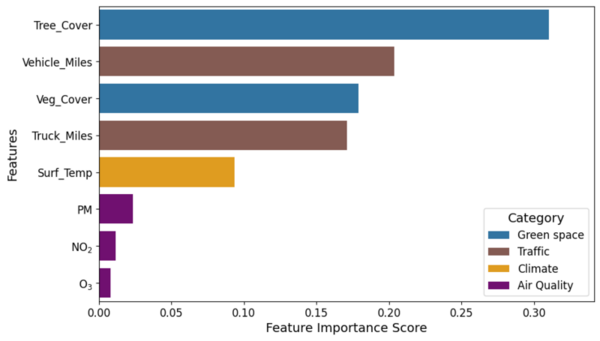
This study explored how green spaces, climate, traffic, and air quality (GCTA) collectively influence asthma-related emergency department visits in the U.S using machine learning models and explainable AI.
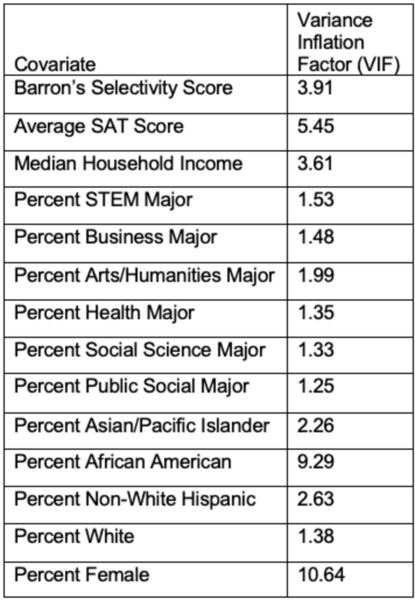
Debates around legacy preferences, recruited athletes, and affirmative action in U.S. college admissions often focus on the belief that graduating from a more selective institution leads to higher future earnings. The study hypothesized a positive correlation between college selectivity and future income due to enhanced resources and opportunities.
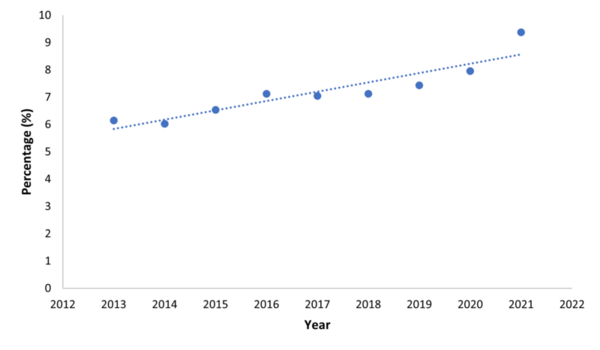
Black patients tend to have better health outcomes when cared for by Black physicians, yet Black doctors make up only 5% of U.S. physicians, despite Black people comprising 14% of the population. This analysis of data from Florida medical schools showed a higher enrollment of Black first-year students (13.5%) compared to the national average (9%), and a national increase from 6% in 2013 to 9% in 2021, aligning with the rise of social justice movements. Increasing Black medical student enrollment could reduce health disparities and improve outcomes for Black communities.
Every year, more than 30% of food products go to waste. This is approximately 1.3 billion tons of food, which is equivalent to 1.3 trillion U.S. dollars. While conventional solid waste treatments and fertilization of food waste are common, citrus fruit peels require secondary applications and advanced disposal management due to their low pH values and high antimicrobial characteristics. Since citrus fruits are well-known sources of vitamin C and antioxidants, we hypothesized that their peels also contain high amounts of vitamin C and antioxidants. In our study, five common citrus peels including grapefruit, lemon, lime, orange, and tangerine, were used to determine the amounts of vitamin C and total soluble antioxidants.
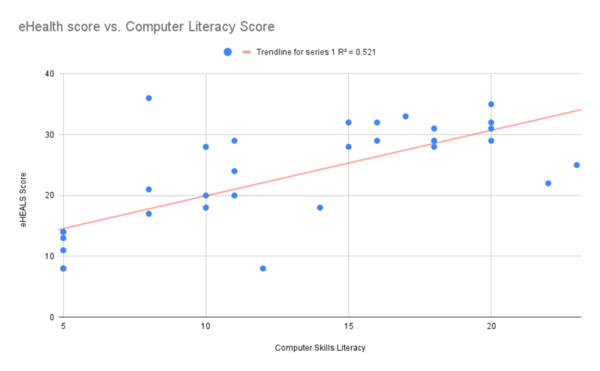
As digital tools become more prevalent in medicine, the ability for individuals to understand and take actions based on what they read on the internet is crucial. eHealth literacy is defined as as the ability to seek, find, understand, and evaluate health information from electronic sources and apply the knowledge gained to addressing or solving a health problem. In general, Americans have low eHealth literacy rates. However, limited research has been conducted to understand the eHealth literacy level among older Chinese adult immigrants in the U.S. To determine the eHealth literacy of elderly Chinese immigrants, we sent out an eHealth survey and relevant computer skills survey using a modified version of the eHEALS (eHealth Literacy Scale) health literacy test. We hypothesized that elders who consumed more electronic health content would have a higher eHealth literacy score. The results of this survey showed that there was a positive correlation between the frequency of electronic health information consumption and the participant's eHealth literacy rate. In addition, the results of our computer literacy test show that the frequency of consumption and computer literacy are positively correlated as well. There is a strong positive correlation between the level of computer skills and eHealth literacy of participants. These results reveal possible steps individuals can take to reduce health misinformation and improve their own health by attaining, understanding, and taking action on health material on the internet.