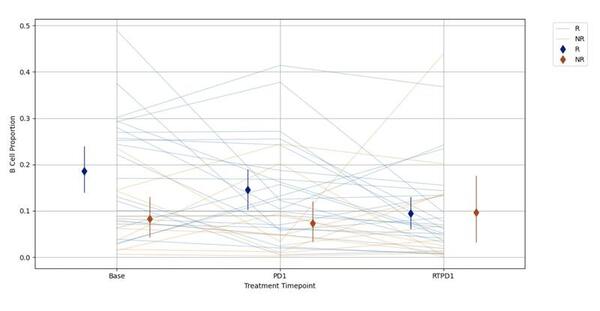
This study used single-cell RNA sequencing to examine whether B cells can predict response to pembrolizumab and radiation therapy in patients with triple-negative breast cancer.
Read More...B cell dynamics as predictive markers in triple-negative breast cancer treated with Pembrolizumab & radiation
This study used single-cell RNA sequencing to examine whether B cells can predict response to pembrolizumab and radiation therapy in patients with triple-negative breast cancer.
Read More...Study of PINN sensor layout in evaluating WSS with application to patient-specific carotid flow
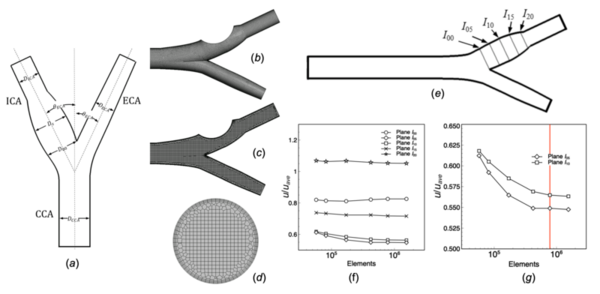
Physics‑Informed Neural Networks (PINNs) offer a promising way to estimate blood‑flow behavior in arteries, especially near the vessel wall where traditional methods struggle. In this study, students tested how sensor density and placement affect PINN accuracy in modeling carotid artery flow and found that accuracy improves up to a moderate sensor density and depends strongly on how close sensors are placed to the arterial wall. Applying the optimized configuration to a patient‑specific carotid model produced velocity predictions closely matching computational fluid dynamics results, highlighting PINNs’ potential for future personalized cardiovascular assessment.
Read More...How teaching style influences math learning: Comparing discovery and traditional instruction
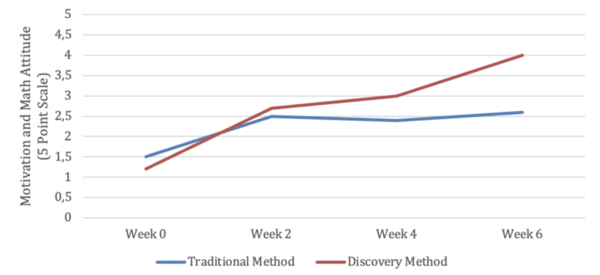
This study compares traditional and discovery-based instructional methods in online middle school mathematics education. Findings show that discovery-based learning significantly improves students’ academic performance and attitudes, highlighting the value of inquiry-driven instruction for enhancing both understanding and motivation.
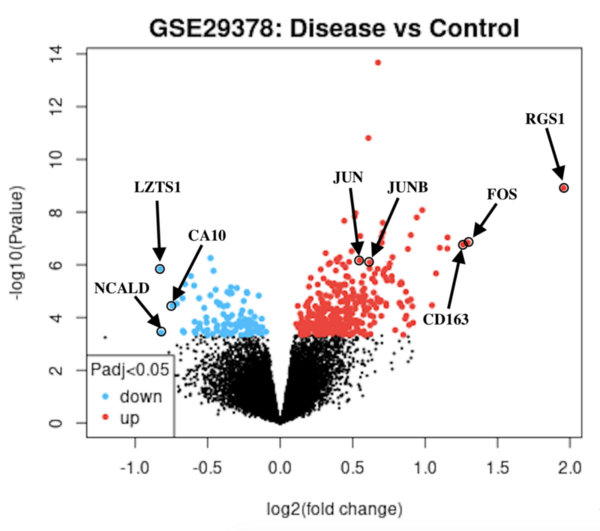
Read More...Upregulation of the AP-1 complex as a potential biomarker for Alzheimer’s disease (AD)
The relationship between meteorological factors and air quality in Washington D.C. metropolitan area
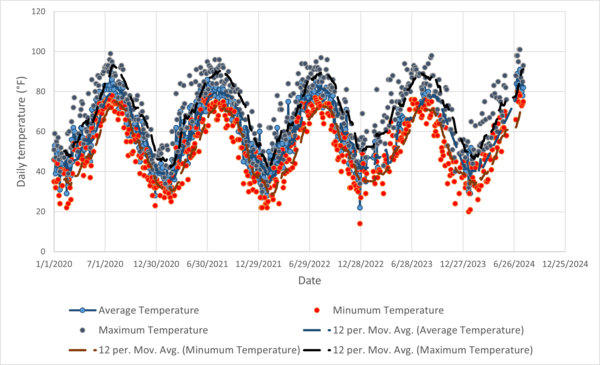
The authors studied the relationship between air quality and weather conditions (wind speed, precipitation, and temperature) in the Washington D.C. area.
Read More...Comparative study on three machine learning models in novel autonomous drone-based detection of invasive plant Brassica nigra
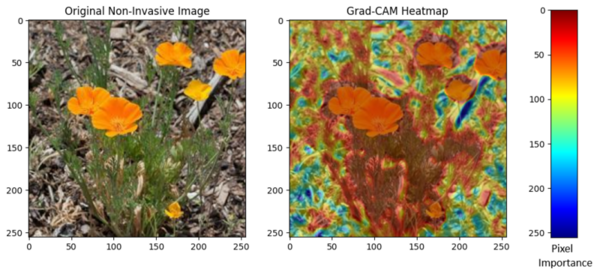
Autonomous drone imaging combined with machine learning offers a promising approach for early detection of invasive species. In this study, students built an autonomous drone and compared three models: CNN, SGDC, and XGBoost, to identify Brassica nigra from aerial footage. Their results show that CNNs most effectively recognize key visual features, demonstrating strong potential for supporting conservation and invasive plant management.
Read More...Linear relationship between nanostructural features and coloring of biomimetic photonic material

Iridescent materials reflect different colored depending on viewing angle. This specific effect can be achieved by biomimetic photonic materials. This project models the quantitative relationship between these material’s coloring and its nanostructure to facilitate personalized design of art materials.
Read More...Using machine learning to understand social media discourse on the co-use of tobacco and cannabis
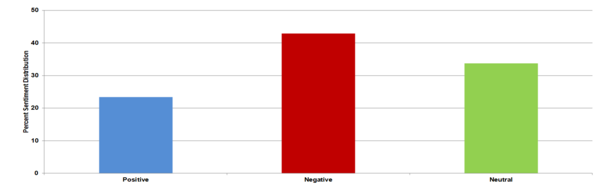
The authors used developed a machine learning tool for studying social media discourse surrounding use of tobacco and cannabis.
Read More...An evaluation of the trends in U.S. maternal deaths based on abortion policies from 2018 to 2021

Here the authors evaluate the relationship between state-level abortion policies and maternal mortality across the United States from 2018 to 2021. Their findings reveal that states with restrictive abortion laws consistently experienced higher maternal mortality ratios than those with protective policies, culminating in a 72% increase in deaths within restrictive states by the end of the study period.
Read More...Feature extraction from peak detection algorithms for enhanced EMG-based hand gesture recognition models
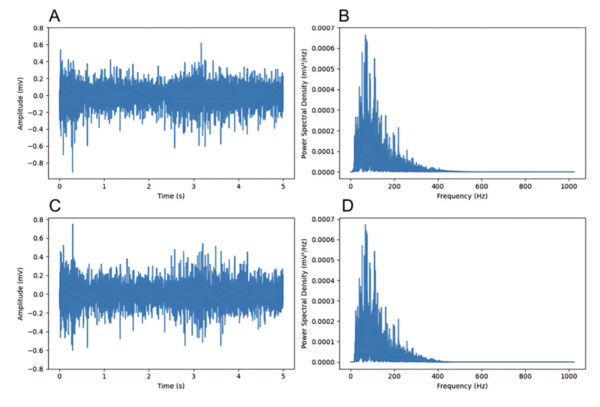
This manuscript evaluates peak detection algorithms for feature extraction in EMG-based hand gesture recognition using a random forest classifier. The study demonstrates that wavelet-based peak detection features achieve the highest classification accuracy (96.5%), outperforming other methods. The results highlight the potential of peak features to improve EMG-based prosthetic control systems.
Read More...