Browse Articles

Electrocatalytic oxidation of furfural on Co3O4/nickel foam catalyst: performance and mechanistic study

Song et al. | Jul 19, 2026

Electrocatalytic oxidation of furfural on Co<sub>3</sub>O<sub>4</sub>/nickel foam catalyst: performance and mechanistic study
Image credit: Shraga kopstein

In this study, the authors hypothesized that the unique redox properties of cobalt oxide (Co3O4), combined with the conductive nature of the nickel foam (NF) substrate, synergistically enhances the catalytic performance for furfural oxidation. The study showed successful synthesis of Co3O4 nanoflowers directly grown on NF and tested their capacity to serve as a highly efficient electrocatalyst for furfural oxidation. Beyond furfural oxidation, this study also offers broader implications for sustainable chemistry by establishing design principles for efficient nucleophilic oxidation reaction catalysts, demonstrating an energy-saving alternative to conventional oxygen evolution reaction-coupled processes, and showcasing how biomass conversion can be integrated with renewable energy systems.

Read More...

Implications of various pure tones on Phaseolus vulgaris and Gaultheria shallon

Judit et al. | Jul 13, 2026

Implications of various pure tones on <i>Phaseolus vulgaris</i> and <i>Gaultheria shallon<i>

This study investigated how different sound frequencies (0, 1,000, 5,000, and 15,000 Hz) affect the growth of Phaseolus vulgaris and the transpiration rates of Gaultheria shallon. Although some differences in plant growth were observed, the authors found no consistent evidence that sound frequency enhanced overall growth or transpiration, highlighting the need for further research.

Read More...

Solubility of graphite and the efficacy of using its dissolved form as a conductive paste

Kirby et al. | Aug 23, 2024

Solubility of graphite and the efficacy of using its dissolved form as a conductive paste

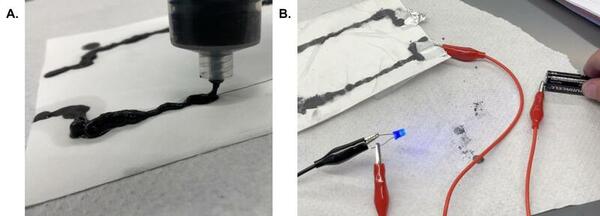
This study explored the use of graphite's conductivity for circuit boards by creating a conductive paste through exfoliation with organic solvents and sonication. The combination of acetone and sonication was found to be the most effective, producing a high-conductivity paste with desirable properties such as a low boiling point. While not a replacement for wires, this conductive paste has potential applications in electronics and infrastructure, provided that key engineering challenges are addressed.

Read More...

Reducing Crop Damage Caused by Folsomia candida by Providing an Alternate Food Source

Tamura et al. | May 28, 2018

Reducing Crop Damage Caused by Folsomia candida by Providing an Alternate Food Source

Tamura and Moché found that Folsomia candida, a common crop pest, prefers to consume yeast instead of lettuce seedlings. The authors confirmed that even with the availability of both lettuce seedlings and yeast in the same dish, Folsomia candida preferred to eat the yeast, thereby reducing the number of feeding injuries on the lettuce seedlings. The authors propose that using this preference for yeast may be a way to mitigate crop damage by this pest.

Read More...

Leaky expression of PRMT1 in Escherichia coli and redox regulation of its histone methyltransferase activity

Kim et al. | Oct 07, 2026

Leaky expression of PRMT1 in <i>Escherichia coli</i> and redox regulation of its histone methyltransferase activity

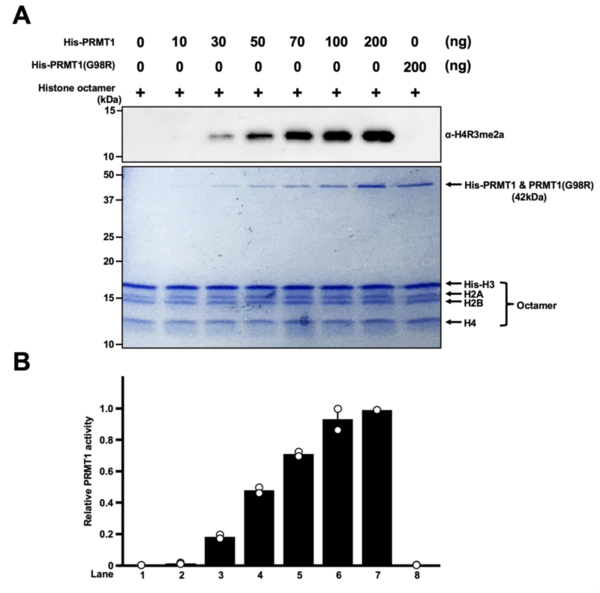
This study characterizes recombinant human Protein arginine methyltransferase 1 (PRMT1) expressed in Escherichia. coli and reveals that the enzyme exhibits leaky expression even without isopropyl β-D-1-thiogalactopyranoside (IPTG) induction. Through in vitro histone methyltransferase assays, we demonstrate that PRMT1 activity toward histone H4R3 is enhanced by dithiothreitol (DTT) in a dose-dependent manner but remains unresponsive to β-mercaptoethanol. These findings highlight the critical role of redox conditions in regulating PRMT1 catalytic function and provide a practical framework for future biochemical and kinetic studies.

Read More...