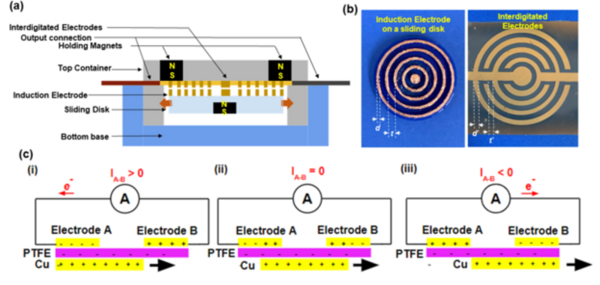
The authors designed a triboelectric nanogenerator with the goal to use it as an energy source for smart farming.
Read More...Triboelectric nanogenerators and self-powered sensors for smart farming
The authors designed a triboelectric nanogenerator with the goal to use it as an energy source for smart farming.
Read More...Computational prediction of chlorogenic acid binding to disease-linked proteins CHIT1 and CHI3L1
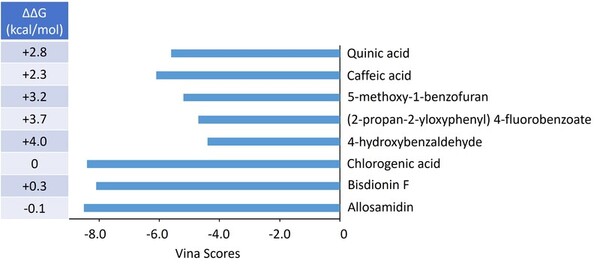
This study investigated whether chlorogenic acid, a plant compound with known health benefits, can interact with the proteins CHIT1 and CHI3L1, which could ultimately lead to new therapeutic strategies for a range of chronic diseases.
Read More...Global trends in total cholesterol by gender (1980-2018)
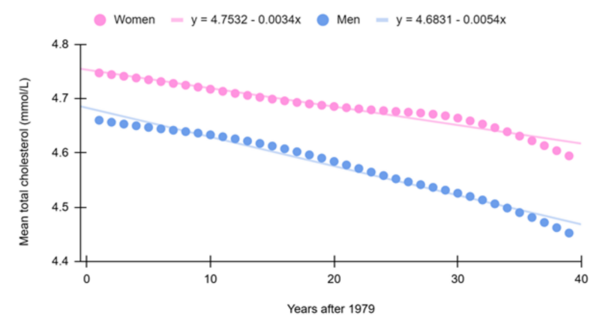
This study explores global trends in average total cholesterol levels among adults from 1980 to 2018, finding a significant decline in both men and women, with a sharper decrease among men. While these improvements likely reflect advances in public health and medical treatment, the persistent gender gap highlights the need for more targeted approaches to cardiovascular disease prevention.
Read More...Integration of iron oxide nanoparticles into high-density polyethylene for sustainable cup coatings
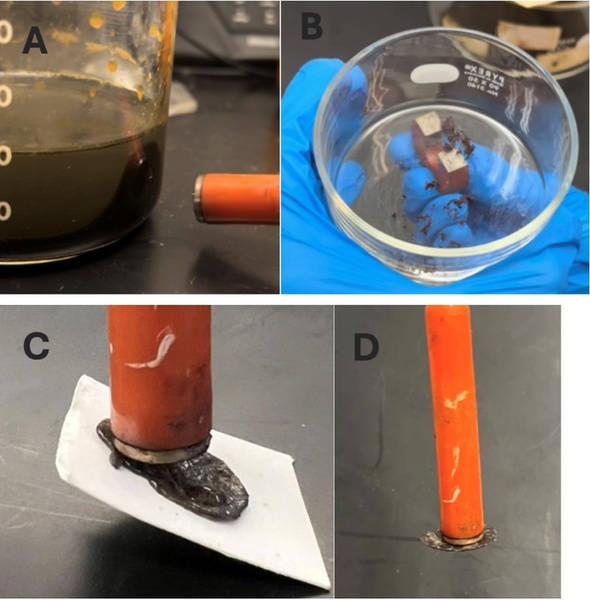
Here the authors propose integrating magnetic iron (II) oxide nanoparticles into the high-density polyethylene linings of disposable paper cups to create a waterproof, magnetically responsive composite liner. Their findings demonstrate that these nanoparticles successfully bond with the plastic layer without disrupting its structural integrity, offering a viable method to improve plastic recovery through magnetic recycling and mitigate global microplastic pollution.
Read More...Investigating the effects of glucose reintroduction on acutely starved HeLa cells
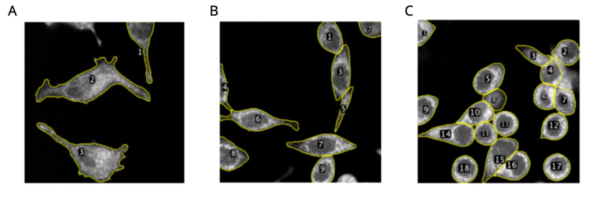
Cancer cells rely heavily on glycolysis, but how they respond when glucose is reintroduced after acute starvation is not well understood. Using fluorescence lifetime imaging microscopy, students tracked metabolic changes in HeLa cells and found a rapid shift toward glycolysis within 20 minutes of glucose reintroduction, followed by heterogeneous recovery toward oxidative phosphorylation. These results highlight metabolic flexibility and variability in cancer cells, offering insights relevant to treatment resistance and therapeutic design.
Read More...Evaluating need for adversarial training data given algorithmic defense methods against adversarial attacks
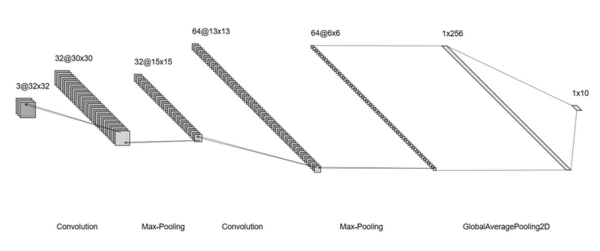
The purpose of this study was to determine the necessity of previous non-algorithmic attacks (Adversarial Training) in light of algorithmic defense methods (Gradient Masking and Defensive Distillation) against FGSM attacks. We found a significant increase in image classification accuracy from defense methods with the non-algorithmic defense method compared to ones without. By analyzing the significance with a McNemar test, we determined that the inclusion of non-algorithmic defense methods is still necessary in light of new algorithmic defense methods.
Read More...Innovative fake health news detection: Integrating emotional features into graph neural networks
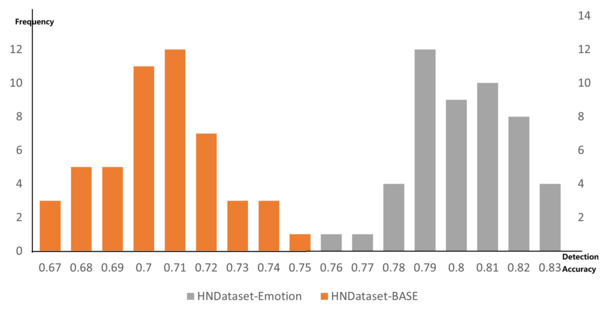
This manuscript tackles a major social issue in the health news sector, with social media being one of the primary sources of information and a prime spot to propagate fake news. The author proposes X-HND , which is a unique architecture that combines emotional and contextual analysis in a Graph Neural Network to accurately detect fake news. This was a multi-step process which involved the creation of a custom health news dataset (HNDataset), and an emotional variant that uses RoBERTa to extract emotion. These dataset were then used to prove the hypothesis that accuracy increases when the custom dataset is used to train the model and that with the integration of emotion capture, the detection accuracy increases further.
Read More...Measuring effects of caffeine and melatonin on learning trends of Zebrafish juveniles
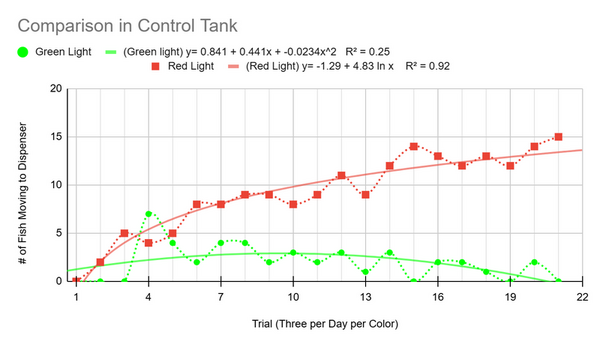
This study investigates how caffeine and melatonin affect learning in adolescent zebrafish, serving as a model for human teens. Using an automated system to track behavior, we found that melatonin slowed learning while caffeine caused erratic, inconsistent responses, suggesting both substances can negatively impact adolescent learning patterns. These findings highlight the need for further research into their physiological effects and potential implications for human adolescents.
Read More...Variation, relationship, and trade-offs of leaf traits in large and small deciduous broadleaf tree species
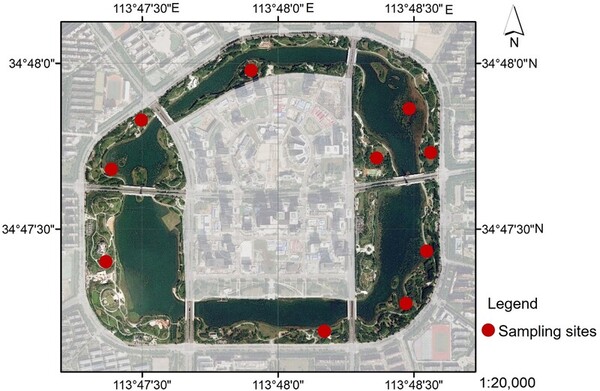
The authors access a panel of leaf traits across ten deciduous tree species to explore adaptive strategies between large and small trees.
Read More...Using machine learning to understand social media discourse on the co-use of tobacco and cannabis
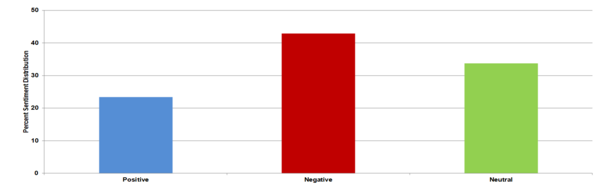
The authors used developed a machine learning tool for studying social media discourse surrounding use of tobacco and cannabis.
Read More...