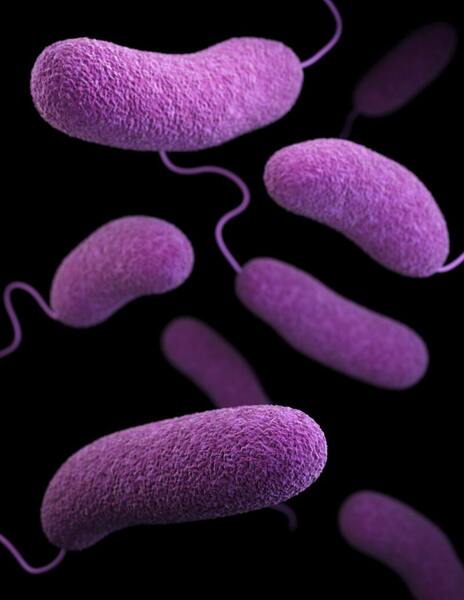
In this study, the authors test new antimicrobials by measuring the ability of extracts from Australian-native Myrtaceae species to induce death of two bacteria S. aureus and P. aeruginosa.
Read More...Myrtaceaes as antimicrobial agents against Staphylococcus aureus and Pseudomonas aeruginosa
In this study, the authors test new antimicrobials by measuring the ability of extracts from Australian-native Myrtaceae species to induce death of two bacteria S. aureus and P. aeruginosa.
Read More...De novo design of a dual-target inhibitor against tau phosphorylation and acetylation for Alzheimer's therapy
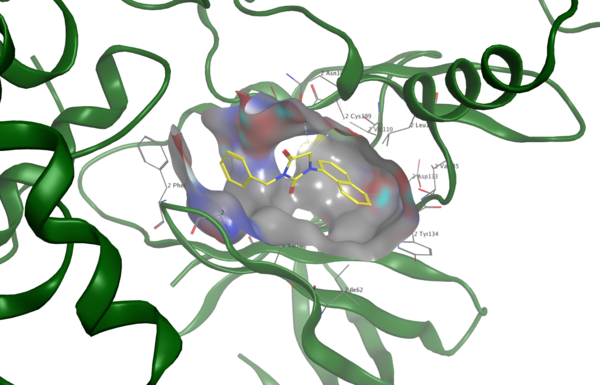
The authors use computational methods to compare tau acetylation to the better studied tau phosphorylation in Alzheimer's disease and then design and computationally test a new drug to prevent abnormal post-translational modifications of tau.
Read More...Prediction of diabetes using supervised classification
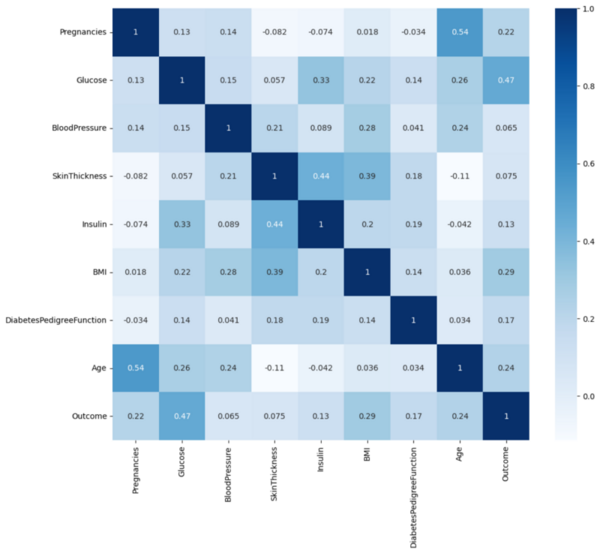
The authors develop and test a machine learning algorithm for predicting diabetes diagnoses.
Read More...Singlet oxygen production analysis of reduced berberine analogs via NMR spectroscopy
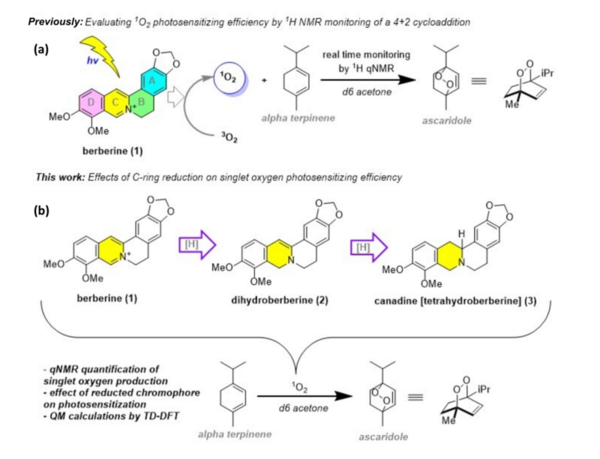
Berberine is a natural product isoquinoline alkaloid derived from plants of the genus Berberis. When exposed to photoirradiation, it produces singlet oxygen through photosensitization of triplet oxygen. Through qNMR analysis of 1H NMR spectra gathered through kinetic experiments, we were able to track the generation of a product between singlet oxygen and alpha terpinene, allowing us to quantitatively measure the photosensitizing properties of our scaffolds.
Read More...String analysis of exon 10 of the CFTR gene and the use of Bioinformatics in determination of the most accurate DNA indicator for CF prediction
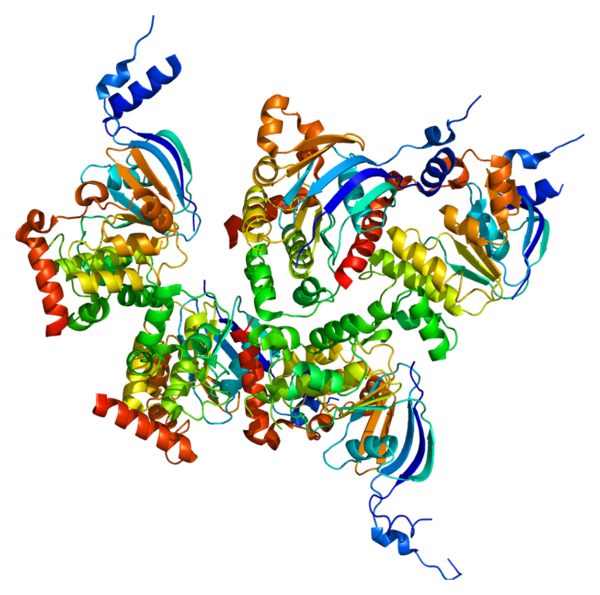
Cystic fibrosis is a genetic disease caused by mutations in the CFTR gene. In this paper, the authors attempt to identify variations in stretches of up to 8 nucleotides in the protein-coding portions of the CFTR gene that are associated with disease development. This would allow screening of newborns or even fetuses in utero to determine the likelihood they develop cystic fibrosis.
Read More...The effect of an anthocyanin on the gut permeability of a Type 2 Diabetic Drosophila melanogaster

Anti-diabetic drugs like Metformin are known to increase gut permeability, and this has a negative impact on patient health. These authors hypothesized that this can be mitigated using purple sweet potato extract, which is high anthocyanin content, that feeds bacteria metabolism to decrease gut permeability.
Read More...Transfer Learning with Convolutional Neural Network-Based Models for Skin Cancer Classification
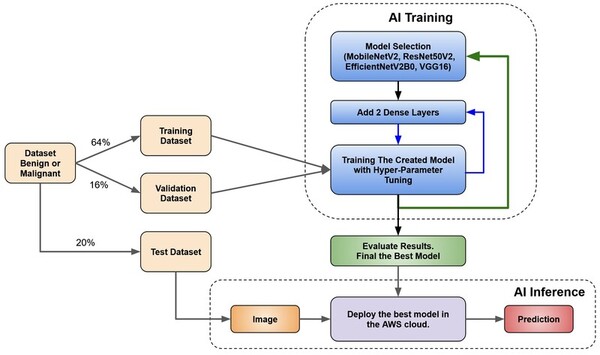
Skin cancer is a common and potentially deadly form of cancer. This study’s purpose was to develop an automated approach for early detection for skin cancer. We hypothesized that convolutional neural network-based models using transfer learning could accurately differentiate between benign and malignant moles using natural images of human skin.
Read More...Quantitative analysis and development of alopecia areata classification frameworks
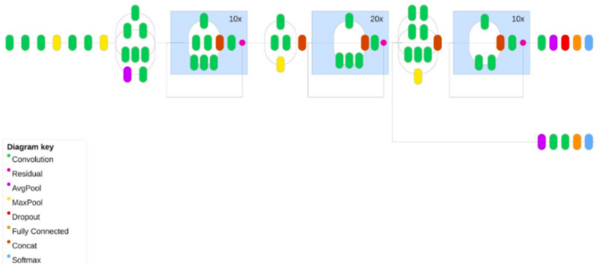
This article discusses Alopecia areata, an autoimmune disorder causing sudden hair loss due to the immune system mistakenly attacking hair follicles. The article introduces the use of deep learning (DL) techniques, particularly convolutional neural networks (CNN), for classifying images of healthy and alopecia-affected hair. The study presents a comparative analysis of newly optimized CNN models with existing ones, trained on datasets containing images of healthy and alopecia-affected hair. The Inception-Resnet-v2 model emerged as the most effective for classifying Alopecia Areata.
Read More...Simulations of Cheetah Roaming Demonstrate the Effect of Safety Corridors on Genetic Diversity and Human-Cheetah Conflict

Ecological corridors are geographic features designated to allow the movement of wildlife populations between habitats that have been fragmented by human landscapes. Corridors can be a pivotal aspect in wildlife conservation because they preserve a suitable habitat for isolated populations to live and intermingle. Here, two students simulate the effect of introducing a safety corridor for cheetahs, based on real tracking data on cheetahs in Namibia.
Read More...The impact of environmental noise on the cognitive functions and mental workload of high school students
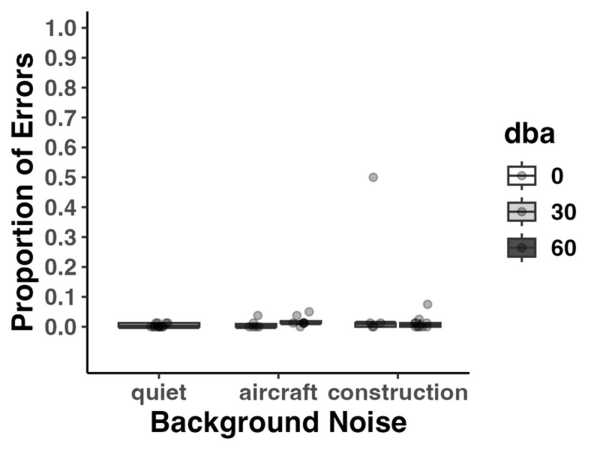
Authors examine the impact of environmental noise on cognitive processes in teenagers, focusing on five different noise conditions: two types of noise (aircraft and construction) at two different decibel levels (30 dBA and 60 dBA) and a quiet condition.
Read More...