Browse Articles

Suppress that algae: Mitigating the effects of harmful algal blooms through preemptive detection & suppression

Natarajan et al. | Jul 17, 2023

Suppress that algae: Mitigating the effects of harmful algal blooms through preemptive detection & suppression
Image credit: Sharanya Natarajan

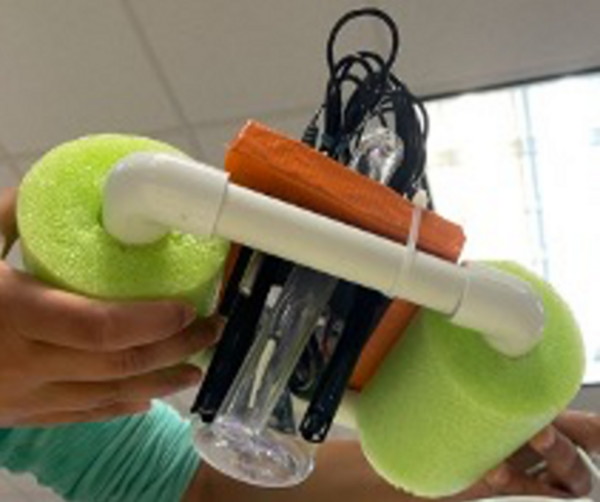
A bottleneck in deleting algal blooms is that current data section is manual and is reactionary to an existing algal bloom. These authors made a custom-designed Seek and Destroy Algal Mitigation System (SDAMS) that detects harmful algal blooms at earlier time points with astonishing accuracy, and can instantaneously suppress the pre-bloom algal population.

Read More...

The Cosmic Microwave Background: Galactic Foregrounds and Faraday Rotation

Connelly et al. | Nov 20, 2017

The Cosmic Microwave Background: Galactic Foregrounds and Faraday Rotation

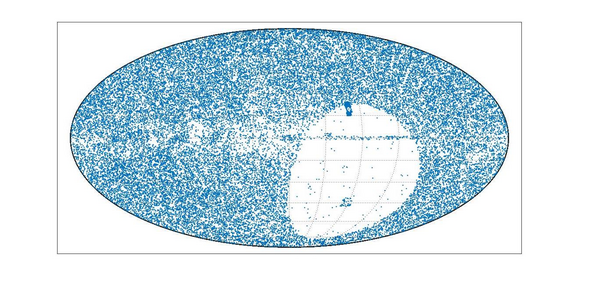
The cosmic microwave background (CMB) is faint electromagnetic radiation left over from early stages in the formation of the universe. In order to analyze the CMB, scientists need to remove from electromagnetic data foreground radiation that contaminates CMB datasets. In this study, students utilize extensive updated datasets to analyze the correlation between CMB maps and Faraday RM and WMAP sky maps.

Read More...

Tree-Based Learning Algorithms to Classify ECG with Arrhythmias

Sun et al. | Apr 23, 2025

Tree-Based Learning Algorithms to Classify ECG with Arrhythmias

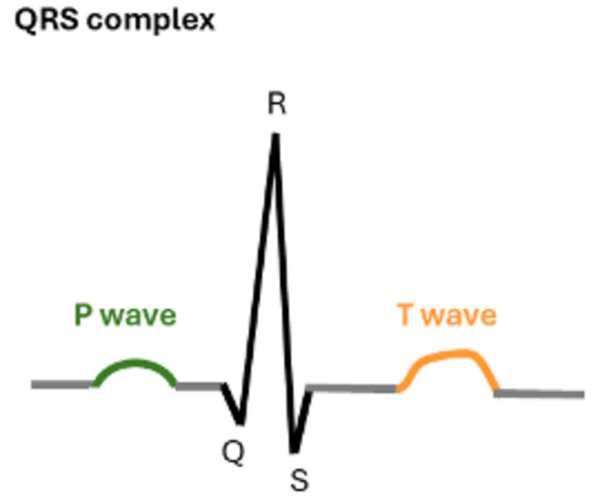
Arrhythmias vary in type and treatment, and ECGs are used to detect them, though human interpretation can be inconsistent. The researchers tested four tree-based algorithms (gradient boosting, random forest, decision tree, and extra trees) on ECG data from over 10,000 patients.

Read More...

Enhanced brain arteries and aneurysms analysis using a CAE-CFD approach

Saravanan et al. | Mar 02, 2025

Enhanced brain arteries and aneurysms analysis using a CAE-CFD approach
Image credit: Vineet Saravanan

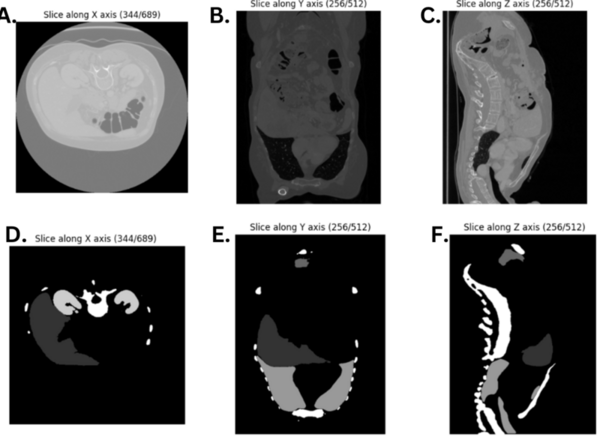
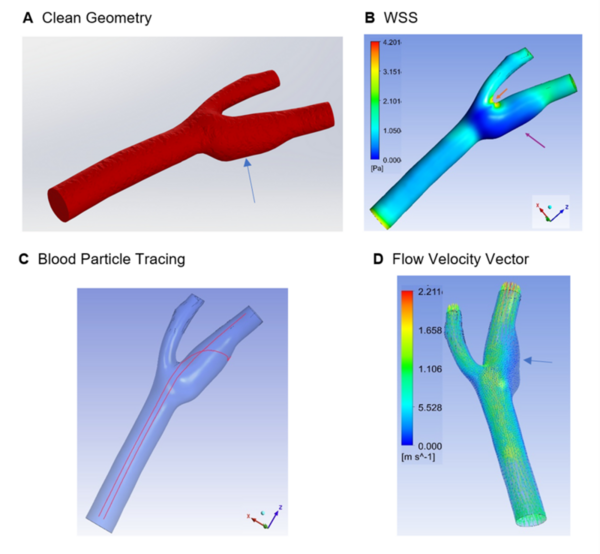
Here, recognizing that brain aneurysms pose a severe threat, often misdiagnosed and leading to high mortality, particularly in younger individuals, the authors explored a novel computer-aided engineering approach. They used magnetic resonance angiography images and computational fluid dynamics, to improve aneurysm detection and risk assessment, aiming for more personalized treatment.

Read More...