Browse Articles

Can Children Acquire Their Parents’ History of Fracture?

Boulis et al. | Sep 24, 2018

Can Children Acquire Their Parents’ History of Fracture?

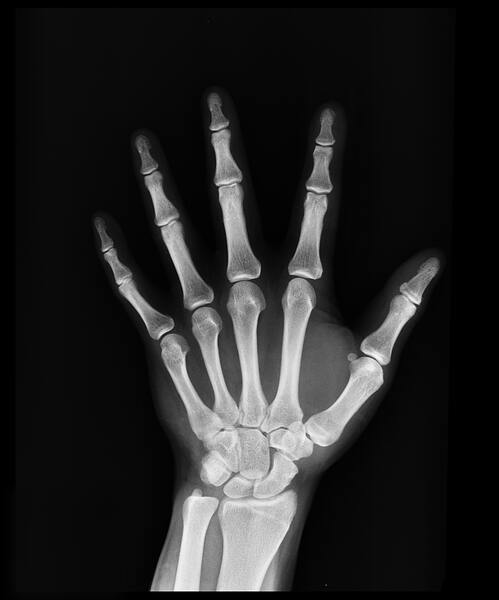
While the genetic basis of hip fracture risk has been studied extensively in adults, it is not known whether parental history of bone fractures affects their children's fracture risk. In this article, the authors investigated whether a parental history of bone fractures influences the rate of fractures in their children. They found that adolescent children whose parents had a more extensive history of fractures were more likely to have a history of fractures themselves, suggesting that parents' medical histories may be an important consideration in future pediatric health research.

Read More...

Using broad health-related survey questions to predict the presence of coronary heart disease

Chavda et al. | Aug 23, 2024

Using broad health-related survey questions to predict the presence of coronary heart disease

Coronary heart disease (CHD) is the leading cause of death in the U.S., responsible for nearly 700,000 deaths in 2021, and is marked by artery clogging that can lead to heart attacks. Traditional prediction methods require expensive clinical tests, but a new study explores using machine learning on demographic, clinical, and behavioral survey data to predict CHD.

Read More...

Deciphering correlation and causation in risk factors for heart disease with Mendelian randomization

Singh et al. | Feb 08, 2023

Deciphering correlation and causation in risk factors for heart disease with Mendelian randomization
Image credit: Robina Weermeijer

Here, seeking to identify the risk of coronary artery disease (CAD), a major cause of cardiovascular disease, the authors used Mendelian randomization. With this method they identified several traits such as blood pressure readings, LDL cholesterol and BMI as significant risk factors. While other traits were not found to be significant risk factors.

Read More...

Breast cancer mammographic screening by different guidelines among women of different races/ethnicities

Wang et al. | Aug 27, 2023

Breast cancer mammographic screening by different guidelines among women of different races/ethnicities

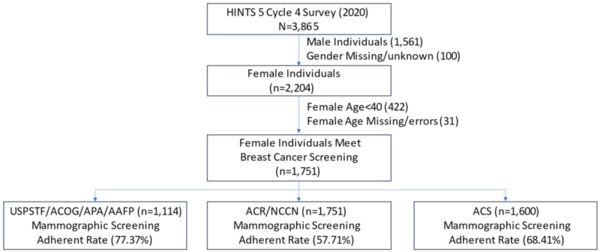
Mammographic screening is a common diagnostic tool for breast cancer among average-risk women. The authors hypothesized that adherence rates for mammographic screening may be lower among minorities (non-Hispanic black (NHB) and Hispanic/Latino) than among non-Hispanic whites (NHW) regardless of the guideline applied. The findings support other studies’ results that different racial/ethnic and socio-demographic factors can affect screening adherence. Therefore, healthcare providers should promote breast cancer screening especially among NHW/Hispanic women and women lacking insurance coverage.

Read More...

A Quantitative Assessment of Time, Frequency, and Time-frequency Algorithms for Automated Seizure Detection and Monitoring

Vangal et al. | Sep 28, 2020

A Quantitative Assessment of Time, Frequency, and Time-frequency Algorithms for Automated Seizure Detection and Monitoring

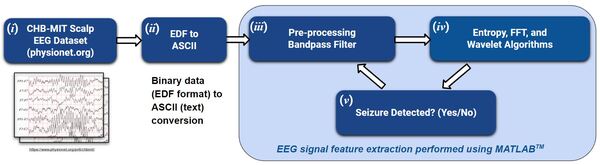
Each year, over 100,000 patients die from Sudden Unexpected Death in Epilepsy (SUDEP). A reliable seizure warning system can help patients stay safe. This work presents a comprehensive, comparative analysis of three different signal processing algorithms for automated seizure/ictal detection. The experimental results show that the proposed methods can be effective for accurate automated seizure detection and monitoring in clinical care.

Read More...

POC-MON: A Novel and Cost-Effective Pocket Lemon Sniff Test (PLST) for Early Detection of Major Depressive Disorder

Cruz et al. | Jul 07, 2020

POC-MON: A Novel and Cost-Effective Pocket Lemon Sniff Test (PLST) for Early Detection of Major Depressive Disorder

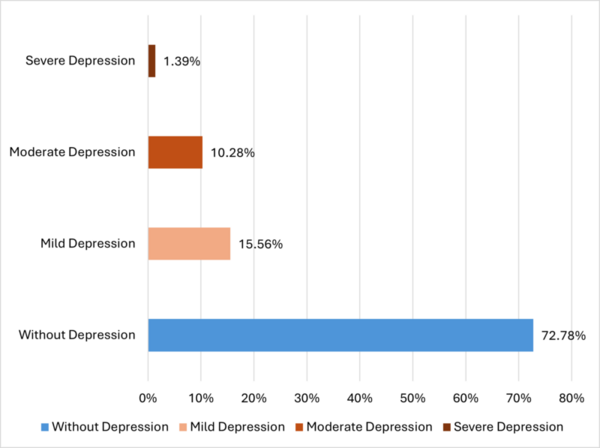
Effective treatment of depression requires early detection. Depressive symptoms overlap with olfactory regions, which led to several studies of the correlation between sense of smell and depression. The alarming rise of depression, its related crimes, suicides, and lack of inexpensive, quick tools in detecting early depression — this study aims in demonstrating decreased olfaction and depression correlation. Forty-two subjects (ages 13-83) underwent POC-MON (Pocket Lemon) assessment — an oven-dried lemon peel sniff test, subjected to distance measurement when odor first detected (threshold) and completed Patient Health Questionnaires (PHQ-9). POC-MON and PHQ-9 scores yielded a correlation of 20% and 18% for the right and left nostrils, respectively. Among male (n=17) subjects, the average distance of POC-MON and PHQ-9 scores produced a correlation of 14% and 16% for the right and left nostrils, respectively. Females (n=25) demonstrated a correlation of 28% and 21% for the right and left nostrils, respectively. These results suggest the correlation between olfaction and depression in diagnosing its early-stage, using a quick, inexpensive, and patient-friendly tool — POC-MON.

Read More...