Browse Articles

Assessing the association between developed surface area and land surface temperature of urban areas

Ustin et al. | Nov 11, 2024

Assessing the association between developed surface area and land surface temperature of urban areas
Image credit: The authors

Almost all urban areas face the challenge of urban heat islands, areas with substantially hotter land surface temperatures than the surrounding rural areas. These areas are associated with worse air and water
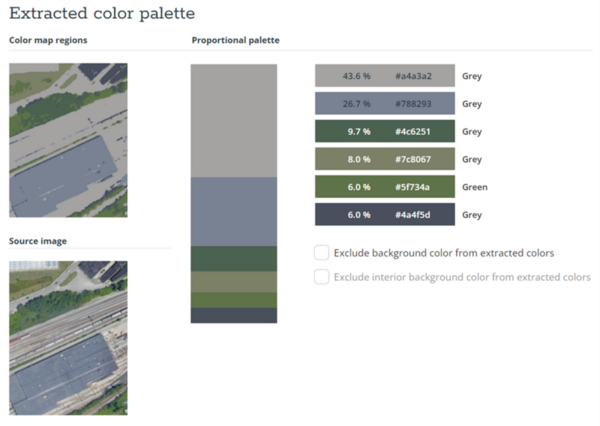
quality, increased power outages, and increased heat-related illnesses. To learn more about these areas, Ustin et al. analyze satellite images of Cleveland neighborhoods to find out if there is a correlation between surface area development and surface temperature.

Read More...

The impact of timing and magnitude of the El Niño- Southern Oscillation on local precipitation levels and temperatures in the Bay Area

Li et al. | May 09, 2021

The impact of timing and magnitude of the El Niño- Southern Oscillation on local precipitation levels and temperatures in the Bay Area

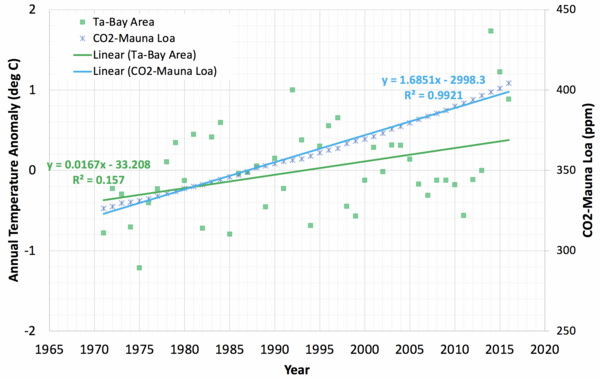
Understanding the relationships between temperature, MEI, SPI, and CO2 concentration is important as they measure the major influencers of California’s regional climate: temperature, ENSO, precipitation, and atmospheric CO2. In this article, the authors analyzed temperature, Multivariate El Niño-Southern Oscillation Index (MEI), and Standard Precipitation Index (SPI) data from the San Francisco Bay Area from 1971 to 2016. They also analyzed CO2 records from Mauna Loa, HI for the same time period, along with the annual temperature anomalies for the Bay Area.

Read More...

A new hybrid cold storage material

Zhang et al. | Jun 05, 2022

A new hybrid cold storage material

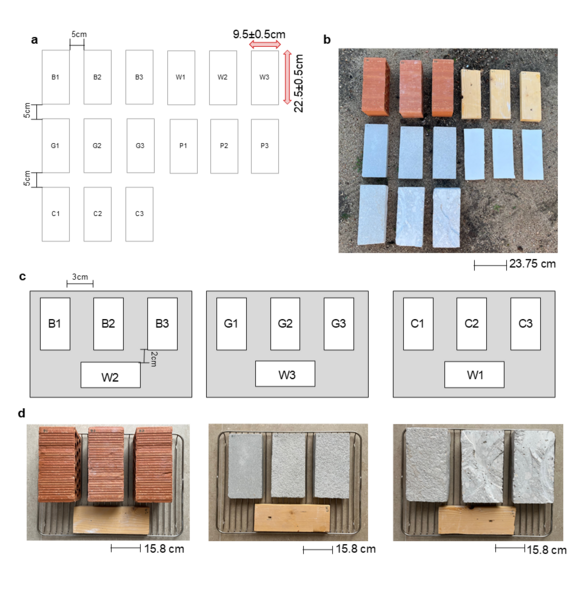
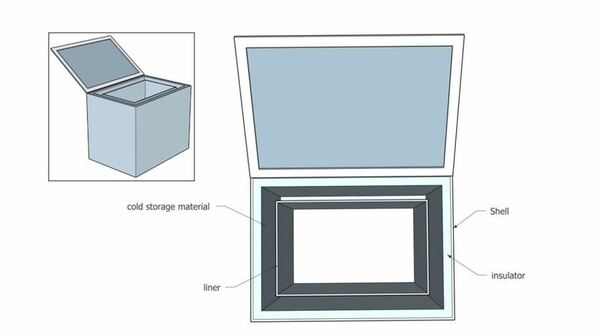
With low-temperature transportation being critical for the progress of research and medical services by preserving biological samples and vaccines, the optimization of cold storage materials is more critical now than ever. The exclusive use of dry ice has its limitations. Notably, it proves insufficient for cold storage during long-range transportation necessary for the delivery of specimens to rural areas. In this article, the authors have proposed a new means of cold storage through the combination of dry ice and ethanol. Upon thorough analysis, the authors have determined their new method as considerably better than the use of pure dry ice across many characteristics, including cold storage capacity, longevity of material, and financial and environmental feasibility.

Read More...

An Investigative Analysis of Climate Change Using Historical and Modern Weather Data

Han et al. | Dec 02, 2013

An Investigative Analysis of Climate Change Using Historical and Modern Weather Data

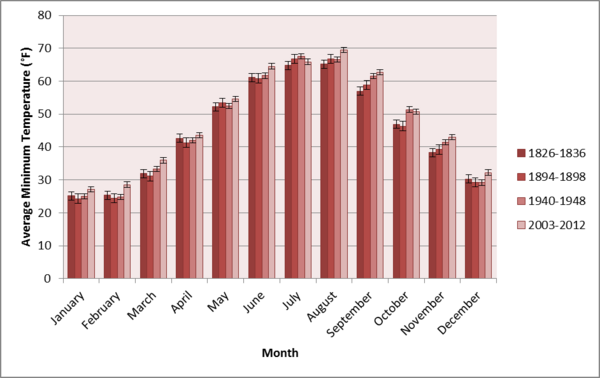
Climate change is an important and contentious issue that has far-reaching implications for our future. The authors here compare primary temperature and precipitation data from almost 200 years ago against the present day. They find that the average annual temperature in Brooklyn, NY has risen significantly over this time, as has the frequency of precipitation, though not the amount of precipitation. These data stress the need for more ecologically-conscious choices in our daily lives.

Read More...

Fluorescein or Green Fluorescent Protein: Is It Possible to Create a Sensor for Dehydration?

Joshi et al. | Dec 09, 2019

Fluorescein or Green Fluorescent Protein: Is It Possible to Create a Sensor for Dehydration?

Currently there is no early dehydration detection system using temperature and pH as indicators. A sensor could alert the wearer and others of low hydration levels, which would normally be difficult to catch prior to more serious complications resulting from dehydration. In this study, a protein fluorophore, green fluorescent protein (GFP), and a chemical fluorophore, fluorescein, were tested for a change in fluorescence in response to increased temperature or decreased pH. Reversing the pH change did not restore GFP fluorescence, but that of fluorescein was re-established. This finding suggests that fluorescein could be used as a reusable sensor for a dehydration-related pH change.

Read More...