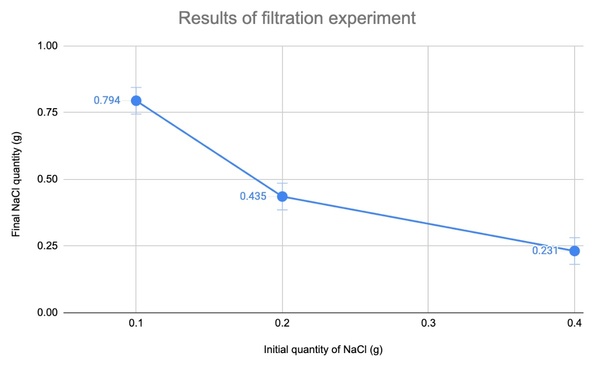
The authors investigated the efficacy of functionalized graphene oxide nanoparticles for turning saltwater to freshwater.
Read More...Functionalized graphene oxide nanoparticles for improved saltwater treatment
The authors investigated the efficacy of functionalized graphene oxide nanoparticles for turning saltwater to freshwater.
Read More...AeroPurify: Autonomous air filtration UAV using real-time 3-D Monte Carlo gradient search

Here the authors present an autonomous drone air filtration system that uses a novel algorithm, the gradient ascent ML particle filter (GA/MLPF), to efficiently locate and mitigate outdoor air pollution. They demonstrate that their GA/MLPF algorithm is significantly more efficient than the conventional gradient ascent algorithm, reducing both the time and number of waypoints needed to find the source of pollution.
Read More...Parental exposure of cannabinoids THC and CBD reduces reproductive rates in Drosophila melanogaster
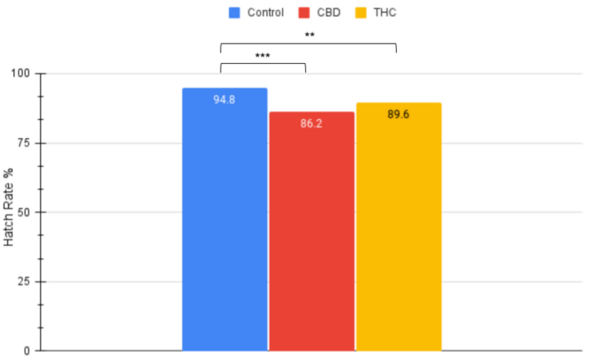
The authors looked at whether CBD and THC would decrease reproductive rates in a Drosophila melanogaster model. They found that CBD had a greater impact on reducing hatching rates than THC, and that THC resulted in unexpected mortalities.
Read More...Effects of material advantage and space advantage on the Komodo and Stockfish chess engines
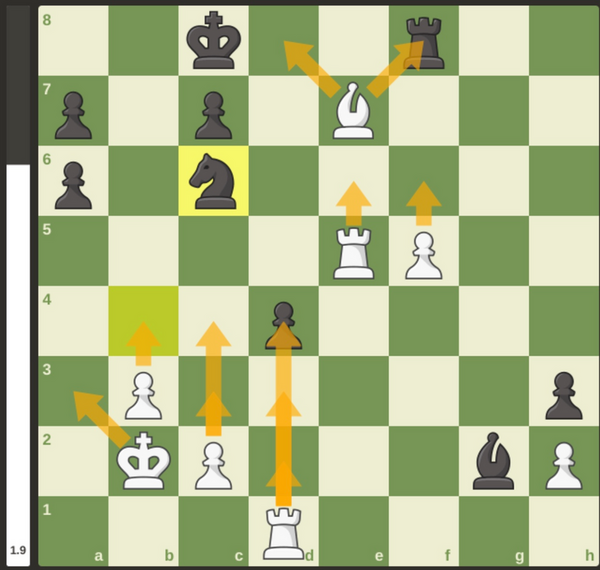
Chess engines, or computer programs built to play chess, outperform even the best human players. Kaushikan and Park investigate the inner workings of these chess engines by studying popular chess engines' evaluations of which side of a chess match is most likely to win, and how this is affected by the number of pieces and controlled squares on each side.
Read More...Comparative analysis of CO2 emissions of electric ride-hailing vehicles over conventional gasoline personal vehicles

While some believe that ride-hailing services offer reduced CO2 emissions compared to individual driving, studies have found that driving without passengers on ride-hailing trips or "deadheading" prevents this. Here, with a mathematical model, the authors investigated if the use of electric vehicles as ride-hailing vehicles could offer reduced CO2 emissions. They found that the improved vehicle efficiency and cleaner generation could in fact lower emissions compared to the use of personal gas vehicles.
Read More...Implementing machine learning algorithms on criminal databases to develop a criminal activity index
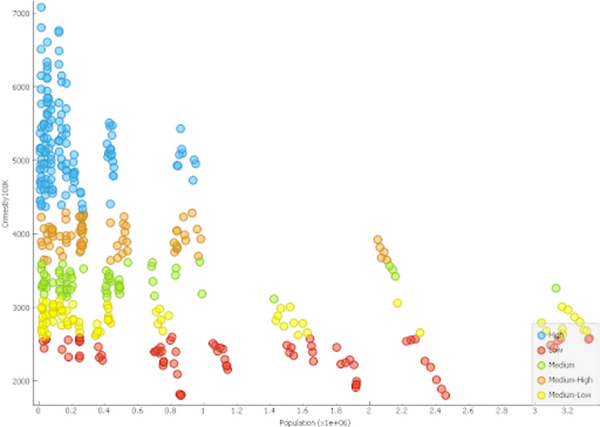
The authors look at using publicly available data and machine learning to see if they can develop a criminal activity index for counties within the state of California.
Read More...The influence of purpose-of-use on information overload in online social networking

Here, seeking to understand the effects of social media in relation to social media fatigue and/or overload in recent years, the authors used various linear models to assess the results of a survey of 27 respondents. Their results showed that increased duration of use of social media did not necessarily lead to fatigue, suggesting that quality may be more important than quantity. They also considered the purpose of an individual's social media usage as well as their engagement behavior during the COVID-19 pandemic.
Read More...Comparing the effects of electronic cigarette smoke and conventional cigarette smoke on lung cancer viability
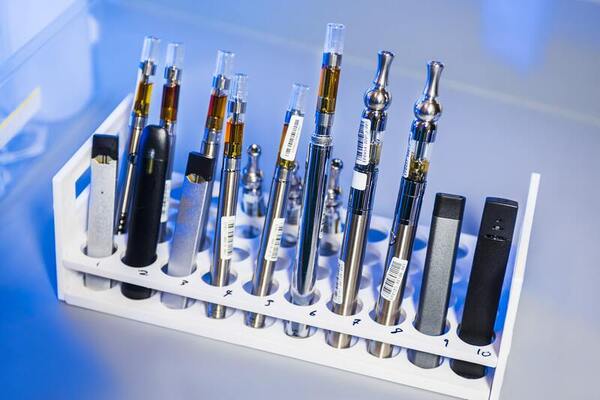
Here, recognizing the significant growth of electronic cigarettes in recent years, the authors sought to test a hypothesis that three main components of the liquid solutions used in e-cigarettes might affect lung cancer cell viability. In a study performed by exposing A549 cells, human lung cancer cells, to different types of smoke extracts, the authors found that increasing levels of nicotine resulted in improve lung cancer cell viability up until the toxicity of nicotine resulted in cell death. They conclude that these results suggest that contrary to conventional thought e-cigarettes may be more dangerous than tobacco cigarettes in certain contexts.
Read More...Examining the impact of consecutive losses on gambling: When do we decide to quit?

This article explored the question of when do people decide to stop gambling and further tries to extrapolate why people stop gambling at that point. Their study showed that people tend to quit gambling after 4 consecutive losses, significantly more than 1-3 consecutive losses or a win previous to quitting. They also found that participants commonly quit at a point value approximately 5 points greater than or less than their starting balance. The authors concluded that these results may be important in understanding how to cut down on excessive gambling or in creating policies that make it easier for people to disengage from gambling.
Read More...The availability of a poetry tutor prompts inexperienced writers to explore deeply emotional themes

The study developed Loving Words, a free AI-powered poetry tutor designed to help writers improve their poetry and experience its therapeutic benefits. Two groups of participants wrote poems—one without assistance and one using Loving Words.
Read More...