
The authors computationally screened potential ALDH1 inhibitors, for use as potential cancer therapeutics.
Read More...In silico screening of DEAB analogues as ALDH1 isoenzymes inhibitors in cancer treatment
The authors computationally screened potential ALDH1 inhibitors, for use as potential cancer therapeutics.
Read More...Exploring Political Discourse Among High School Journalists with Web Scraping and AI Technology

Here the authors provided greater coverage of adolescent stances by investigating the political perspectives and trends of high school journalists, utilizing web scraping methods and artificial intelligence (ChatGPT-4o) to analyze over 153,000 articles. They found that high school publications exhibit lower levels of political polarization compared to mainstream media and that journalists' views, while tending to lean moderately liberal, showed no significant correlation with local voting patterns.
Read More...Investigating auxin import and export proteins in Chlorella vulgaris

This study explores auxin signaling in Chlorella vulgaris, a green alga with potential for sustainable biofuel and food production. Evidence from protoplast swelling experiments suggests that C. vulgaris secretes auxin and possesses auxin import proteins, highlighting previously uncharacterized signaling pathways. These findings could support more efficient cultivation and resource extraction strategies.
Read More...Lactic acid bacteria protect the growth of Solanum lycopersicum from Sodium dodecyl sulfate
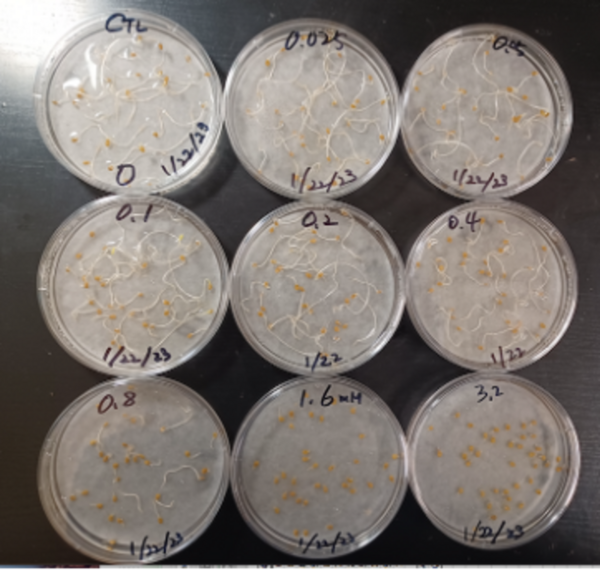
Sodium dodecyl sulfate (SDS), a detergent component, can harm plant growth when it contaminates soil and waterways. Authors explored the potential of lactic acid bacteria (LAB) to mitigate SDS-induced stress on plants.
Read More...Antimicrobial properties of common household spices on microbes cultured from two kitchen locations
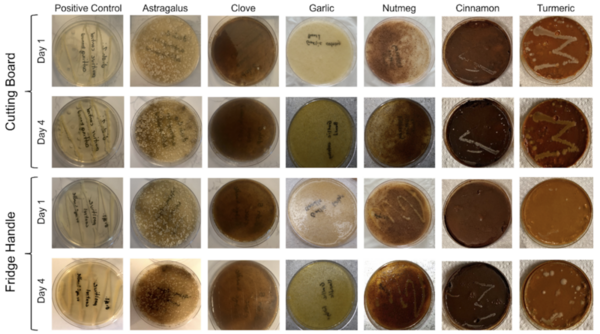
The number of bacterial infections in humans is rising, and a major contributor is foodborne illnesses, which affect a large portion of the population and result in many hospitalizations and deaths. Common household cleaners are an effective strategy to combat foodborne illness, but they are often costly and contain harmful chemicals. Thus, the authors sought to test the antimicrobial effectiveness of spices (clove, nutmeg, astragalus, cinnamon, turmeric, and garlic) on microbes cultured from refrigerator handles and cutting boards. Results from this study demonstrate long-lasting, antimicrobial effects of multiple spices that support their use as alternatives to common household cleaners.
Read More...Reducing PMA-induced COX-2 expression using a herbal formulation in MCF-7 breast cancer cells

In this study, the authors investigate the effect of a herbal formulation on Cyclooxygenase-2 (COX-2) expression in cancer cells. High levels of COX-2 correlates with worsened cancer outcomes and the authors hypothesize that the formulation will inhibit COX-2 levels.
Read More...Comparing Virulence of Three T4 Bacteriophage Strains on Ampicillin-Resistant and Sensitive E. coli Bacteria

In this study, the authors investigate an alternative way to kill bacteria other than the use of antibiotics, which is useful when considering antibiotic-resistance bacteria. They use bacteriophages, which are are viruses that can infect bacteria, and measure cell lysis. They make some important findings that these bacteriophage can lyse both antibiotic-resistant and non-resistant bacteria.
Read More...Evaluation of Tea Extract as an Inhibitor of Oxidative Stress in Prostate Cells

One important factor that contributes to human cancers is accumulated damage to cells' DNA due to the oxidative stress caused by free radicals. In this study, the authors investigate the effects of several different tea leaf extracts on oxidative stress in cultured human prostate cells to see if antioxidants in the tea leaves could help protect cells from this type of DNA damage. They found that all four types of tea extract (as well as direct application of the antioxidant EGCG) improved the outcomes for the cultured cells, with white tea extract having the strongest effect. This research suggests that tea extracts and the antioxidants that they contain may have applications in the treatment of the many diseases associated with cellular DNA damage, including cancer.
Read More...A cross-cultural analysis of consumer behavior and payment preferences: Insights from India and the United Arab Emirates
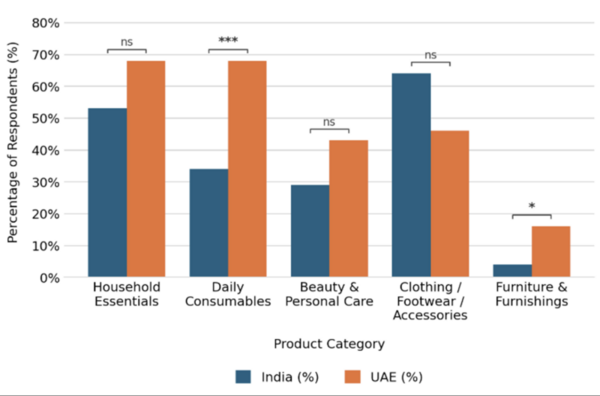
Consumers in India and the United Arab Emirates live in very different economic and cultural environments, and this study set out to measure how that shapes the way they shop and pay. Surveying 50 people in each country, they found that Indian consumers were more price-sensitive and favored cash, while UAE consumers prioritized convenience, gravitating toward credit cards, mobile wallets, and online shopping. The results offer practical insight for retailers, marketers, and policymakers working across these two fast-growing but culturally distinct markets.
Read More...A study to determine the anti-cancer and pro-apoptotic properties of Amaranthus spinosus Linn. Extract, AS20
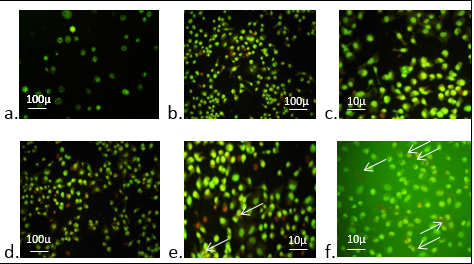
In this study, the authors investigate whether a new compound has anti-cancer properties. Using the crude extract from the Amaranthus spinosus plant, HeLa cancer cells were assessed for cell death. Findings reveal that the extract (AS20) has cytotoxic effects on HeLa cells. Their findings introduce a new compound to potentially pursue in the hunt for novel cancer treatments.
Read More...