Browse Articles

Evaluation of Tea Extract as an Inhibitor of Oxidative Stress in Prostate Cells

Zhang et al. | Jan 22, 2019

Evaluation of Tea Extract as an Inhibitor of Oxidative Stress in Prostate Cells

One important factor that contributes to human cancers is accumulated damage to cells' DNA due to the oxidative stress caused by free radicals. In this study, the authors investigate the effects of several different tea leaf extracts on oxidative stress in cultured human prostate cells to see if antioxidants in the tea leaves could help protect cells from this type of DNA damage. They found that all four types of tea extract (as well as direct application of the antioxidant EGCG) improved the outcomes for the cultured cells, with white tea extract having the strongest effect. This research suggests that tea extracts and the antioxidants that they contain may have applications in the treatment of the many diseases associated with cellular DNA damage, including cancer.

Read More...

Mathematical modeling of plant community composition for urban greenery plans

Fang et al. | Jul 05, 2023

Mathematical modeling of plant community composition for urban greenery plans
Image credit: CHUTTERSNAP

Here recognizing the importance of urban green space for the health of humans and other organisms, the authors investigated if mathematical modeling can be used to develop an urban greenery management plan with high eco-sustainability by calculating the composition of a plant community. They optimized and tested their model against green fields in a Beijing city park. Although the compositions predicted by their models differed somewhat from the composition of testing fields, they conclude that by using a mathematical model such as this urban green space can be finely designed to be ecologically and economically sustainable.

Read More...

Antimicrobial properties of common household spices on microbes cultured from two kitchen locations

Carroll et al. | May 12, 2022

Antimicrobial properties of common household spices on microbes cultured from two kitchen locations

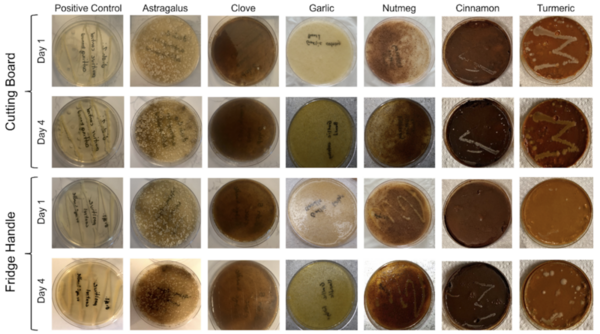
The number of bacterial infections in humans is rising, and a major contributor is foodborne illnesses, which affect a large portion of the population and result in many hospitalizations and deaths. Common household cleaners are an effective strategy to combat foodborne illness, but they are often costly and contain harmful chemicals. Thus, the authors sought to test the antimicrobial effectiveness of spices (clove, nutmeg, astragalus, cinnamon, turmeric, and garlic) on microbes cultured from refrigerator handles and cutting boards. Results from this study demonstrate long-lasting, antimicrobial effects of multiple spices that support their use as alternatives to common household cleaners.

Read More...

Music's Effect on Dogs' Heart Rates

Aubin et al. | Oct 03, 2017

Music's Effect on Dogs' Heart Rates

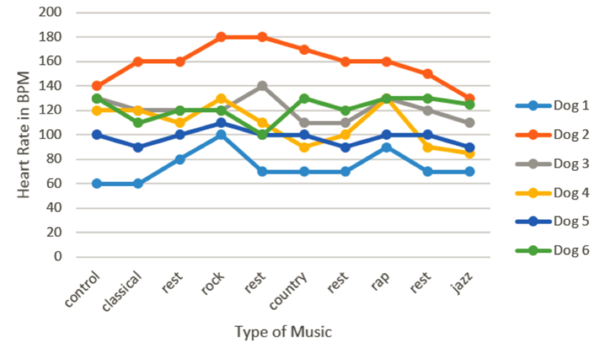
Music can affect the behavior of humans and other animals. In this study, the authors studied five types of music with different tempos and demonstrated how each one affected dogs' heart rates.

Read More...

Mitigating microplastic exposure from water consumption in junior high students and teachers

Chow et al. | May 10, 2024

Mitigating microplastic exposure from water consumption in junior high students and teachers
Image credit: Pixabay

Microplastics (MPs) are inorganic material that have been observed within items destined for human consumption, including water, and may pose a potential health hazard. Here we estimated the average amount of MPs junior high students and teachers consumed from different water sources and determined whether promoting awareness of microplastic (MP) exposure influenced choice of water source and potential MPs consumed.

Read More...

Investigation of the correlation between trihalomethane concentrations and socioeconomic factors in NY State

Lee et al. | Aug 19, 2023

Investigation of the correlation between trihalomethane concentrations and socioeconomic factors in NY State

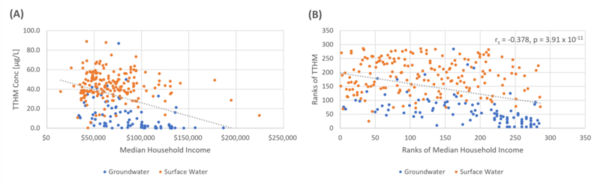
Trihalomethanes, probable human carcinogens, are commonly found disinfection by-products (DBPs) in public water systems (PWS). The authors investigated the correlation between trihalomethane concentrations and socioeconomic factors in New York State, finding a negative correlation between median household income and trihalomethane concentrations. The inverse association between trihalomethanes and household income may indicate socioeconomic disparity regarding drinking water quality and the need for improved efforts to assist small- and medium-sized community water systems to lower DBP levels in New York State.

Read More...