Browse Articles

Assigning Lightning Seasons to Different Regions in the United States

Hawkins et al. | Sep 07, 2020

Assigning Lightning Seasons to Different Regions in the United States

Climate change is predicted to increase the frequency of severe thunderstorm events in coming years. In this study, the authors hypothesized that (i) the majority of severe thunderstorm events will occur in the summer months in all states examined for all years analyzed, (ii) climate change will cause an unusual number of severe thunderstorm events in winter months in all states, (iii) thundersnow would be observed in Colorado, and (iv.) there would be no difference in the number of severe thunderstorm events between states in any given year examined. They classified lightning seasons in all states observed, with the most severe thunderstorm events occurring in May, June, July, and August. Colorado, New Jersey, Washington, and West Virginia were found to have severe thunderstorm events in the winter, which could be explained by increased winter storms due to climate change (1). Overall, they highlight the importance of quantifying when lightning seasons occur to avoid lightning-related injuries or death.

Read More...
Characterization of a UPEC DegS Mutant in vitro and in vivo

Bradley et al. | Mar 16, 2015

Characterization of a UPEC <em>DegS</em> Mutant <em>in vitro</em> and <em>in vivo</em>

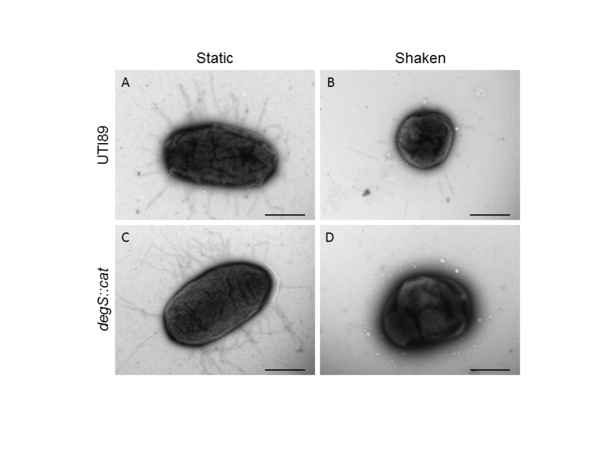
DegS is an integral inner membrane protein in E. coli that helps break down misfolded proteins. When it is mutated, there is a large increase in the production of outer membrane vesicles (OMVs), which are thought to play a role in pathogenesis. This study used mutant strains of uropathogenic E. coli (UPEC) to characterize the role of DegS and OMVs on UPEC virulence.

Read More...

3D Printed Polymer Scaffolds for Bone Tissue Regeneration

Jayatissa et al. | Apr 26, 2019

3D Printed Polymer Scaffolds for Bone Tissue Regeneration

Scientists are always on the quest to improve the body's healing abilities and broken bones are no exception. In this article, the authors investigate properties of 3D-printed biocompatible polymers used to improve bone healing. With such efforts, we can hope to, one day, improve bone scaffolding materials in ways that make the natural healing processes more efficient, reducing the time needed for recovery from bone fractures.

Read More...