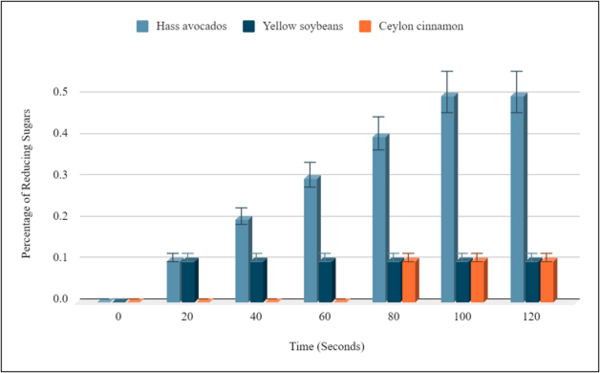
The authors test the levels of reducing sugars in avocados, soybeans, and cinnamon as part of a diet for individuals managing Type II diabetes.
Read More...Comparing the reducing sugars in avocados, soybeans, and cinnamon: A Benedict’s test experiment
The authors test the levels of reducing sugars in avocados, soybeans, and cinnamon as part of a diet for individuals managing Type II diabetes.
Read More...Do elders care about eHealth? A correlational study between eHealth consumption and literacy
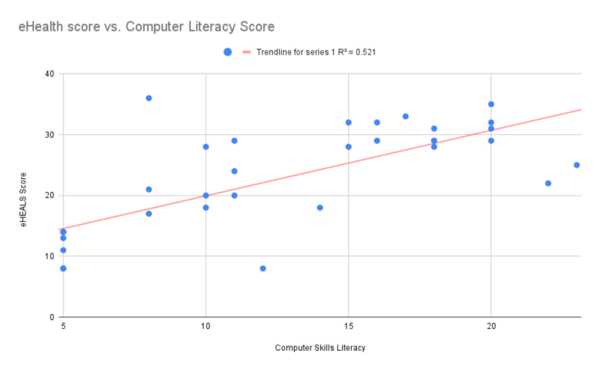
As digital tools become more prevalent in medicine, the ability for individuals to understand and take actions based on what they read on the internet is crucial. eHealth literacy is defined as as the ability to seek, find, understand, and evaluate health information from electronic sources and apply the knowledge gained to addressing or solving a health problem. In general, Americans have low eHealth literacy rates. However, limited research has been conducted to understand the eHealth literacy level among older Chinese adult immigrants in the U.S. To determine the eHealth literacy of elderly Chinese immigrants, we sent out an eHealth survey and relevant computer skills survey using a modified version of the eHEALS (eHealth Literacy Scale) health literacy test. We hypothesized that elders who consumed more electronic health content would have a higher eHealth literacy score. The results of this survey showed that there was a positive correlation between the frequency of electronic health information consumption and the participant's eHealth literacy rate. In addition, the results of our computer literacy test show that the frequency of consumption and computer literacy are positively correlated as well. There is a strong positive correlation between the level of computer skills and eHealth literacy of participants. These results reveal possible steps individuals can take to reduce health misinformation and improve their own health by attaining, understanding, and taking action on health material on the internet.
Read More...Elevated levels of IL-8, TGF-β, and TNF-α associated with pneumoconiosis: A meta-analysis

The authors looked at previous studies to evaluate the ability to use serum levels of certain cytokines as biomarkers for pneumoconiosis.
Read More...Reactivity-informed design, synthesis, and Michael addition kinetics of C-ring andrographolide analogs
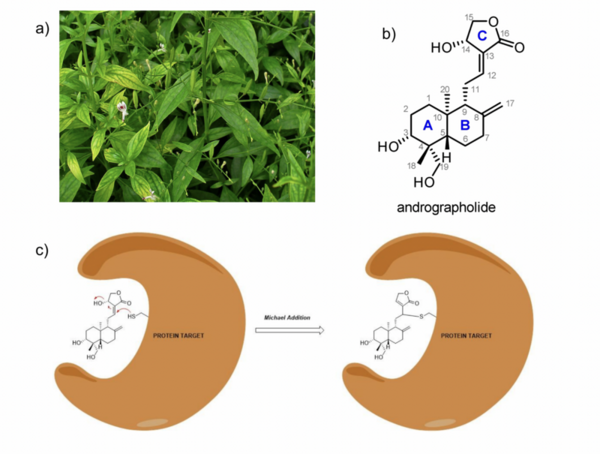
Here, based on the identification of androgapholide as a potential therapeutic treatment against cancer, Alzheimer's disease, diabetes, and multiple sclerosis, due to its ability to inhibit a signaling pathway in immune system function, the authors sought ways to optimize the natural product human systems by manipulating its chemical structure. Through the semisynthesis of a natural product along with computational studies, the authors developed an understanding of the kinetic mechanisms of andrographolide and semisynthetic analogs in the context of Michael additions.
Read More...Environmental, social, and governance ratings and firm performance: Evidence from the Chinese stock market

Large corporations often are known for their financial power, but what social and environmental power and conscious do they have? The more responsible corporations are in relation to environmental, social, and governance criteria the better they do fiscally.
Read More...Does technology help or hurt learning? Evidence from middle school and high school students

Here, recognizing the vastly different opinion held regarding device usage, the authors considered the effects of technology use on middle and high school students' learning effectiveness. Using an anonymous online survey they found partial support that device use at school increases learning effectiveness, but found strong support for a negative effect of technology use at home on learning effectiveness. Based on their findings they suggest that the efficacy of technology depends on environmental context along with other important factors that need consideration.
Read More...Modular mimics of neuroactive alkaloids - design, synthesis, and cholinesterase inhibitory activity of rivastigmine analogs
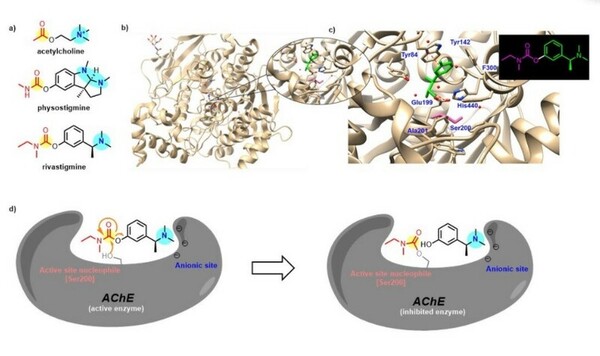
Naturally occurring neuroactive alkaloids are often studied for their potential to treat Neurological diseases. This team of students study Rivastigmine, a potent cholinesterase inhibitor that is a synthetic analog of physostigmine, which comes from the Calabar bean plant Physostigma venenosum. By comparing the effects of optimized synthetic analogs to the naturally occurring alkaloid, they determine the most favorable analog for inhibition of acetylcholinesterase (AChE), the enzyme that breaks down the neurotransmitter acetylcholine (ACh) to terminate neuronal transmission and signaling between synapses.
Read More...Sri Lankan Americans’ views on U.S. racial issues are influenced by pre-migrant ethnic prejudice and identity
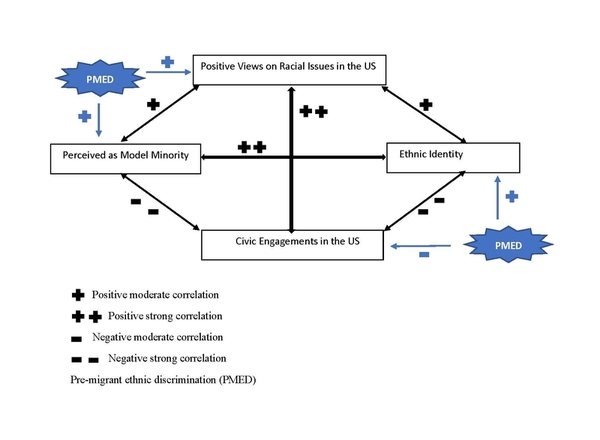
In this study, the authors examined how Sri Lankan Americans (SLAs) view racial issues in the U.S. The main hypothesis is that SLAs, as a minority in the U.S., are supportive of the Black Lives Matter movement and its political goal, challenging the common notion that SLAs are anti-Black. The study found that a majority of SLAs believe the U.S. has systemic racism, favor BLM, and favor affirmative action. IT also found that Tamil SLAs have more favorable views of BLM and affirmative action than Sinhalese SLAs.
Read More...Evaluation of platelet-rich plasma vs. platelet lysate: VEGF and PDGF concentration, stability, and shelf life

Cell-free biologicals are a novel method of treating clinical conditions which involve chronic inflammation such as tendonitis and osteoarthritis. This study compared platelet-derived growth factor (PDGF) and vascular endothelial growth factor (VEGF) in platelet-rich plasma (PRP), activated PRP (aPRP), and platelet lysate (PL). It was hypothesized that PL would contain higher concentrations of growth factors than PRP and that different storage temperatures for PL would diminish cytokine expression. Results demonstrated PL had the highest concentrations of both cytokines, with concentrations slightly diminishing at-80C. aPRP and PRP demonstrated lower concentrations of PDGF and VEGF than PL.
Read More...Idotea balthica comparison: Anatomy, locomotion, and seaweed preference of Massachusetts isopods

Here the authors examined a population of Massachusetts marine isopods, seeking to classify them based on comparison of their morphology, movement, and seaweed preference compared to those of known species. In this process they found that they were most similar to Idotea balthica. The authors suggest that this knowledge combined with monitoring populations of marine biology such as these isopods in different physical and ecological areas can provide useful insight into the effects of climate change.
Read More...