Browse Articles

Groundwater prediction using artificial intelligence: Case study for Texas aquifers

Sharma et al. | Apr 19, 2024

Groundwater prediction using artificial intelligence: Case study for Texas aquifers

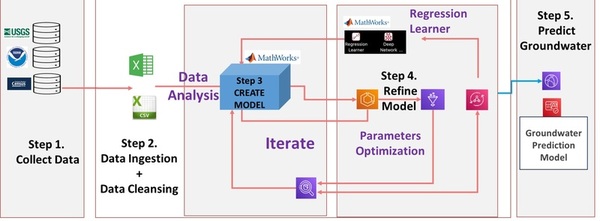
Here, in an effort to develop a model to predict future groundwater levels, the authors tested a tree-based automated artificial intelligence (AI) model against other methods. Through their analysis they found that groundwater levels in Texas aquifers are down significantly, and found that tree-based AI models most accurately predicted future levels.

Read More...

Converting SiO2 wafers to hydrophobic using chlorotrimethylsilane

Lee et al. | Aug 20, 2024

Converting SiO<sub>2</sub> wafers to hydrophobic using chlorotrimethylsilane

Semiconductors are the center of the fourth industrial revolution as they are key components for all electronics. Exposed wafers made of silicon (Si), which can easily oxidize, convert to silicon dioxide (SiO2). The surface of SiO2 wafers consists of many Si-OH bonds, allowing them to easily bond with water, resulting in a “wet” or hydrophilic condition. We sought to determine a way to modify the surface of SiO2 wafers to become hydrophobic to ensure safe wet cleaning.

Read More...

Utilizing sorbitol to improve properties of cellulose-based biodegradable hydrogels

Adler et al. | Jan 06, 2025

Utilizing sorbitol to improve properties of cellulose-based biodegradable hydrogels

Hydrogels are commonly used in medicine, pharmaceuticals, and agriculture. Hydrogels absorb water by swelling and re-release this water by diffusion. This study sought to synthesize a biodegradable, cellulose-based hydrogel that is more effective at absorbing and re-releasing water than those produced by current methods. We tested the compressive strength of both the dry and swollen gels and the tensile strength of the swollen gels to elucidate the gel structure.

Read More...