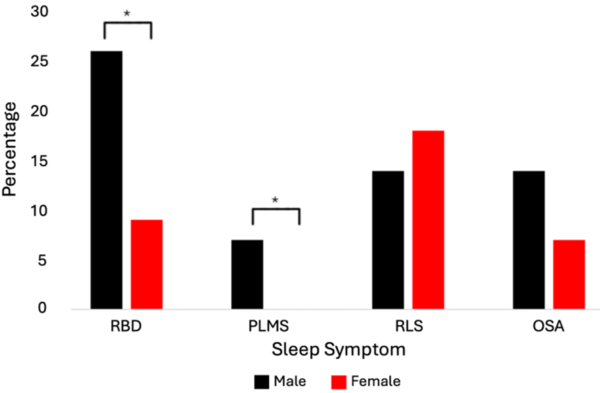
The authors use known Parkinson's disease-associated genetic variants to compare the prevalence of sleep dysfunction between males and females diagnosed with Parkinson's disease.
Read More...Sex differences in sleep disorders of Parkinson’s disease patients associated with a genetic risk variant
The authors use known Parkinson's disease-associated genetic variants to compare the prevalence of sleep dysfunction between males and females diagnosed with Parkinson's disease.
Read More...Effects of urban traffic noise on the early growth and transcription of Arabidopsis thaliana
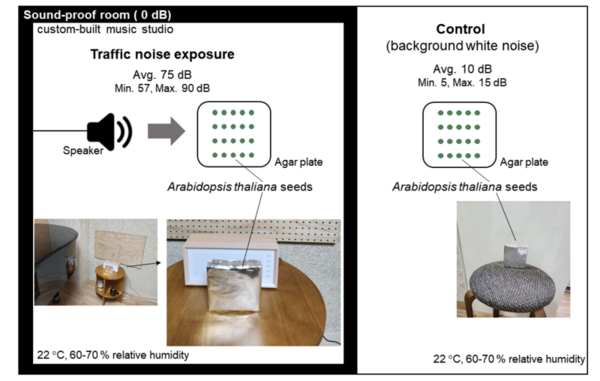
This article explores the largely unstudied impact of noise pollution on plant life. By exposing Arabidopsis thaliana seedlings to urban traffic noise, the study found a significant increase in seedling growth, alongside substantial changes in gene expression. This research reveals critical insights into how noise pollution affects plant physiology and contributes to a broader understanding of its ecological impacts, helping to guide future efforts in ecosystem conservation.
Read More...Synthesis of sodium alginate composite bioplastic films
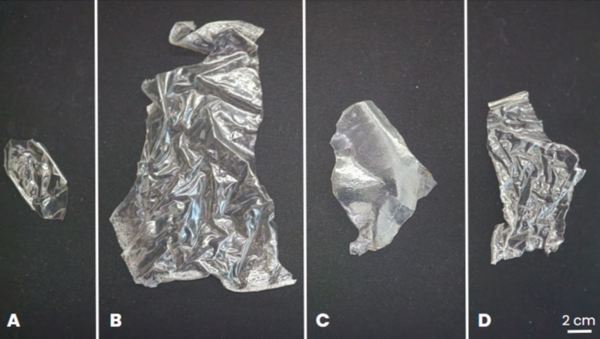
The authors looked at the development of biodegradable bioplastic and its features compared to PET packaging films. They were able to develop a biodegradable plastic with sodium alginate that dissolved in water and degrade in microbial conditions while also being transparent and flexible similar to current plastic films.
Read More...How are genetically modified foods discussed on TikTok? An analysis of #GMOFOODS

Here, the authors investigated engagement with #GMOFOODS, a hashtag on TikTok. They hypothesized that content focused on the negative effects of genetically modified organisms would receive more interaction driven by consumers. They found that the most common cateogry focused on the disadvantages of GMOs related to nutrition and health with the number of views determining if the video would be provided to users.
Read More...Applying centrality analysis on a protein interaction network to predict colorectal cancer driver genes
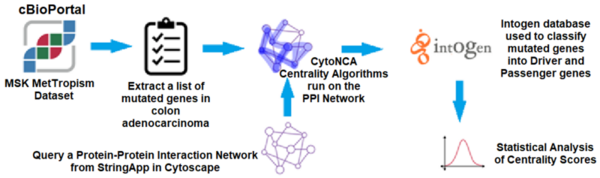
In this article the authors created an interaction map of proteins involved in colorectal cancer to look for driver vs. non-driver genes. That is they wanted to see if they could determine what genes are more likely to drive the development and progression in colorectal cancer and which are present in altered states but not necessarily driving disease progression.
Read More...Post-Traumatic Stress Disorder (PTSD) biomarker identification using a deep learning model
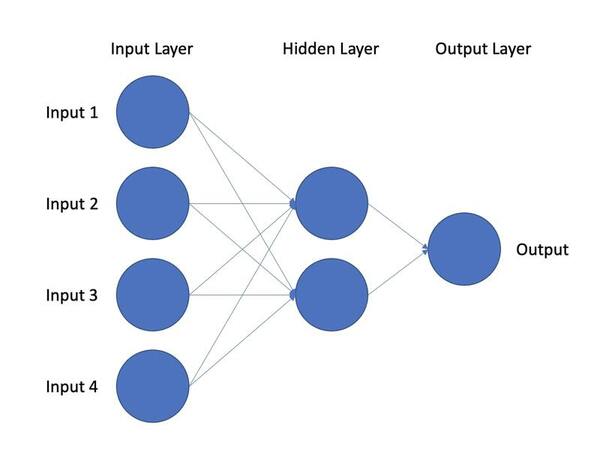
In this study, a deep learning model is used to classify post-traumatic stress disorder patients through novel markers to assist in finding candidate biomarkers for the disorder.
Read More...Modular mimics of neuroactive alkaloids - design, synthesis, and cholinesterase inhibitory activity of rivastigmine analogs
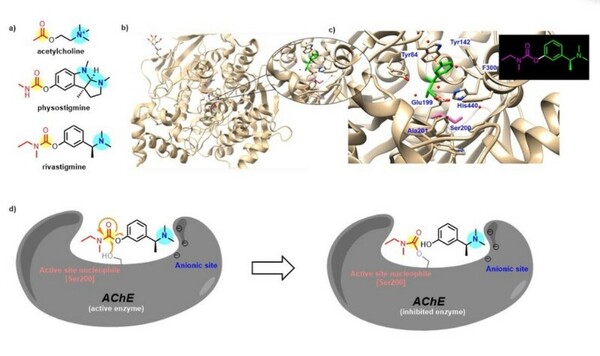
Naturally occurring neuroactive alkaloids are often studied for their potential to treat Neurological diseases. This team of students study Rivastigmine, a potent cholinesterase inhibitor that is a synthetic analog of physostigmine, which comes from the Calabar bean plant Physostigma venenosum. By comparing the effects of optimized synthetic analogs to the naturally occurring alkaloid, they determine the most favorable analog for inhibition of acetylcholinesterase (AChE), the enzyme that breaks down the neurotransmitter acetylcholine (ACh) to terminate neuronal transmission and signaling between synapses.
Read More...Gene expression profiling of MERS-CoV-London strain

In this study, the authors identify transcripts and gene networks that are changed after infection with the Middle East Respiratory Syndrome-related coronavirus (MERS-CoV).
Read More...Preliminary investigation of Allosauroidea facial integument and the evolution of theropod facial armor
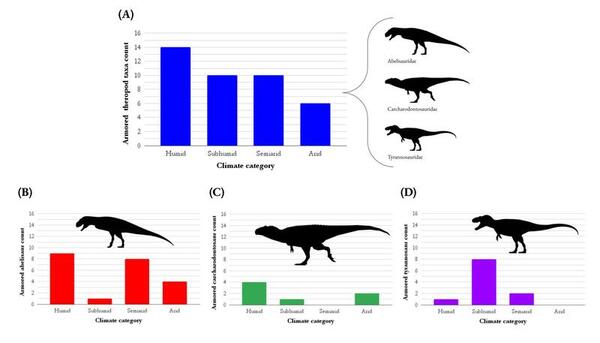
The facial integument, or external skin tissues, were assessed on set of dinosaurs from the Allosauroidea clade to test whether dermal patterns served specific functions.
Read More...DNA-SEnet: A convolutional neural network for classifying DNA-asthma associations

In this study, the authors developed a model named DNA Sequence Embedding Network (DNA-SEnet) to classify DNA-asthma associations using their genomic patterns.
Read More...