Browse Articles

Deep learning for pulsar detection: Investigating hyperparameter effects on TensorFlow classification accuracy

Upadhyay et al. | Jan 31, 2026

Deep learning for pulsar detection: Investigating hyperparameter effects on TensorFlow classification accuracy

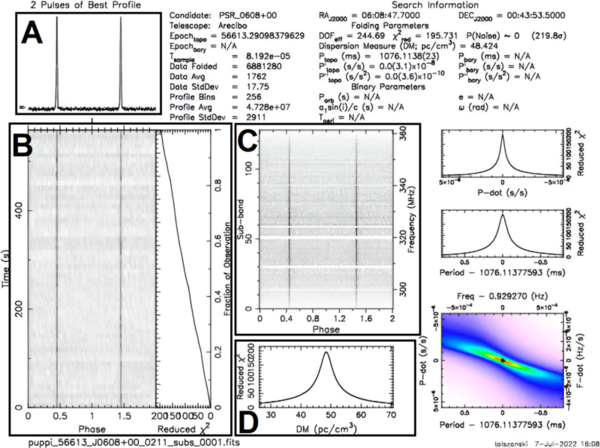
This study investigates how the hyperparameters epochs and batch size affect the classification accuracy of a convolutional neural network (CNN) trained on pulsar candidate data. Our results reveal that accuracy improves with increasing number of epochs and smaller batch sizes, suggesting that with optimized hyperparameters, high accuracy may be achievable with minimal training. These findings offer insights that could help create more efficient machine learning classification models for pulsar signal detection, with the potential of accelerating pulsar discovery and advancing astrophysical research.

Read More...

Evaluating the performance of Q-learning-based AI in auctions

Liu et al. | Nov 09, 2025

Evaluating the performance of Q-learning-based AI in auctions
Image credit: Liu and Liu

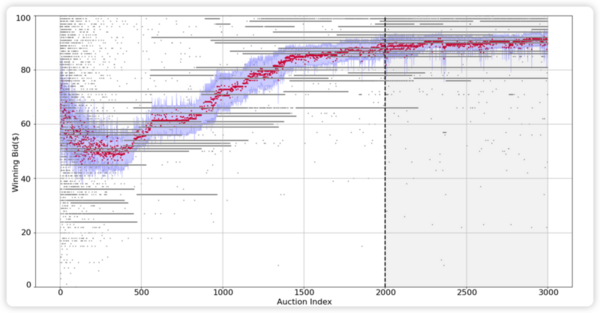
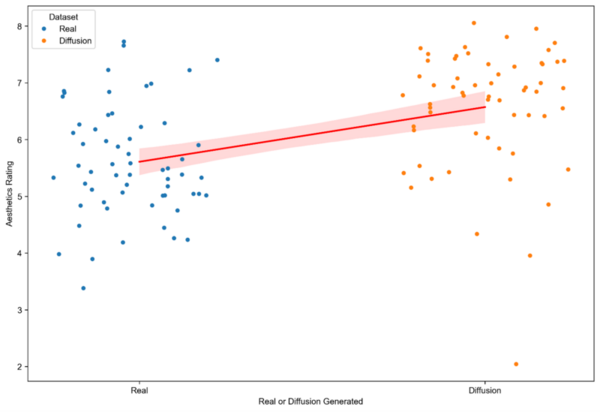
Advertising platforms like Google Ads use AI to drive the algorithms used to maximize advertisers benefits. This study shows that AI does not adjust it strategy based on auction type and highlights the limitations of AI running without explicit guidance.

Read More...

Machine learning predictions of additively manufactured alloy crack susceptibilities

Gowda et al. | Nov 12, 2024

Machine learning predictions of additively manufactured alloy crack susceptibilities

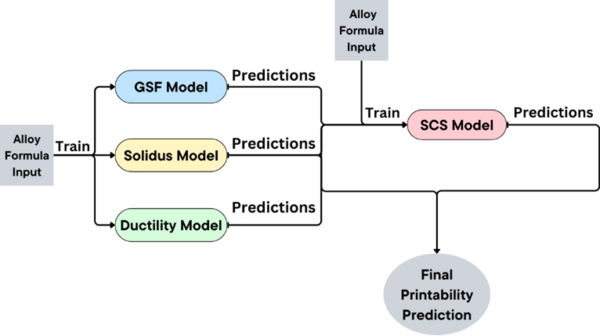
Additive manufacturing (AM) is transforming the production of complex metal parts, but challenges like internal cracking can arise, particularly in critical sectors such as aerospace and automotive. Traditional methods to assess cracking susceptibility are costly and time-consuming, prompting the use of machine learning (ML) for more efficient predictions. This study developed a multi-model ML pipeline that predicts solidification cracking susceptibility (SCS) more accurately by considering secondary alloy properties alongside composition, with Random Forest models showing the best performance, highlighting a promising direction for future research into SCS quantification.

Read More...

Machine learning for retinopathy prediction: Unveiling the importance of age and HbA1c with XGBoost

Ramachandran et al. | Sep 05, 2024

Machine learning for retinopathy prediction: Unveiling the importance of age and HbA1c with XGBoost

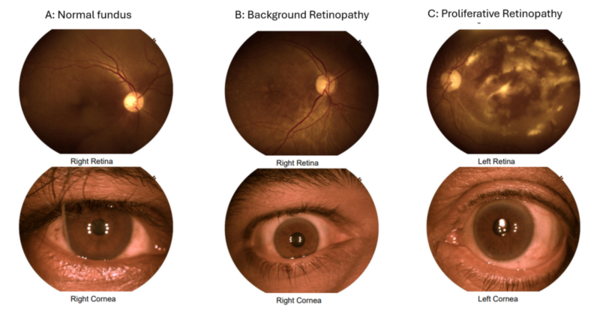
The purpose of our study was to examine the correlation of glycosylated hemoglobin (HbA1c), blood pressure (BP) readings, and lipid levels with retinopathy. Our main hypothesis was that poor glycemic control, as evident by high HbA1c levels, high blood pressure, and abnormal lipid levels, causes an increased risk of retinopathy. We identified the top two features that were most important to the model as age and HbA1c. This indicates that older patients with poor glycemic control are more likely to show presence of retinopathy.

Read More...