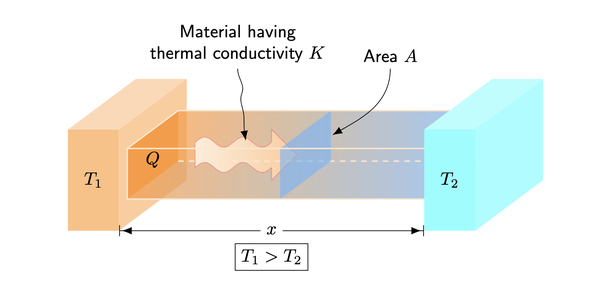
In this experiment, the authors modify the heat equation to account for imperfect insulation during heat transfer and compare it to experimental data to determine which is more accurate.
Read More...Heat conduction: Mathematical modeling and experimental data
In this experiment, the authors modify the heat equation to account for imperfect insulation during heat transfer and compare it to experimental data to determine which is more accurate.
Read More...An Analysis on Exoplanets and How They are Affected by Different Factors in Their Star Systems
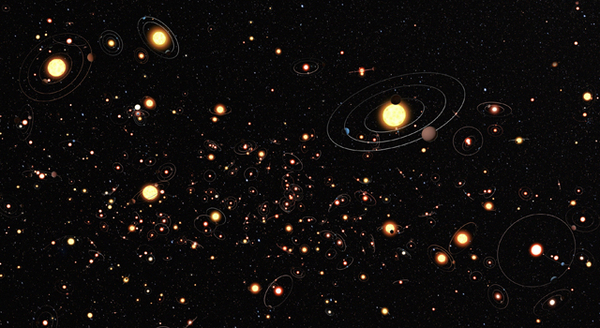
In this article, the authors systematically study whether the type of a star is correlated with the number of planets it can support. Their study shows that medium-sized stars are likely to support more than one planet, just like the case in our solar system. They predict that, of the hundreds of planets beyond our solar system, 6% might be habitable. As humans work to travel further and further into space, some of those might truly be suited for human life.
Read More...FRUGGIE – A Board Game to Combat Obesity by Promoting Healthy Eating Habits in Young Children

The authors created a board game to teach young children about healthy eating habits to see whether an interactive and family-oriented method would be effective at introducing and maintaining a love for fruits and veggies. Results showed that children developed a liking for fruits and vegetables, and none regressed. Half maintained their level of enjoyment for fruits and vegetables during the research period, while the other half had a positive increase. The results show that a simple interactive game can shape how young children relate to food and encourage them to maintain healthy habits.
Read More...TGFβ1 Codon 10 Polymorphism and its Association with the Prevalence of Low Myopia
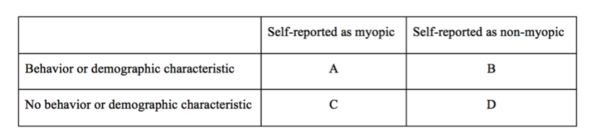
The goal of this project was to assess the relationships among low myopia, behavioral and demographic factors, and a single-nucleotide polymorphism (SNP) in the TGFβ1 gene.
Read More...Optimizing website performance: A comprehensive Google Lighthouse study on desktop and mobile modes
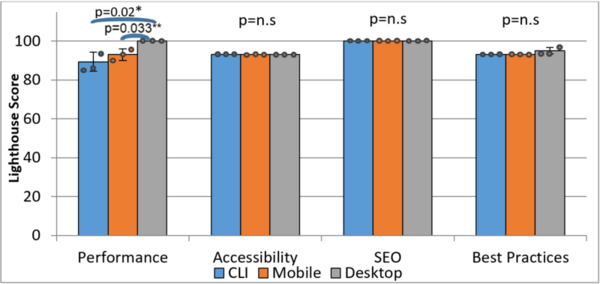
In this study, we examined the consistency and dependability of Google's Lighthouse tool for measuring website performance, accessibility, SEO, and best practices. Tests conducted on three websites showed that performance scores vary based on the testing mode and website complexity, while other audit categories stay constant. These results provide direction for researchers and developers by highlighting Lighthouse's benefits and drawbacks.
Read More...Study of PINN sensor layout in evaluating WSS with application to patient-specific carotid flow
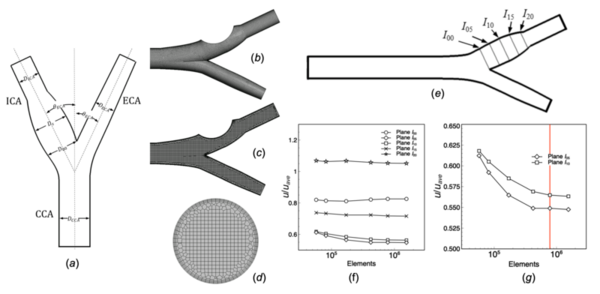
Physics‑Informed Neural Networks (PINNs) offer a promising way to estimate blood‑flow behavior in arteries, especially near the vessel wall where traditional methods struggle. In this study, students tested how sensor density and placement affect PINN accuracy in modeling carotid artery flow and found that accuracy improves up to a moderate sensor density and depends strongly on how close sensors are placed to the arterial wall. Applying the optimized configuration to a patient‑specific carotid model produced velocity predictions closely matching computational fluid dynamics results, highlighting PINNs’ potential for future personalized cardiovascular assessment.
Read More...A 3D printed triboelectric nanogenerator for bridge vibration energy harvesting and sensing
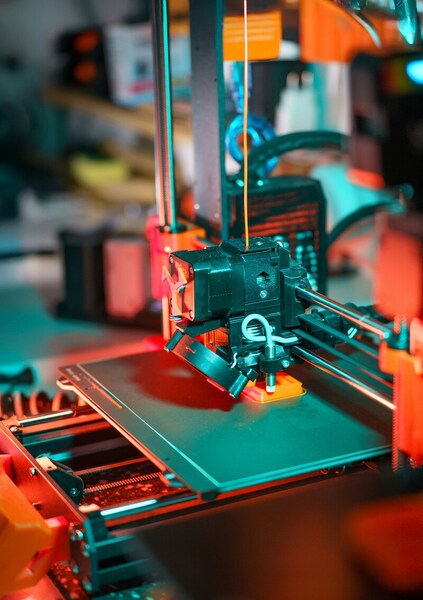
This study strongly illustrates that optimizing 3D printing parameters would enhance a triboelectric nanogenerator's performance. The design improvements substantiate the potential of optimized, 3D-printed TENGs for developing scalable, cost-effective solutions for powering low-energy electronics, particularly in applications such as structural health monitoring.
Read More...Deep learning for pulsar detection: Investigating hyperparameter effects on TensorFlow classification accuracy
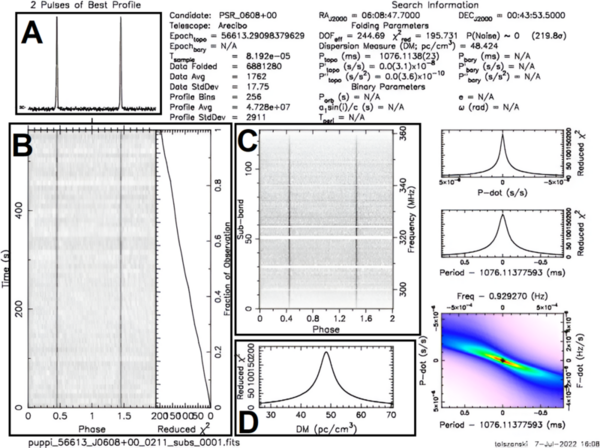
This study investigates how the hyperparameters epochs and batch size affect the classification accuracy of a convolutional neural network (CNN) trained on pulsar candidate data. Our results reveal that accuracy improves with increasing number of epochs and smaller batch sizes, suggesting that with optimized hyperparameters, high accuracy may be achievable with minimal training. These findings offer insights that could help create more efficient machine learning classification models for pulsar signal detection, with the potential of accelerating pulsar discovery and advancing astrophysical research.
Read More...The characterizations and the anonymity of comments: A case study on Lizzo’s videos
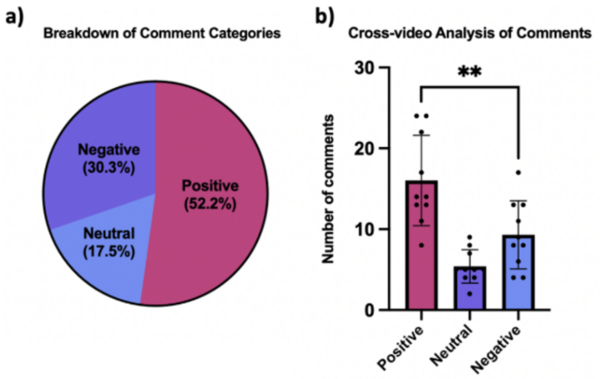
Social media, especially among adolescents, has become a popular communication tool, but its link to negative mental health outcomes is a growing concern. This study analyzed public comments on Lizzo's social media, focusing on the nature of praise and criticism.
Read More...Advancing pediatric cancer predictions through generative artificial intelligence and machine learning
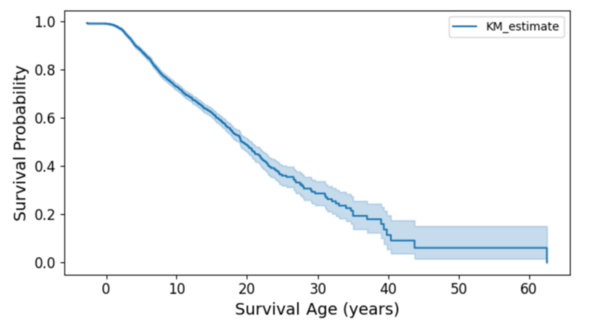
Pediatric cancers pose unique challenges due to their rarity and distinct biological factors, emphasizing the need for accurate survival prediction to guide treatment. This study integrated generative AI and machine learning, including synthetic data, to analyze 9,184 pediatric cancer patients, identifying age at diagnosis, cancer types, and anatomical sites as significant survival predictors. The findings highlight the potential of AI-driven approaches to improve survival prediction and inform personalized treatment strategies, with broader implications for innovative healthcare applications.
Read More...