Browse Articles

Young People Drinking: The Effect of Group Size on Drinking Habits

Palermo et al. | May 10, 2018

Young People Drinking: The Effect of Group Size on Drinking Habits

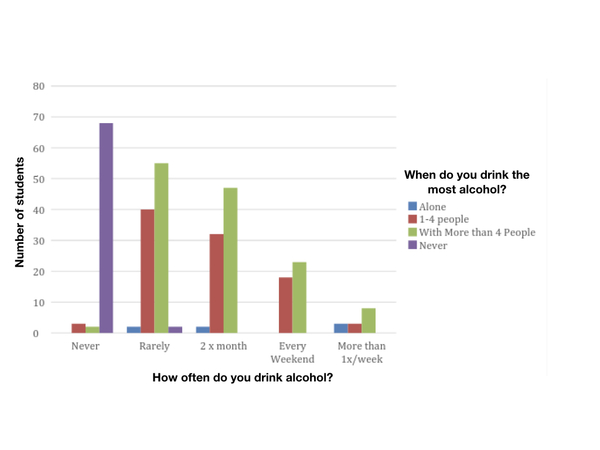
Palermo et al. examined the effect of group size on drinking habits of college and high school students. The authors found that both high school and college students tended to consume the most alcohol in group sizes of 4 or more, independent of how frequently they drink. They also found that the proportion of college students that drink is nearly twice the proportion of high school students that drink. This study supports previous findings that underage drinking happens in large groups and suggests that effective intervention in underage drinking would be at the group level.

Read More...
Does Gaming Improve Cognitive Skills?

Chakravarti et al. | Jan 26, 2015

Does Gaming Improve Cognitive Skills?

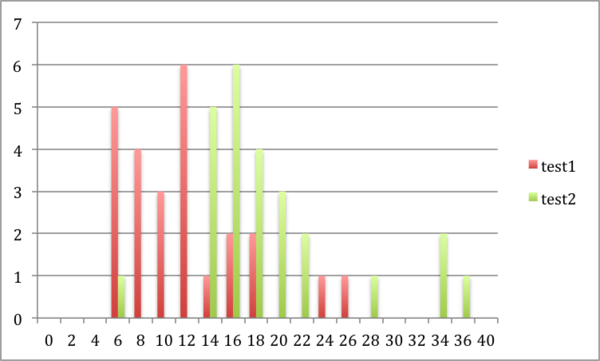
Playing video games may improve mental performance by encouraging practicing logical reasoning skills. Students who played video games in between two tests tended to perform better on the second test than those that did not play video games.

Read More...

Study of PINN sensor layout in evaluating WSS with application to patient-specific carotid flow

Nie et al. | Sep 04, 2026

Study of PINN sensor layout in evaluating WSS with application to patient-specific carotid flow

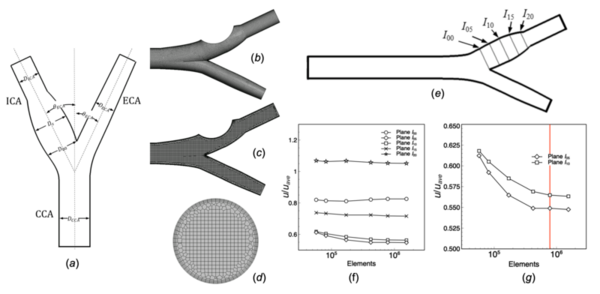
Physics‑Informed Neural Networks (PINNs) offer a promising way to estimate blood‑flow behavior in arteries, especially near the vessel wall where traditional methods struggle. In this study, students tested how sensor density and placement affect PINN accuracy in modeling carotid artery flow and found that accuracy improves up to a moderate sensor density and depends strongly on how close sensors are placed to the arterial wall. Applying the optimized configuration to a patient‑specific carotid model produced velocity predictions closely matching computational fluid dynamics results, highlighting PINNs’ potential for future personalized cardiovascular assessment.

Read More...

Performance comparison of indoor polyculture utilizing hydroponic and soil-based systems

Sreenath et al. | Jul 26, 2026

Performance comparison of indoor polyculture utilizing hydroponic and soil-based systems

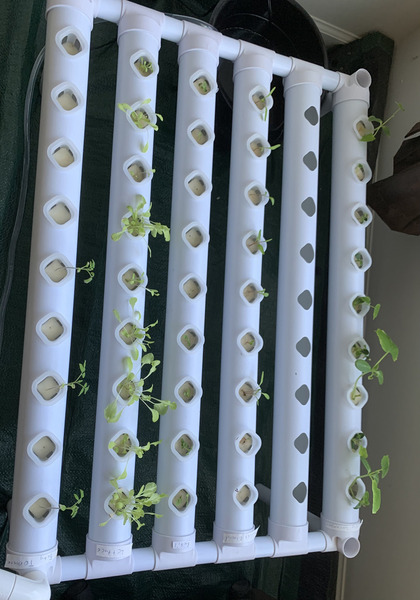
Hydroponics is often promoted as a highly efficient alternative to traditional soil farming, but its effectiveness in small indoor polyculture systems is not well understood. In this study, students compared plant growth and maturity across hydroponic and soil-based indoor polycultures and found that soil grown plants were generally taller and more mature than those grown hydroponically. These results suggest that soil-based methods may outperform hydroponics in certain household polyculture settings.

Read More...

Evaluating the impact of prompting styles on LLM accuracy for AIME math questions

Ganesa et al. | Jul 26, 2026

Evaluating the impact of prompting styles on LLM accuracy for AIME math questions

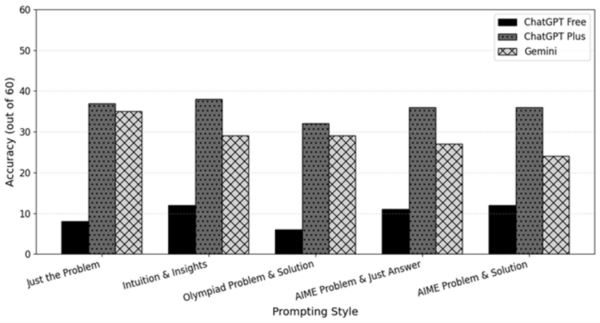
Large language models are increasingly used to solve math problems, but their ability to handle multi-step reasoning remains uncertain. In this study, students tested whether different prompting styles could improve LLM accuracy on challenging AIME math questions and found that detailed step-by-step solutions did not significantly outperform simpler prompts. These results suggest that improving LLM mathematical reasoning may require deeper model-level advances rather than changes in prompting style alone.

Read More...

Comparative study on three machine learning models in novel autonomous drone-based detection of invasive plant Brassica nigra

Ho et al. | Jul 05, 2026

Comparative study on three machine learning models in novel autonomous drone-based detection of invasive plant <em>Brassica nigra</em>

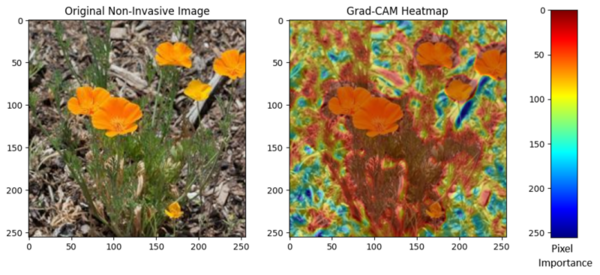
Autonomous drone imaging combined with machine learning offers a promising approach for early detection of invasive species. In this study, students built an autonomous drone and compared three models: CNN, SGDC, and XGBoost, to identify Brassica nigra from aerial footage. Their results show that CNNs most effectively recognize key visual features, demonstrating strong potential for supporting conservation and invasive plant management.

Read More...

Investigating the effects of glucose reintroduction on acutely starved HeLa cells

Puduru et al. | Jul 05, 2026

Investigating the effects of glucose reintroduction on acutely starved HeLa cells

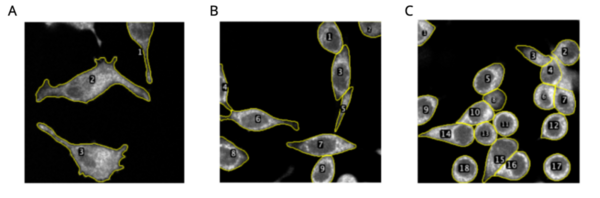
Cancer cells rely heavily on glycolysis, but how they respond when glucose is reintroduced after acute starvation is not well understood. Using fluorescence lifetime imaging microscopy, students tracked metabolic changes in HeLa cells and found a rapid shift toward glycolysis within 20 minutes of glucose reintroduction, followed by heterogeneous recovery toward oxidative phosphorylation. These results highlight metabolic flexibility and variability in cancer cells, offering insights relevant to treatment resistance and therapeutic design.

Read More...

Algorithmic barriers: Investigating student perceptions of AI bias in subjective “culture fit” hiring

Mahatara et al. | May 25, 2026

Algorithmic barriers: Investigating student perceptions of AI bias in subjective “culture fit” hiring
Image credit: JonTyson

This study investigated perceptions of the emerging workforce toward the use of artificial intelligence in hiring, specifically for assessing subjective "culture fit." Through a mixed-methods survey of 150 high school and early-college students in Nepal, we found a significant disconnect between organizational adoption of AI and the profound skepticism of young job candidates, who express deep concerns about fairness, transparency, and the potential for AI to perpetuate systemic discrimination.

Read More...

Unit-price anchoring affects consumer purchasing behavior

James et al. | Jan 15, 2025

Unit-price anchoring affects consumer purchasing behavior

This study examines how anchoring—providing numerical suggestions like "2 for $4"—can influence consumer purchasing decisions and increase revenue. The researchers tested three types of price anchors on 29 high school students shopping in a mock store.

Read More...

Trust in the use of artificial intelligence technology for treatment planning

Srivastava et al. | Sep 18, 2024

Trust in the use of artificial intelligence technology for treatment planning

As AI becomes more integrated into healthcare, public trust in AI-developed treatment plans remains a concern, especially for emotionally charged health decisions. In a study of 81 community college students, AI-created treatment plans received lower trust ratings compared to physician-developed plans, supporting the hypothesis. The study found no significant differences in AI trust levels across demographic factors, suggesting overall skepticism toward AI-driven healthcare.

Read More...