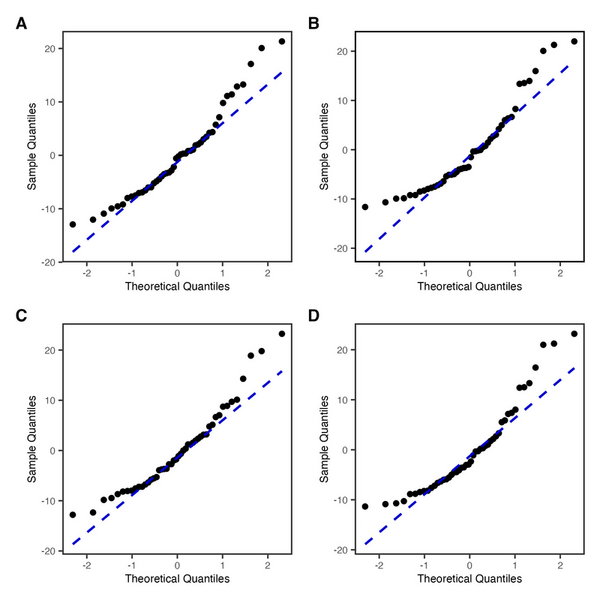
This study examined whether Rubik’s Cube solving ability is related to spatial visualization skills and stress levels.
Read More...Puzzle to progress: relationship between Rubik’s Cube solving proficiency, spatial visualization, and anxiety
This study examined whether Rubik’s Cube solving ability is related to spatial visualization skills and stress levels.
Read More...Mitigating skin color bias in dermatology AI using CycleGAN-based data augmentation
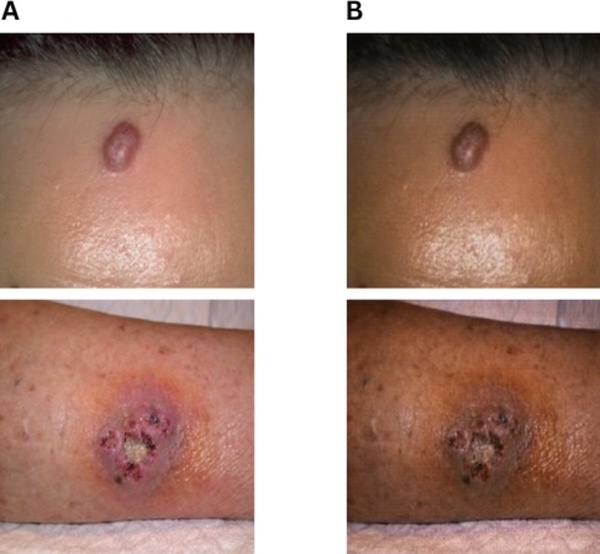
This study investigates skin tone bias in artificial intelligence models used for dermatological disease classification and evaluates a CycleGAN-based data augmentation approach to improve diagnostic performance on darker skin types. We generated synthetic dark-skinned images to enhance dataset diversity and compared model performance before and after augmentation. The results demonstrate that augmentation with synthetic dermatological images can help reduce disparities in diagnostic performance across skin tones, highlighting a practical strategy for improving fairness in dermatology AI systems.
Read More...Assessing Spanish interpretation in community healthcare: a study of patient satisfaction

This manuscript explores the use of Spanish language translators in an outpatient clinic in New Jersey. The authors surveyed patients before and after in person, video, and telephone appointments to determine which modality was most acceptable to the patients. The authors found that the three modalities did not differ in patient satisfaction, but that patients were grateful for translations services and that patient trust may be expanded by the use of these services and by focuses of translator soft skills.
Read More...Penalty kick success is unaffected by direction: Insights from right-footed world-class soccer players
Mitigating open-set misclassification in a colorectal cancer detecting neural network
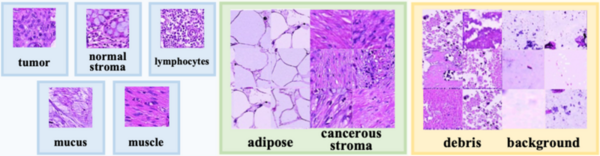
The authors develop a machine learning method to reduce misclassification of objects in safety-critical applications such as medical diagnosis.
Read More...Effects of data amount and variation in deep learning-based tuberculosis diagnosis in chest X-ray scans
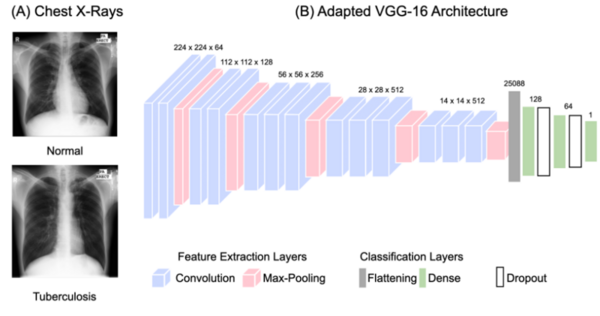
The authors developed and tested machine learning methods to diagnose tuberculosis from pulmonary X-ray scans.
Read More...Transfer Learning with Convolutional Neural Network-Based Models for Skin Cancer Classification
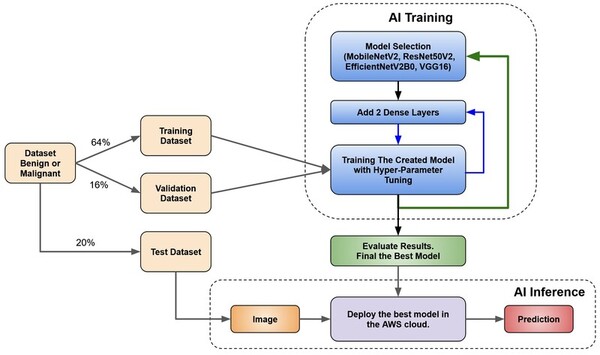
Skin cancer is a common and potentially deadly form of cancer. This study’s purpose was to develop an automated approach for early detection for skin cancer. We hypothesized that convolutional neural network-based models using transfer learning could accurately differentiate between benign and malignant moles using natural images of human skin.
Read More...Solving a new NP-Complete problem that resembles image pattern recognition using deep learning
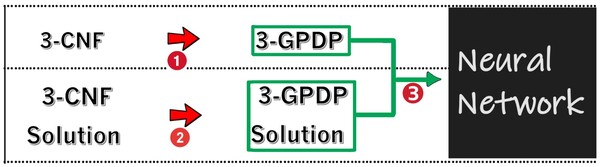
In this study, the authors tested the ability and accuracy of a neural net to identify patterns in complex number matrices.
Read More...Prediction of preclinical Aβ deposit in Alzheimer’s disease mice using EEG and machine learning
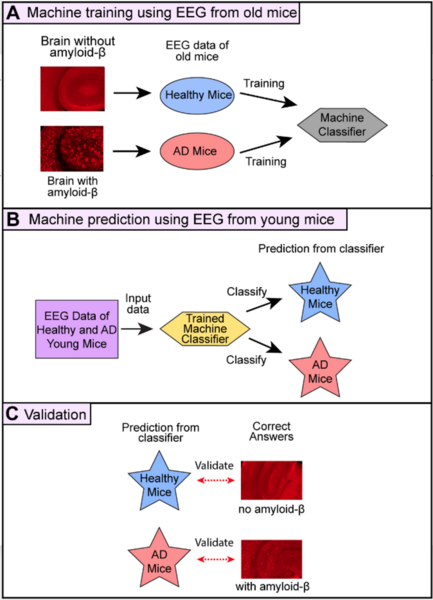
Alzheimer’s disease (AD) is a common disease affecting 6 million people in the U.S., but no cure exists. To create therapy for AD, it is critical to detect amyloid-β protein in the brain at the early stage of AD because the accumulation of amyloid-β over 20 years is believed to cause memory impairment. However, it is difficult to examine amyloid-β in patients’ brains. In this study, we hypothesized that we could accurately predict the presence of amyloid-β using EEG data and machine learning.
Read More...An optimal pacing approach for track distance events

In this study, the authors use existing mathematical models to how high school athletes pace 800 m, 1600 m, and 3200 m distance track events compared to elite athletes.
Read More...