Browse Articles

Analyzing honey’s ability to inhibit the growth of Rhizopus stolonifer

Johnecheck et al. | Jun 06, 2023

Analyzing honey’s ability to inhibit the growth of <i>Rhizopus stolonifer</i>
Image credit: Johnecheck et al. 2023

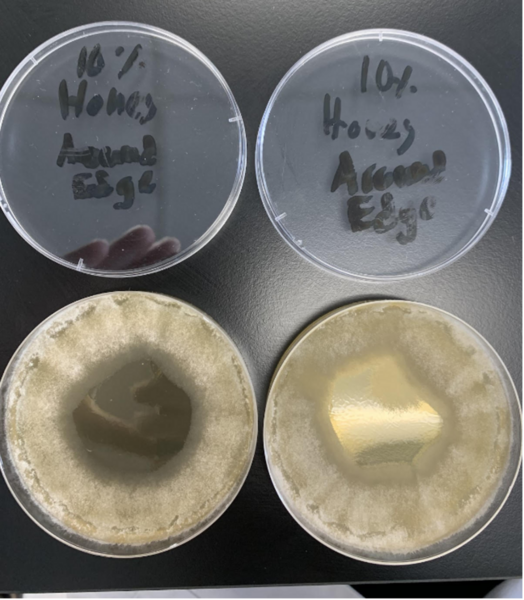
Rhizopus stolonifer is a mold commonly found growing on bread that can cause many negative health effects when consumed. Preservatives are the well-known answer to this problem; however, many preservatives are not naturally found in food, and some have negative health effects of their own. We focused on honey as a possible solution because of its natural origin and self-preservation ability. We hypothesized that honey would decrease the growth rate of R. stolonifer . We evaluated the honey with a zone of inhibition (ZOI) test on agar plates. Sabouraud dextrose agar was mixed with differing volumes of honey to generate concentrations between 10.0% and 30.0%. These plates were then inoculated with a solution of spores collected from the mold. The ZOI was measured to determine antifungal effectiveness. A statistically significant difference was found between the means of all concentrations except for 20.0% and 22.5%. Our findings support the hypothesis as we showed a positive correlation between the honey concentration and growth rate of mold. By using this data, progress could be made on an all-natural, honey-based preservative.

Read More...
The Effectiveness of Different Palate Relievers Against a Hot Chili Pepper Sauce

Avendaño-Rodríguez et al. | Jun 11, 2016

The Effectiveness of Different Palate Relievers Against a Hot Chili Pepper Sauce

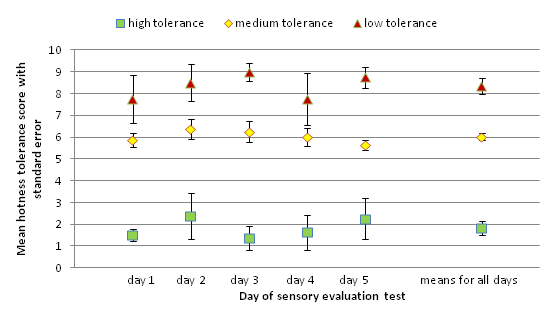
Cuisine with hot chili peppers can be tasty, but sometimes painful to consume because of the burning sensations caused by the capsaicin molecule. The authors wanted to find the palate reliever that decreases the burning sensation of capsaicin the most by testing water, soft drink, olive oil, milk, and ice-cream as possible candidates. The authors hypothesized that olive oil would be the best palate reliever as it is non-polar like the capsaicin molecule. The authors surveyed 12 panelists with low, medium, and high spice tolerances and found that across all levels of spice tolerance, milk and ice-cream were the best palate relievers and soft drink the worst.

Read More...

Adults’ attitudes toward non-alcoholic beer purchases and consumption by children and adolescents

An et al. | Aug 23, 2024

Adults’ attitudes toward non-alcoholic beer purchases and consumption by children and adolescents
Image credit: The authors

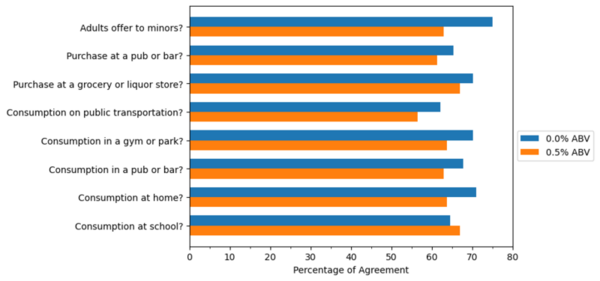
Consumption of non-alcoholic beverages, like non-alcoholic beer, is growing in popularity in the United States. These beverages raise important societal questions, such as whether minors should be allowed to purchase or consume non-alcoholic beer. An and An investigate this issue by surveying adults to see if they support minors purchasing and consuming non-alcoholic beer.

Read More...

Mitigating microplastic exposure from water consumption in junior high students and teachers

Chow et al. | May 10, 2024

Mitigating microplastic exposure from water consumption in junior high students and teachers
Image credit: Pixabay

Microplastics (MPs) are inorganic material that have been observed within items destined for human consumption, including water, and may pose a potential health hazard. Here we estimated the average amount of MPs junior high students and teachers consumed from different water sources and determined whether promoting awareness of microplastic (MP) exposure influenced choice of water source and potential MPs consumed.

Read More...

A Novel Alzheimer's Disease Therapeutic Model: Attenuating Hyperphosphorylated Tau and Amyloid β (Aβ) Aggregates by Characterizing Antioxidative, Anti-Inflammatory, and Neuroprotective Properties of Natural Extracts

Pokkunuri et al. | Jul 25, 2022

A Novel Alzheimer's Disease Therapeutic Model: Attenuating Hyperphosphorylated Tau and Amyloid β (Aβ) Aggregates by Characterizing Antioxidative, Anti-Inflammatory, and Neuroprotective Properties of Natural Extracts

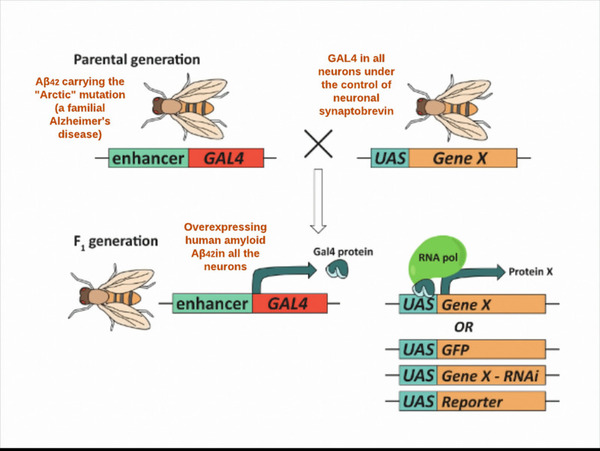
Oxidative damage and neuro-inflammation were the key pathways implicated in the pathogenesis of Alzheimer’s disease. In this study, 30 natural extracts from plant roots and leaves with extensive anti-inflammatory and anti-oxidative properties were consumed by Drosophila melanogaster. Several assays were performed to evaluate the efficacy of these combinational extracts on delaying the progression of Alzheimer’s disease. The experimental group showed increased motor activity, improved associative memory, and decreased lifespan decline relative to the control group.

Read More...

The Effects of Confinement on the Associative Learning of Gallus gallus domesticus

Jaworsky et al. | Dec 23, 2019

The Effects of Confinement on the Associative Learning of <em>Gallus gallus domesticus</em>

This study aimed to determine if confinement affects associative learning in chickens. The research found that the difference in time lapsed before chickens began to consume cottage cheese before and after confinement was significant. These results suggest that confinement distresses chickens, as it impairs associative learning without inducing confusion.

Read More...

Reducing Crop Damage Caused by Folsomia candida by Providing an Alternate Food Source

Tamura et al. | May 28, 2018

Reducing Crop Damage Caused by Folsomia candida by Providing an Alternate Food Source

Tamura and Moché found that Folsomia candida, a common crop pest, prefers to consume yeast instead of lettuce seedlings. The authors confirmed that even with the availability of both lettuce seedlings and yeast in the same dish, Folsomia candida preferred to eat the yeast, thereby reducing the number of feeding injuries on the lettuce seedlings. The authors propose that using this preference for yeast may be a way to mitigate crop damage by this pest.

Read More...

Young People Drinking: The Effect of Group Size on Drinking Habits

Palermo et al. | May 10, 2018

Young People Drinking: The Effect of Group Size on Drinking Habits

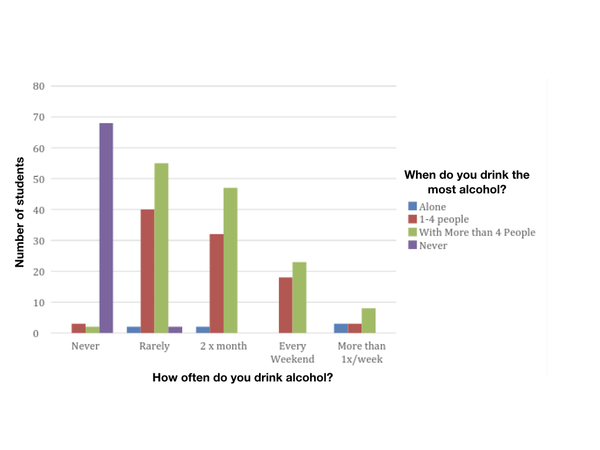
Palermo et al. examined the effect of group size on drinking habits of college and high school students. The authors found that both high school and college students tended to consume the most alcohol in group sizes of 4 or more, independent of how frequently they drink. They also found that the proportion of college students that drink is nearly twice the proportion of high school students that drink. This study supports previous findings that underage drinking happens in large groups and suggests that effective intervention in underage drinking would be at the group level.

Read More...

Genetic Bioaugmentation of Oryza sativa to Facilitate Self-Detoxification of Arsenic In-Situ

Bhat et al. | Dec 03, 2024

Genetic Bioaugmentation of Oryza sativa to Facilitate Self-Detoxification of Arsenic In-Situ

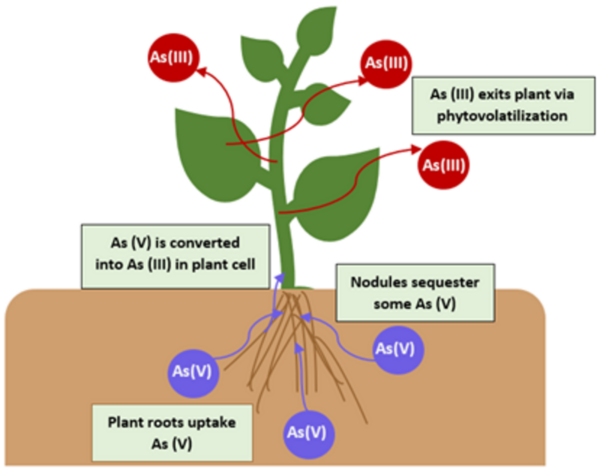
Arsenic contamination in rice, caused by the use of arsenic-laden groundwater for irrigation, is a growing global concern, affecting over 150 million people. To address this, researchers hypothesized that genetically modifying rice plants with arsenic-resistant genes could reduce arsenic uptake and allow the plants to detoxify arsenic, making them safer to consume.

Read More...

Exploring differences in men’s marijuana consumption and cigarette smoking by race and citizenship status

Miriyala et al. | Sep 04, 2024

Exploring differences in men’s marijuana consumption and cigarette smoking by race and citizenship status

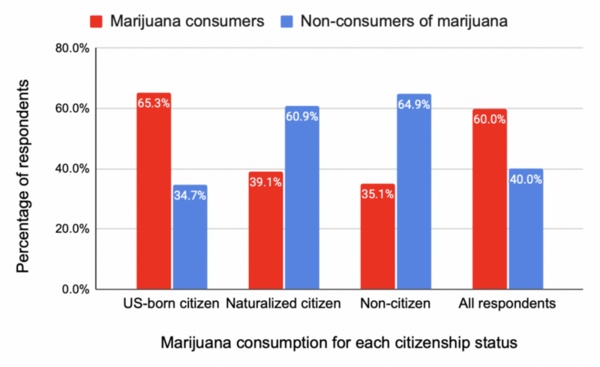
This study examined the relationship between citizenship status, racial background, and the use of marijuana and cigarettes among males in California using data from the 2017–2018 California Health Interview Survey. Findings indicated that non-citizens and naturalized citizens were less likely to use marijuana compared to US-born citizens, while Asian and Latino males were less likely to consume marijuana than White males. Additionally, various racial groups were more likely to smoke cigarettes compared to White males, suggesting that targeted health interventions based on citizenship status and race could be beneficial.

Read More...