Browse Articles

Analyzing honey’s ability to inhibit the growth of Rhizopus stolonifer

Johnecheck et al. | Jun 06, 2023

Analyzing honey’s ability to inhibit the growth of <i>Rhizopus stolonifer</i>
Image credit: Johnecheck et al. 2023

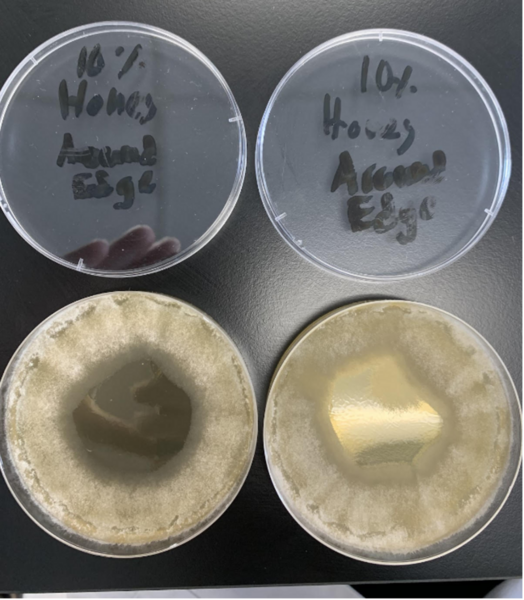
Rhizopus stolonifer is a mold commonly found growing on bread that can cause many negative health effects when consumed. Preservatives are the well-known answer to this problem; however, many preservatives are not naturally found in food, and some have negative health effects of their own. We focused on honey as a possible solution because of its natural origin and self-preservation ability. We hypothesized that honey would decrease the growth rate of R. stolonifer . We evaluated the honey with a zone of inhibition (ZOI) test on agar plates. Sabouraud dextrose agar was mixed with differing volumes of honey to generate concentrations between 10.0% and 30.0%. These plates were then inoculated with a solution of spores collected from the mold. The ZOI was measured to determine antifungal effectiveness. A statistically significant difference was found between the means of all concentrations except for 20.0% and 22.5%. Our findings support the hypothesis as we showed a positive correlation between the honey concentration and growth rate of mold. By using this data, progress could be made on an all-natural, honey-based preservative.

Read More...
Increased carmine red exposure periods yields a higher number of vacuoles formed in Tetrahymena pyriformis

Shah et al. | Nov 18, 2022

Increased carmine red exposure periods yields a higher number of vacuoles formed in <em>Tetrahymena pyriformis</em>

T. pyriformis can use phagocytosis to create vacuoles of carmine red, a dye which is made using crushed insects and is full of nutrients. Establishing a relationship between vacuole formation and duration of exposure to food can demonstrate how phagocytosis occurs in T. pyriformis. We hypothesized that if T. pyriformis was incubated in a carmine red solution, then more vacuoles would form over time in each cell.

Read More...

The Non-Thermal Effect of UV-B Irradiation on Onion Growth

Nashnoush et al. | Jun 09, 2020

The Non-Thermal Effect of UV-B Irradiation on Onion Growth

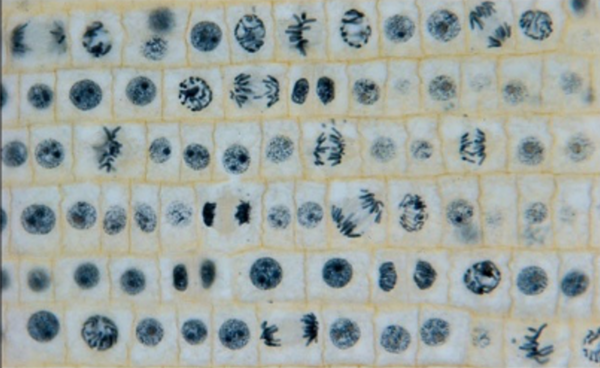
UV-B radiation due to the depletion of ozone threatens plant life, potentially damaging ecosystems and dismantling food webs. Here, the impact of UV-B radiation on the physiology and morphology of Allum cepa, the common onion, was assessed. Mitosis vitality decreased, suggesting UV-B damage can influence the plant’s physiology.

Read More...

Development of novel biodegradable bioplastics for packaging film using mango peels

Wang et al. | Apr 06, 2025

Development of novel biodegradable bioplastics for packaging film using mango peels
Image credit: JACQUELINE BRANDWAYN

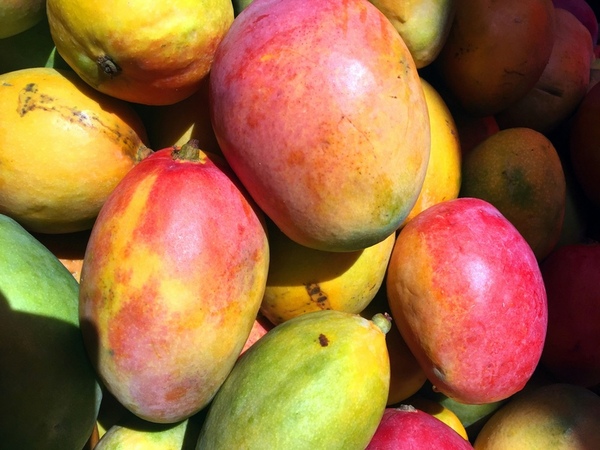
Here the authors explored the development of biodegradable bioplastic films derived from mango peels as a sustainable solution to plastic pollution and greenhouse gas emissions from fruit waste. They optimized the film's mechanical properties and water resistance through adjusting processing conditions and incorporating plasticizers and a hydrophobic coating, ultimately demonstrating its potential as a bacteriostatic and biodegradable alternative to conventional plastic food wrap.

Read More...

Importance of pay on job satisfaction

Ravi et al. | Mar 25, 2025

Importance of pay on job satisfaction

Pay is a widely debated factor in workplace motivation, influencing both incentives and job satisfaction. This work analyzed employee reviews across various industries to examine the relationship between pay importance and job satisfaction. Findings suggest that job satisfaction decreases as the importance of pay increases, particularly in construction, food, and finance industries, as well as among entry-level and experienced workers, though the results were not statistically significant.

Read More...

The Effectiveness of Different Palate Relievers Against a Hot Chili Pepper Sauce

Avendaño-Rodríguez et al. | Jun 11, 2016

The Effectiveness of Different Palate Relievers Against a Hot Chili Pepper Sauce

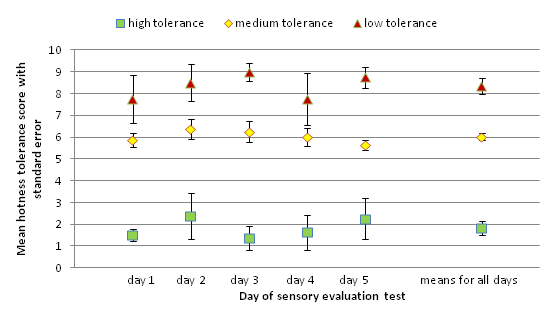
Cuisine with hot chili peppers can be tasty, but sometimes painful to consume because of the burning sensations caused by the capsaicin molecule. The authors wanted to find the palate reliever that decreases the burning sensation of capsaicin the most by testing water, soft drink, olive oil, milk, and ice-cream as possible candidates. The authors hypothesized that olive oil would be the best palate reliever as it is non-polar like the capsaicin molecule. The authors surveyed 12 panelists with low, medium, and high spice tolerances and found that across all levels of spice tolerance, milk and ice-cream were the best palate relievers and soft drink the worst.

Read More...

Failure of colony growth in probiotic Lactobacillus casei Shirota as result of preservative sorbic acid

Raymond et al. | May 07, 2023

Failure of colony growth in probiotic <i>Lactobacillus casei</i> Shirota as result of preservative sorbic acid

This study tested the proficiency of different concentrations of the antimicrobial sorbic acid to inhibit the probiotic Lactobacillus casei Shirota. It was hypothesized that sorbic acid’s use as a bacterial deterrent would also target this bacterial strain of Lactobacillus. The results supported the hypothesis, with the colony count of L. casei Shirota having significant decreases at all concentrations of sorbic acid. These results additionally suggest that even under the FDA sorbic acid restrictions of 0.03% concentration, damaging effects could be seen in L. casei Shirota.

Read More...

Antibiotic Residues Detected in Commercial Cow’s Milk

Memili et al. | Mar 18, 2015

Antibiotic Residues Detected in Commercial Cow’s Milk

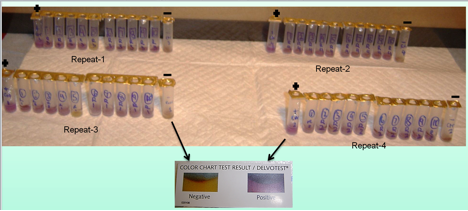
Antibiotics are oftentimes used to treat mastitis (infection of the mammary gland) in dairy cows. Regulations require that milk from these cows be discarded until the infection has cleared and antibiotic residues are no longer detectable in the cow's milk. These regulations are in place to protect consumers and to help prevent the rise of antibiotic resistant bacteria. In this study, the authors test milk samples from 10 milk suppliers in the Greensboro, NC to see if they contain detectable levels of antibiotic residues.

Read More...

Friend or Foe: Investigating the Relationship between a Corn Crop and a Native Ragweed Population

Wainwright et al. | May 07, 2014

Friend or Foe: Investigating the Relationship between a Corn Crop and a Native Ragweed Population

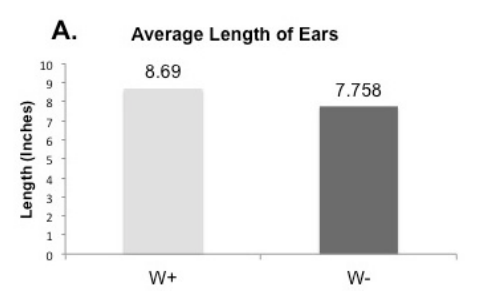
Farmers will need to increase crop yields to feed the world's growing population efficiently. The authors here investigate the effects of growing corn in the presence or absence of ragweed, an invasive weed found in many fields and gardens. Surprisingly, the authors found that corn grown in the presence of weeds grew taller and were more productive than corn that had weeds removed. This may help gardeners rethink the necessity of weeding, and may point a way to improve farm yields in the future.

Read More...

Implications of various pure tones on Phaseolus vulgaris and Gaultheria shallon

Judit et al. | Jul 13, 2026

Implications of various pure tones on <i>Phaseolus vulgaris</i> and <i>Gaultheria shallon<i>

This study investigated how different sound frequencies (0, 1,000, 5,000, and 15,000 Hz) affect the growth of Phaseolus vulgaris and the transpiration rates of Gaultheria shallon. Although some differences in plant growth were observed, the authors found no consistent evidence that sound frequency enhanced overall growth or transpiration, highlighting the need for further research.

Read More...