.png)
The authors assess incidence and mortality rates of two cancer types in relation to trihalomethane pollutant concentrations in drinking water.
Read More...Correlation between trihalomethane concentrations and various cancers in Massachusetts counties
The authors assess incidence and mortality rates of two cancer types in relation to trihalomethane pollutant concentrations in drinking water.
Read More...Near-infrared activation of environmentally-friendly gold and silver nanoparticles for unclogging arteries
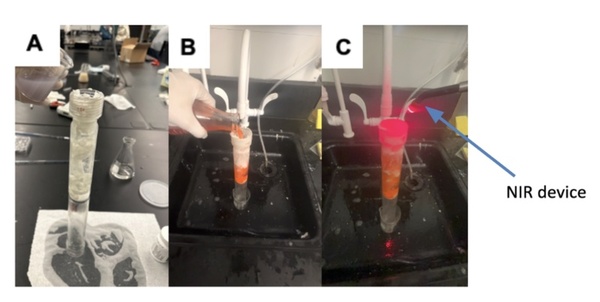
Coronary artery disease, the leading cause of death worldwide, results from cholesterol build-up in coronary arteries, limiting blood and oxygen flow to the heart. This study investigated the use of gold and silver nanoparticles coated with aspirin and activated by near-infrared light to improve blood flow in a clogged artery model. The nanoparticles increased simulated blood flow rates, demonstrating potential as a less invasive and more targeted treatment for cardiovascular disease.
Read More...Eye color, visual acuity and photophobia: How eye color affects light sensitivity
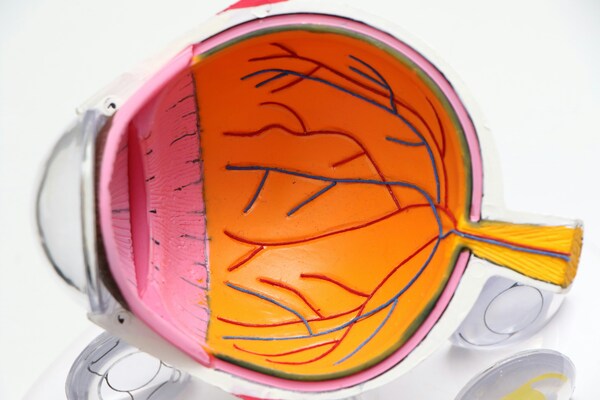
This study examined whether eye color affects photophobia and vision in elementary school students and staff, finding no significant relationship between eye color, light sensitivity, or visual acuity. However, photophobia was common across age groups, highlighting the need for greater awareness of light sensitivity in learning environments.
Read More...Vineyard vigilance: Harnessing deep learning for grapevine disease detection
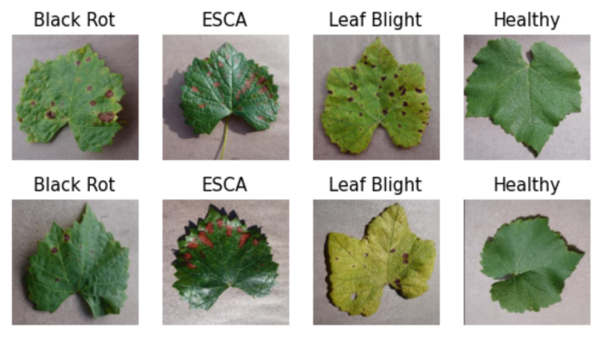
Globally, the cultivation of 77.8 million tons of grapes each year underscores their significance in both diets and agriculture. However, grapevines face mounting threats from diseases such as black rot, Esca, and leaf blight. Traditional detection methods often lag, leading to reduced yields and poor fruit quality. To address this, authors used machine learning, specifically deep learning with Convolutional Neural Networks (CNNs), to enhance disease detection.
Read More...Investigating cross-cultural emotional responses to world music under simulated hearing loss
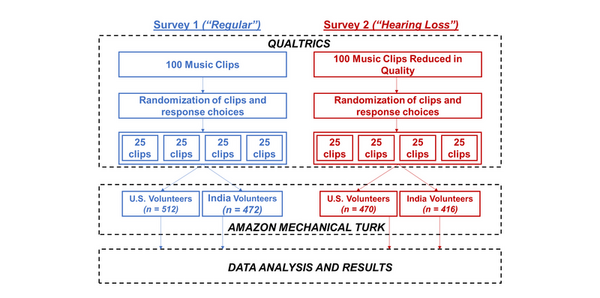
The authors survey how emotional responses to music differ across cultures and the impact of hearing loss on these emotional responses.
Read More...Evaluating machine learning algorithms to classify forest tree species through satellite imagery

Here, seeking to identify an optimal method to classify tree species through remote sensing, the authors used a few machine learning algorithms to classify forest tree species through multispectral satellite imagery. They found the Random Forest algorithm to most accurately classify tree species, with the potential to improve model training and inference based on the inclusion of other tree properties.
Read More...A Retrospective Study of Research Data on End Stage Renal Disease
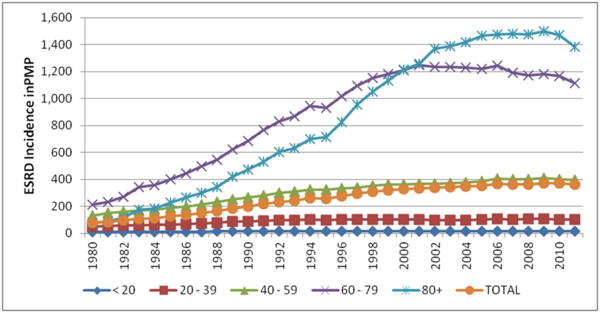
End Stage Renal Disease (ESRD) is a growing health concern in the United States. The authors of this study present a study of ESRD incidence over a 32-year period, providing an in-depth look at the contributions of age, race, gender, and underlying medical factors to this disease.
Read More...The effect of the pandemic on the behavior of junior high school students

Here, seeking to understand how the COVID-19 pandemic affected the social interactions of junior high school students, the authors surveyed students, teachers, and parents. Contrary to their initial hypotheses, the authors found positive correlation between increased virtual contact during social isolation and in-person conflict and disregard for social norms after the pandemic. While the authors identified the limitations of their study, they suggest that further research into the effect of online interactions is becoming increasingly important.
Read More...FCRL3 Gene Association with Asthma and Allergic Rhinitis
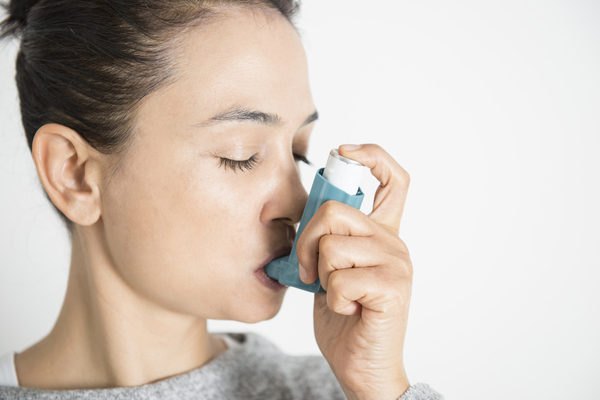
This study sought to determine if there is an association between the single nucleotide polymorphism rs7528684 of the Fc receptor-like-3 (FCRL3) gene and asthma or allergic rhinitis (AR). Based on previous studies in an Asian population, we hypothesized that participants with an AA genotype of FCRL3 would be more likely to have asthma and/or allergic rhinitis. To test the hypothesis, surveys were administered to participants, and genotyping was performed on spit samples via PCR, restriction digest, and gel electrophoresis.
Read More...Improving Wound Healing by Breaking Down Biofilm Formation and Reducing Nosocomial Infections
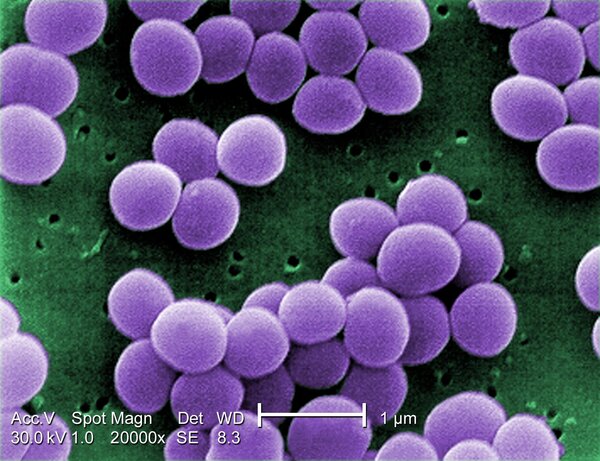
In a 10-year period in the early 2000’s, hospital-based (nosocomial) infections increased by 123%, and this number is increasing as time goes on. The purpose of this experiment was to use hyaluronic acid, silver nanoparticles, and a bacteriophage cocktail to create a hydrogel that promotes wound healing by increasing cell proliferation while simultaneously disrupting biofilm formation and breaking down Staphylococcus aureus and Pseudomonas aeruginosa, which are two strains of bacteria that attribute to nosocomial infections and are increasing in antibiotic resistance.
Read More...