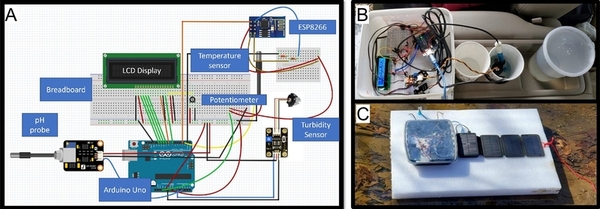
The authors monitored water quality over time looking for influences from construction and deforestation.
Read More...A low-cost, Arduino-based system for real-time abiotic monitoring of a local watershed
The authors monitored water quality over time looking for influences from construction and deforestation.
Read More...Mitigating skin color bias in dermatology AI using CycleGAN-based data augmentation

This study investigates skin tone bias in artificial intelligence models used for dermatological disease classification and evaluates a CycleGAN-based data augmentation approach to improve diagnostic performance on darker skin types. We generated synthetic dark-skinned images to enhance dataset diversity and compared model performance before and after augmentation. The results demonstrate that augmentation with synthetic dermatological images can help reduce disparities in diagnostic performance across skin tones, highlighting a practical strategy for improving fairness in dermatology AI systems.
Read More...Mining social media posts: An alternative approach to understanding home health care workers’ experiences

This study developed an effective method for extracting valuable information from social media data and employed computer-assisted human coding alongside the AI-powered tool to analyze social media posts. The findings provide a deep understanding of the major challenges that home health care workers are experiencing and offer important implications regarding how to improve home healthcare workers' well-being, and provide suggestions on optimizing the home health care service experience.
Read More...Weather-based power outage prediction in New York City: An ensemble machine learning approach

This study contributes to our understanding of how urban energy systems respond to climate variability and inform strategies for enhancing power grid resilience. The findings can help inform urban planners and infrastructure developers by identifying the factors that make regions within a power grid more vulnerable.
Read More...Examining the impact of consecutive losses on gambling: When do we decide to quit?

This article explored the question of when do people decide to stop gambling and further tries to extrapolate why people stop gambling at that point. Their study showed that people tend to quit gambling after 4 consecutive losses, significantly more than 1-3 consecutive losses or a win previous to quitting. They also found that participants commonly quit at a point value approximately 5 points greater than or less than their starting balance. The authors concluded that these results may be important in understanding how to cut down on excessive gambling or in creating policies that make it easier for people to disengage from gambling.
Read More...Silver armor against bacteria: A battle of antimicrobial effectiveness
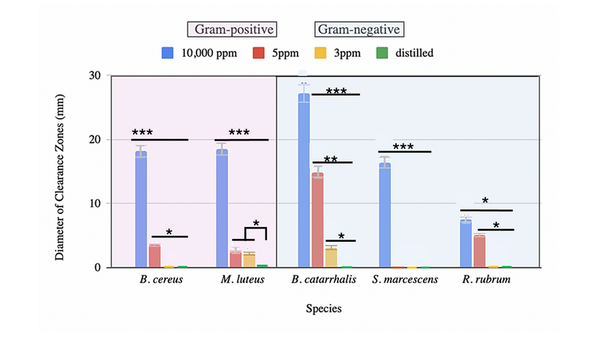
Pathogenic bacteria cause major economic losses in agriculture, and widespread antibiotic use has led to increasing resistance. This study tested whether a low-cost DIY method could produce antibacterial colloidal silver effective against both Gram-negative and Gram-positive plant pathogens.
Read More...Bacteriophage TLS sensitizes Escherichia coli to antibiotics
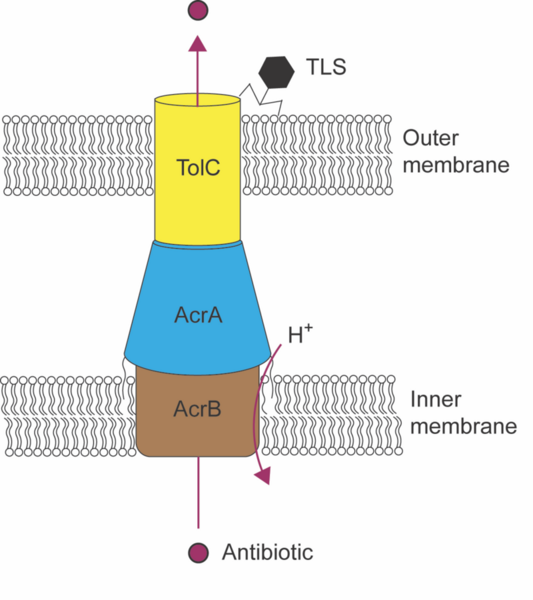
Antibiotic resistance is a growing global health threat, and one strategy to combat it is using bacteriophages to enhance the effectiveness of existing antibiotics. This study tested whether targeting the TolC protein in E. coli with the TLS bacteriophage would increase bacterial sensitivity to antibiotics.
Read More...Human comprehension of 4-dimensional rotation
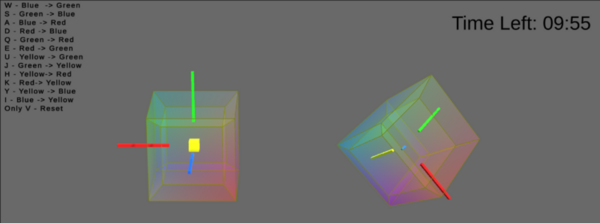
The authors looked at the ability subjects to rotation a 4D cube and how the ability to practice cube rotation impact their ability to understand 4D space.
Read More...Decline in vocabulary richness in individuals with Alzheimer's disease
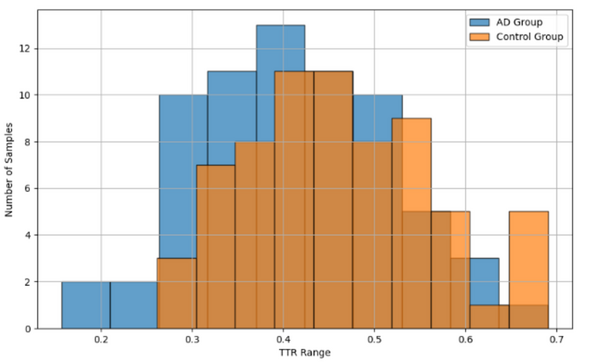
The authors looked at how vocabulary is impacted in Alzheimer's disease and whether it could be used a predictor of disease onset.
Read More...The availability of a poetry tutor prompts inexperienced writers to explore deeply emotional themes

The study developed Loving Words, a free AI-powered poetry tutor designed to help writers improve their poetry and experience its therapeutic benefits. Two groups of participants wrote poems—one without assistance and one using Loving Words.
Read More...