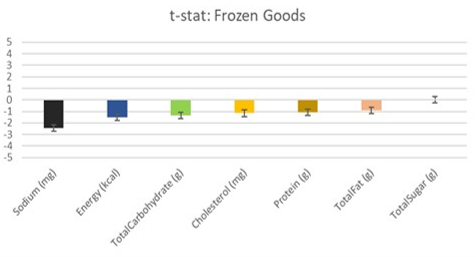
The authors compare nutritional content of foods found in Western versus Asian grocery stores to determine whether one cultural diet is healthier than the other.
Read More...Are Asian foods healthier than Western foods: Evidence collected from St. Louis area grocery stores
The authors compare nutritional content of foods found in Western versus Asian grocery stores to determine whether one cultural diet is healthier than the other.
Read More...Utilizing a Wastewater-Based Medium for Engineered Saccharomyces cerevisiae for the Biological Production of Fatty Alcohols and Carboxylic Acids to Replace Petrochemicals

Saccharomyces cerevisiae yeast is used to produce bioethanol, an alternative to fossil fuels. In this study, authors take advantage of this well studied yeast by genetically engineering them to increase fatty acid biosynthesis and culturing in a cost-effective wastewater based medium; potentially providing a sustainable alternative to petrochemicals.
Read More...Exploring the Factors that Drive Coffee Ratings
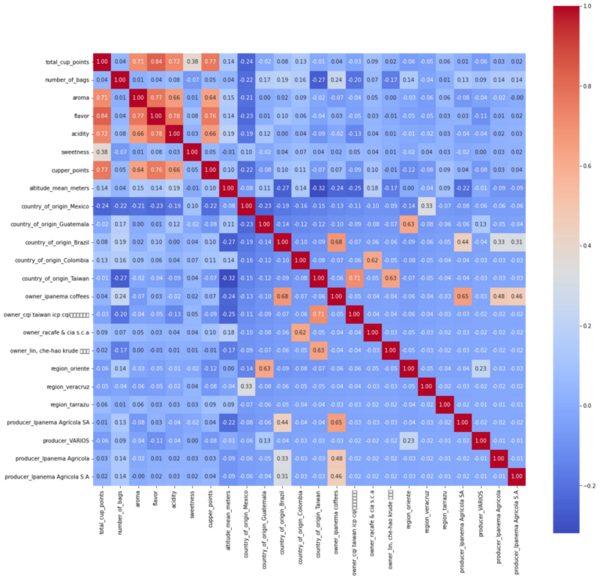
This study explores the factors that influence coffee quality ratings using data from the Coffee Quality Institute. Through a regression model based on gradient descent, the authors aimed to predict coffee ratings (total cup points) and hypothesized that sweetness and the coffee producer would be the most influential factors.
Read More...Physical Appearance and Its Effect on Trust

Do different physical traits affect teenagers’ initial trust of an unknown person? Would they give greater trust to women and people of similar ethnicity? To test these hypotheses, the authors developed a survey to determine the sets of physical characteristics that affect a person's trustworthiness. They found that gender and expression were the main physical traits associated with how trustworthy an individual looks, while ethnicity was also important.
Read More...Assessing Spanish interpretation in community healthcare: a study of patient satisfaction

This manuscript explores the use of Spanish language translators in an outpatient clinic in New Jersey. The authors surveyed patients before and after in person, video, and telephone appointments to determine which modality was most acceptable to the patients. The authors found that the three modalities did not differ in patient satisfaction, but that patients were grateful for translations services and that patient trust may be expanded by the use of these services and by focuses of translator soft skills.
Read More...A five-year retrospective analysis of Tuberculosis risk factors and their variability in the United States
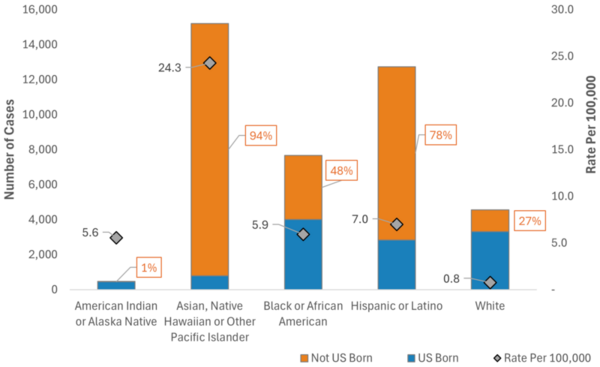
The main goal of this study is to determine what demographics are related to tuberculosis incidence in the United States populations, particularly if changing demographics are related to differences in tuberculosis risk over two discrete time periods. The major finding is that in the two studied time periods, tuberculosis risk factors were somewhat consistent and may be influenced by things such as immigration, healthcare access, and race or ethnicity, although the top predictor did change.
Read More...The impacts of different Al(NO3)3 concentrations on the mitotic index of Allium sativum

Recognizing the increasing threat of acid deposition inn soil through the reaction of NOx and SO2 pollutants with water in Spain, the authors investigates the effects of Al(NO3)3 concentrations on the health of Allium sativum. By tracking its mitotic index, they found a negative exponential correlation between Al(NO3)3 concentrations and the mitotic index of A. sativum.
Read More...Effects of spices on rice spoilage
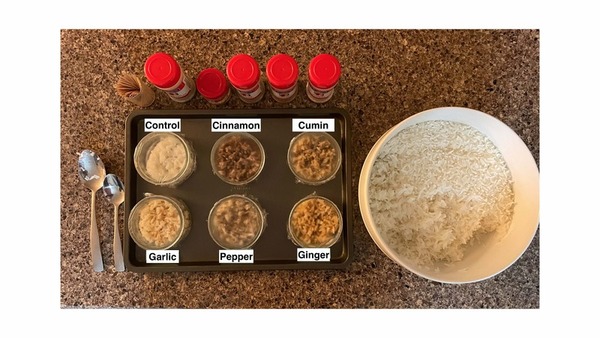
In this work, based on centuries of history where spices have been used and thought to have antimicrobial properties that prolong the shelf life of food, the authors investigated if several spices used in Indian cooking could delay the spoilage of cooked white rice. Based on changed in appearance and smell, as well as growth on agar plates, they found that cinnamon was the most effective in delaying spoilage, followed by cumin, pepper, garlic, and ginger. Their findings suggest the ability to use spices rather than chemical food preservatives to prolong the shelf life of foods.
Read More...Effect of environmental factors on bacterial flora of normal human skin
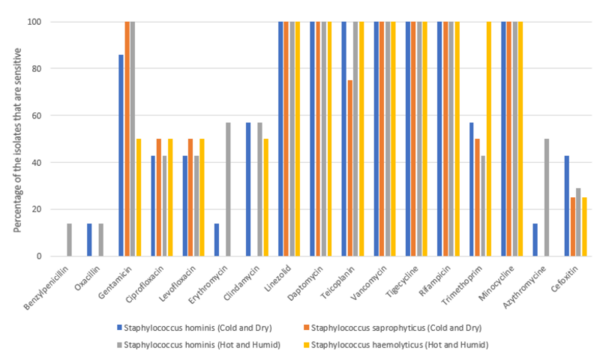
The authors looked how different working conditions impacted the microbiome of the human skin.
Read More...